Showing posts with label Life_Cable. Show all posts

23/11/2009

Proposal : Open_Sailing_01 Technical Drawing

We have now the design of the Open_Sailing_01 ready to submit to the British maritime authorities. This ship design has been tested in the water on models (iteration 1, iteration 2), so we have confirmed that the vessel is :
- large enough to host 4 people and equipment
- self-righting, hard to capsize, automatically fliping back in place
- insubmersible, resitant to internal pressure
- impact resistant, composite skin made of recycled material (see rogue waves)
- complying with SOLAS regulations and much more...


Download the ready-to-print 10 pages pdf technical drawing folder 13mb.

Download the 3d model on google 3D warehouse, sketchup, .dwg, .3ds.


front

right


left

back

top

bottom

Open Sailing 4 minutes concept video


Download the original quicktime .mov video here (44 mb).

Also visible on vimeo / youtube / dailymotion / sevenload : Script of the video in .txt (3 kb).

This 3 minutes video explains the Open_Sailing main concepts. Buzz it, spread the world.

Life cable terminal inspiration, all in the same place

http://www.banik.org/constr/FiltreEauMer.htm

Most boats have at least 3 holes directly into the sea... 3 holes? WHAT? Yes, one for the cooling of the engine, one for the toilets, one for grey-water evacuation. A french DIY sailor made this little instructable (in french sorry) of how to put these function in one hole, with one valve instead of 3, clever, safer.


15/11/2009

Floating Wind-power Takes Shape

By Nick Kaufman


hywind (Economist, 2009)

a functional application of floating energy generation. Although the structure itself does float, cables attached to the sea floor are necessary for it to maintain balance. The floating structure and cables allow wind energy to be implemented in far deeper waters (and connected to the electricity grid) than currently possible. The Economist says, "One obvious drawback is that connecting deep-water turbines to the electrical grid will be expensive." How interesting it would be if the energy delivery was local (from the ocean to ocean environments as opposed to ocean - land), as in the open_sailing scenario. It would also be interesting to look at the technology behind the delivery of the cable "anchors" to the sea floor and what the concept of different kinds of 'anchors' could add to a nomadic seafaring life.


11/11/2009

Yvon Legay, Institut Marin de Prevention, Lorient

I met Yvon Leroy, the technical director of the Marine Institut of Prevention in Lorient Bretagne, in charge of getting the safety equipments its way on most french boats, for off-shore platforms, fret, commercial, touristic and fishermen. His institution keeps a record of all accidents and safety procedures to adapt and enhance the health and safety response on board, and on survival equipments and communications.


Institut Marin de Prevention, Lorient

Institut Marin de Prevention, Lorient

Institut Marin de Prevention, Lorient

Institut Marin de Prevention, Lorient

Institut Marin de Prevention, Lorient

Institut Marin de Prevention, Lorient


Sir Yvon Leroy was extremely kind to introduce me to Yann Chauty, the french specialist in deep sea survival, fondator and instructor of the "Centre d'Etude et de Pratique de la Survie", CEPS, Center for the study and practice of survival.

Yvon Leroy also advised to visit the "Organisation Maritime Internationale", in London.

Loic Dussud, Jean Marvaldi, IFREMER

I was lucky enough to meet Loic Dussud, Head of Mechanical Developments at the IFREMER in Brest, Bretagne France. His work consists in developping the instrumentation and exploration tools for ocean observation and analysis, involving managing 20 specialists in oceanography, biology, mechanics, electronics, computer sciences... His background is in ship engineering.
I think he is the best person we could think of to start with, he knows everything about what we are trying to achieve, it has more than 20 years of experience sending objects on the surface and at the bottom of the oceans for science missions.


fondvict

adeliesig_400


Flickr set of photos of IFREMER Brest.


General concept

Open sailing general concept

I presented him the general concept... He was very curious and patient.
He said, it looks like a sea farm (see aquaculture), with many floating modules.
It has a central shelter, looking like a submarine / flying saucer / fallout shelter with a weight at the bottom, a very smooth object with no flat face, to resist the 100t/m2 impact of 30m high waves.


In motion, static (farming), defensive.


20080108mobile-static-agression_500

(Comments on above drawing) The idea is that a flexible structure, allows to:
1. Sail, dragging behing the various objects constituting the food, water and energy "farm".
2. Static, with a good weather, deploying the units, offering more space for culture, more stability.
3. Protective / retracted when the situation is threatening : more compact not to be dislocated in the violence of wind and waves, more vertical with weight concentrated to insure vertical sustain.


Materials


Uros

I pointed out my interest in building structures with organic materials, ocean-available material :
- to provide a "natural" habitat for fauna and flora
- to have a ressource that grows, like the Uros people - building ships in locally growing reed, or papyrus boats, knowing that will be a lot of maintenance work.
- simply not to become a form of pollution ourselves!
He was a bit skeptic on the use of ocean materials.


I presented Loic Dussud some ideas of energy modules I had, mostly LOW-FI adaptation of larger exisiting renewable technologies...
Quickly he redirected me to his colleague Jean Marvaldi, Specialist of renewable energies at the IFREMER, amazing person too.

The metronome solenoid


solenoid-metronome

This energy system is based on a couple of physcial principles : the buoy, metronome, solenoid, spring.

 _http://www.islikersolenoids.co.uk/images/large/tubular-solenoid-L.jpg _http://www.lakewoodconferences.com/direct/dbimage/50224257/Commercial_Vehicle_Braking_Spring.jpg


I observed that the Pelamis power principle is exellent, but it is too expensive to implement and difficult to scale up and maintain. I was very inspired by the shake torch (video). I bought one for £0.75, shaking for a minutes provided a reasonnable LED to light for almost 48hours non-stop... promising.

http://www.igadget.com.au/catalog/images/batfreetorch.jpg

So the "metronome solemoid" system I propose is made of simple buoys that continuously move on the surface of the ocean, it is possible to amplify the movement of a single buoy by placing the counterweight higher when there is not much waves, lower when there are big waves. The intermediary arms, which are where the solenoid system is, produces energy when the structure is moved by its environment. Each module can have several "male &/or "female" parts, so you would need an articulated structure or "sexualy complementary" nodes to produce energy with. This system would be quite cheap, not very powerfull, but interesting for a small living unit. Tom Hulbert (luckybite.co.uk) pointed out that we need to do tests and calculations to see if it has some competitive potential versus solar or windmill power, or we can think of how to combine...

We might be interested in tensegrity mecanisms to have minimal sustaining structures:

_


The air pressure module


air-pressure


The air pressure is very simple idea too : having the minimum of moving parts to reduce maintenance and fragility.

It is a tiny scale adaptation of the wave or tidal power station above : just transforming air mouvement into electricity through a turbine.


Wave power station

The ideas are :
- to divide the main air tube in many small tubes, each of them having their own pair of IN and OUT valves to harness even the smallest surface mouvements. The valves are made of a simple sandwich of 2 plastic plates holding a silicon (or maybe teflon) sheet with 3/4 - opened circles. Above the sandwich a layer of air circuit conveys air INPUTS and OUTPUTS to a central turbine, or for any type of work.

You can have many floating modules, or snap them into a platform, the bigger the platform, the more rigidity and more potential amplitude in wave oscillation -> energy produced.


concentrator-dissipator

It is a very simple idea : concentrate sun heat and dissipating it in the water, creating a micro climate to attract certain variety of molluscs, fishes.
I am not sure what species we are likely to attract, we need to study this in depth, test this. Apparently any floating object is quickly colonised.

http://www.solarcooking.com.au/recipes/images/SunOven0006.jpg_http://www.medithau.com/IMG/jpg/3_corde_moules.jpg

solar oven, heat disspiation, sea shell culture, micro-climate


Energy animals VS energy network


Energy-animals

So, I wonder if we may converge all these technologies into "hybrid energy animals", or, instead isolate the functions into modules that all feed into a central "mother" shelter?
The "energy animals" have been several times been preferred to modules : less connections, less cables = efficiency, economy, more robust.
For the implementation of the technology, Jean Marvaldi recommends to :
- test separately each technology and mesure the production of each component
- associate them and see if they cancel -or- amplify each other work...

Let's order the parts and try it up!


Loic Dussud introduced me to Yvon Legay of the Institute of marine Prevention in Lorient, and recommended me to contact prof. Paul D. Mitcheson, at the Imperial College London, researching in micro-power generators and their associated power electronics.

Waterproofing things

careless systems to protect water-sensible things, for big and small units. food, devices, organic, shelter, raft...

waterproof laptop 5

Battery types


Primary battery comparison chart: click to enlarge

primary

Rechargable battery comparison chart: click to enlarge

rechargable-battery1

Low visibility superorganism

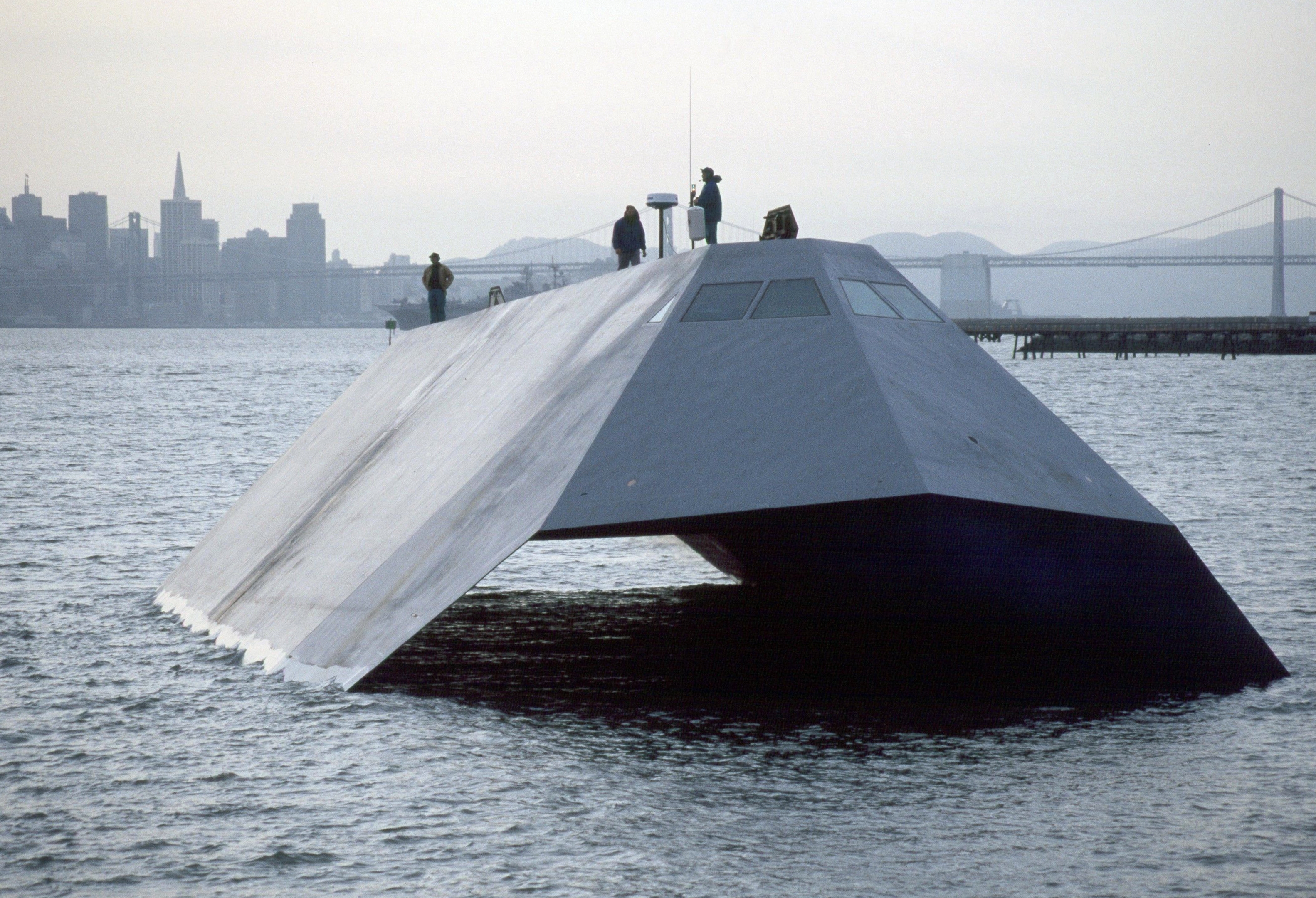
Fichier:US Navy Sea Shadow stealth craft.jpg

In this era of omni-surveillance, in the case of war, it's not so easy to remain undercover... Earth has become a military panopticon. How can one evade the authorities when everybody's freedom is claimed by the war-industry? Any individual can legitimately seek peace and escape conflict, but who amongst us does not belong to a nation? Is freedom the nature of not belonging? Or is it just to hide?


The electronic war has been raging for a very long time now. Every object is shown as a signature on the radar (see above). We must ensure our low observability with a Radar cross-section (RCS) reductions, vehicle shape, non-metallic airframe, radar absorbing material, acoustics, visibility, infrared and by reducing radio frequency (RF) emissions. Some of the most horrible inventions are inspiring for the best purposes : naval mines.


http://www1.eguermin.org/images/training/mv/fig4.jpghttp://www.navy.mil/navydata/policy/fromsea/pos98/55.gif

So here's the plan: instead of large units with an obvious signature, the most powerful way of hiding is to spread over small units.

http://web.uae.ac.ma/uaegrid/images/grid.gif

Grid computing can happen in low visibility flock, herd or crowd formation, most pervasive and resilient to attacks :


We can "mechanize" our system, optimize our communication routes, ventilations, with the superorganism mind...


Please watch this video right to the end! We dont have to be big to be successful! And ants can even go over the water!!!! Look at the video below!
download the film .flv

Labels

design (116) structure (81) architecture (69) Energy_Animal (53) Nomadic_Ecosystem (46) art (43) Instinctive_Architecture (42) free energy (36) 3d (34) graphic (33) Swarm_Operating_System (32) Ocean (31) presentation (31) maps (28) Ocean_Cookbook (23) biology (23) communication (23) navigation (21) Open_Politics (20) strategy (20) water (20) boat (19) computing (19) survival (19) Life_Cable (18) construction (18) farm (18) safety (17) algae (16) posting (16) materials (15) wave (15) ecology (14) politics (14) technology (14) london (13) physics (13) agriculture (12) battery (12) Openet (11) food (11) animal (10) craft (10) culture (10) fishes (10) mechanics (10) Open_Sailing (9) chemistry (9) media (9) open-source (9) plastic (9) theory (9) video (9) TED (8) behaviour (8) competition (8) engine (8) exploration (8) performance (8) technique (8) philosophy (7) sociology (7) Open_Games (6) biomass (6) inflatable (6) seasteading (6) wind (6) OS_Polar (5) USA (5) animation (5) electronics (5) legal (5) medecine (5) pollution (5) berlin (4) data (4) ethics (4) money (4) psychology (4) reportage (4) service (4) statistics (4) sun (4) Brazil (3) Cesar Harada (3) Observation (3) Protei (3) TEDxOilSpill (3) catastrophy (3) engineering (3) garbage (3) google (3) history (3) identity (3) kite (3) mapping (3) metareciclagem (3) oil spill (3) recovery (3) research (3) sailing (3) science (3) space (3) spain (3) sustainable (3) tradition (3) AI (2) Argo (2) CAD (2) Environment (2) Exploration. Robots Swarm .Sea (2) Jellyfish (2) LABB (2) Louisiana (2) NL (2) NOLA (2) Object Oriented Politics (2) Open Hardware (2) Pachube (2) Pacific (2) Plastiki (2) TEDxBoston (2) UK (2) World Environment Organization (2) ants (2) austria (2) autonomy (2) com (2) coral (2) des (2) endangered species (2) fiction (2) geography (2) gulf of mexico (2) model (2) news (2) open architecture initiative (2) open innovation (2) organisation (2) plant (2) post (2) preservation (2) product (2) protection (2) rca (2) reserve (2) robots (2) simulation (2) skeleton (2) social (2) symbol (2) text (2) treatment (2) waste (2) Adhocracy (1) Aerial (1) Articles (1) BBC (1) BLDGBLOG (1) BP (1) BP oil spill (1) Balloon (1) Bangladesh (1) Barataria (1) Barcelona (1) Bay (1) Black (1) Boston (1) CCCB (1) Colet Castano (1) Crafts (1) Decentralize (1) Distributed System (1) Documentary (1) Dream (1) Environmental Concerns (1) Europe (1) Flight (1) Germany (1) Grassrootsmapping (1) Grenelle (1) Grier (1) Helium (1) Hydrogenase. Architecture (1) Institute (1) JP (1) Jimmy (1) John (1) Kaku (1) Kiel (1) Kim (1) Korea (1) LA Bucket Brigade (1) Luxembourg (1) NOAA (1) New Orleans (1) New York (1) Nina (1) Noah (1) Norway (1) Oceanography (1) Oil (1) Photography (1) Plane (1) Plater (1) Pope (1) Pragmatism (1) Resistance (1) Robot (1) Rotterdam (1) Ruairi Glynn (1) Sketchup (1) Snyder (1) Sphere (1) Spill (1) Stitching (1) TEDxMidAtlantic (1) Talk (1) Tilling (1) Tribe (1) Trondheim (1) Tumas (1) Uros (1) V2_ (1) Vision (1) Washington DC (1) Werner (1) Wood (1) Woods Hole (1) YouTube (1) Zygmunt (1) accident (1) admin (1) alternative (1) anaconda (1) appropedia (1) aquanaut (1) architecture for humanity (1) ars (1) autarcy (1) autark (1) awareness (1) ball (1) baltic (1) belgium (1) biodiversity (1) biofuel (1) brainstorming (1) broadcast (1) buoy (1) canada (1) carbon (1) cardboard (1) carton (1) cesar (1) clear climate code (1) climate (1) cold fusion (1) collaboration (1) concepts (1) cruise (1) current (1) deadly (1) deep (1) departure (1) developing (1) disposal (1) dispute (1) diving (1) diy (1) drone (1) eartquake (1) edgcm (1) events (1) excellent (1) experimental (1) exploring (1) farming (1) farms (1) file (1) fire (1) flickr (1) floating (1) florida (1) fluid dynamics (1) forum (1) france (1) future (1) futurology (1) generator (1) geodesic (1) geoengineering (1) graduate (1) green (1) grey (1) habitation (1) halley vi research station (1) harada (1) hybrid (1) icon (1) ideas (1) ideology (1) independent (1) indian (1) indonesia (1) industrial (1) inhabitat (1) innovation (1) instructables (1) insurance (1) japan (1) kelp (1) ledger (1) lloyds (1) louisina (1) machine (1) magnet (1) maths (1) message (1) messaging (1) metal (1) mimicry (1) mission blue (1) mobile (1) modular (1) monitoring (1) nasa (1) natural (1) naviagation (1) nice (1) nucelar (1) open source (1) opportunity (1) pachbox (1) park (1) participation (1) patch (1) pelamis (1) people (1) photo (1) pirate radio (1) planning (1) pods (1) polar (1) pop (1) popular (1) power (1) pr (1) press (1) raft (1) reef (1) render (1) renewable (1) repost (1) rogue (1) sewage (1) ship (1) ships (1) shit (1) software (1) sound (1) speculation (1) studies (1) study (1) super-collider (1) sylvia earle (1) system (1) temporary (1) toxic (1) tv (1) typography (1) underwater (1) utopia (1) weather (1) web (1) whales (1) wired (1) workshops (1) young (1) youth (1)

This blog is embeded inside the official Open_Sailing website, visit us here : http://opensailing.net

Open_Sailors