Showing posts with label Open_Politics. Show all posts

02/02/2010

Le Bateau-usine de Takiji Kobayashi

if you happen to be in paris France, this films sounds very interesting :


http://www.mcjp.fr/francais/cinema/le-bateau-usine-de-takiji-107/le-bateau-usine-de-takiji
Le Bateau-usine de Takiji Kobayashi : témoin de l’histoire, symbole d’aujourd’hui
Table ronde cinéma
プロレタリア文学の名作『蟹工船』の現代性
Samedi 30 janvier de 14h à 18h
Présentation et projection du film
Table ronde consacrée au roman 


Le Bateau-usine (Kanikôsen, 1929) roman de Takiji Kobayashi (1903-1933) raconte l’épopée de trois cents hommes envoyés en mer d’Okhotsk pour pêcher le crabe et en faire des conserves. A travers le microcosme de leur bateau-usine, l’auteur dénonce le capitalisme en tant que système. Ce chef-d’œuvre de la littérature prolétarienne connaît aujourd’hui un fort regain d’intérêt, contemporain d’une prise de conscience des nouvelles inégalités sociales au Japon.

Présentation et projection du film
14h 14h30 : pré sen ta tion du film par Teru Shimamura (spé cia liste de la lit té ra ture pro lé ta rienne japonaise, uni ver sité Ferris, Tôkyô)
14h30 16h30 : pro jec tion du film
Le Bateau-usine「蟹工船」
1953 / 109’ / N&B / vo/stf

Un film de Sô Yamamura / D’après le roman de Takiji Kobayashi / Avec Sô Yamamura, Masayuki Mori, Sumiko Hidaka, Sanae Nakahara / Prix spé cial au Festival de Karlovy-Vary en 1954

Table ronde consacrée au roman
16h30 18h : Table ronde

Intervenants : Cécile Sakai (Professeur à l’Université Paris Diderot-Paris 7, mem bre de l’UMR CRCAO Centre de Recherches sur les Civilisations de l’Asie Orientale),
Jean-Jacques Tschudin (Professeur émérite à l’Université Paris Diderot-Paris 7, mem bre de l’UMR CRCAO),

Evelyne Lesigne-Audoly (doc to rante à l’Inalco, tra duc trice en fran çais du roman Le Bateau-usine).
Autres pro jec tions du film : jeudi 4 février et samedi 6 février à 20h (petite salle, entrée libre)

© Hokusei


Date
samedi 30 janvier
Table ronde - cinéma : Le Bateau-usine de 15h00 à 18h00


10/01/2010

how many antennas in the sea...

I was just having fun trying to calculate how many antennas we would need to create an ocean data mesh network.


Argo floats


Mesh network with diversified nodes

>>>
If I would like to create a global ocean data mesh network, I would like to :
- determine the best long distance data intensive communication technology we should use.
- the energy necessary to each floating antenna-relay.
- calculate the number of floating objects required
- determine roughly the cost of such a technology to be implemented.

I will do the calculation on what I could find on the internet, as a very rough sketch of calculation.
For the example, the antenna I found for WIFI long range are 80km in range (radius), and cost say 3000£, just as example.

To cover up an area of 1000 km2, I need to set up a grid of 25 x 25 80km long range WIFI antennas in the seas.
The antennas signal need to overlap, so I can only exploit a 40km radius (this is why I dont have 12.5 antennas for 1000 km long square).
So I need 25x25, 625 floating antennas to cover up 1000km2 of sea.
So the ratio of antenna needed on 1m2 is 1/1600.

The ocean is ~3.61 x 10E14 m2 (361'000'000'000'000m2)
So to cover the oceans with antennas I will need
~3.61 X 10E14 m2 / 1600 = 225'625'000'000 antennas

Let's say that each antenna is 3000£.
225'625'000'000 x 3000 = 676'875'000'000'000£

We were 6,692,030,277 humans in 2008.
676'875'000'000'000 / 6,692,030,277 = 101'146.43£ / per person to cover the ocean with antennas.

This is too expensive, the environmental impact negatively huge. I blame it on :
- the idea, perhaps a stupid idea, perhaps not.
- the technology efficiency
- the cost of technology
- the lack of money in the world

So my question is : What is the technology that would enable the world population to have an entirely free ocean wireless data mesh network? At what price? How?
It is a technology question at this point.

So anyone : just an advice, of which technology to look into for long distance wireless mesh network would be amazing.
If you know someone who could answer this question I would be very happy to know about.
Please add in the comments below, or send me an email cesar.harada@opensailing.net

13/12/2009

infrastructure geopolitics -> Infrastructure-less civilization


Parag Khanna maps the future of countries

Parag Khanna suggests frontiers are oppressive violent constraints. He suggests we should focus on infrastructure. I would rather suggest we focus on how to stop being dependent of infrastructure. For the simple reason is that infrastructure is what takes the most time to change, it is much slower to change infrastructure than it is to change political landscape or culture.
Most the conflicts he is giving details on are based on infrastructure and their economical consequent politcal power.
Energy is everywhere, we don't need grand infrastructures. So we either global decentralization, or design of mobile sources of renewable energies (Energy_Animal). Just as countries divided, grids should divide, that would also increase local responsabilities and less energy loss on infrastructures. This video also reveals that "new territories" correspond to tribal ancient bodies of population, that used to live there, before infrastructures and imperialists, by traditional means... Another strong argument not to re-arrange frontiers by economical means.

This century has mostly been the century of migrations, see the wonderful exhibition "Terre Natale" an incredibly powerful vizualization of world migrations (by Stewdio, framed by Paul Virilio).


People have legs and dreams. They also have problems, many don't choose to move but have to. Those who have the choice : why are they moving? And where are they moving? I believe most of them are moving because of their aspiration for a better life, an for that reason the image of the territory they are aspiring to go is crucial.

The territory, the population builds the image, and the most attractive bodies of people are the one that build rich bodies of imageries, that appeal by marketing a powerful dreampolitk (Stephen Duncombe) if not many (plurality, heterodox regimes). Enough of realpolitik. Would America as we know it even exist without the American Dream?


So instead of focusing on infrastructure and economy :

Focus on education : facilitating language learning, facilitating trade in general is a good way to create emotional bridges between populations, ensure peace and cooperation durably.

Design culture : the art, design, crafts, music are powerful identification figures for people; a nation unites under a flag, a symbol represents a common interest. I have identified earlier surculture as major force for cultural change in the cultural feedback loop.

Design mobility : human migration is one of the major factor to influence global politics for the coming century. Transports & national borders.

Design infrastructure-less civilization : In the Darwinian sense, fitness does not necessarily mean strength so much as the capacity to adapt successfully. Infrastructure is the power of ancient civilizations ; mobility, flexibility adaptability is at the advantage of the leading group of individuals and of the destitute. Who knows what happens if you generalize these capacities to the majority? World hotel (static infrastructure + nomadic people) or moving cities (nomadic infrastructures)? Ultimately why would people want to travel, especially since they can download HQ national geographic documentaries? Well, it seems that since National Geographic is doing a pretty awesome work, more and more people traveled so, communication again did encourage tourism if not migration.

I don't think Open_Sailing can propose to build a new civilization at all. Many ethnies have been living on water since errr forever, maybe we should learn from them first. But the middle of the ocean, or on really long distances and really different climates ... That's a new exciting story...

12/12/2009

openet.org

>> Are we free on the internet ?
- No we are not. We are under surveillance.
>> Can we create an infrastructure-less internet? An Infrastructure-less civilization?
- The technology already exists, may it be mesh-networks on short ranges, or packet radios on long distances. The less infrastructure, the more robust, check this disaster wifi coverage devices!.
>> Do we need the companies, the states, the militaries to organise and moderate it?
- No we don't. The whole open-source communities will support this initiative, you will.

>> Can we can build a true civilian internet?
- Shall we try ... ?

openet.org

We may not have to re-invent TCP-IP ... Some repeaters or open-source mesh-networking computer like the OXO OLPC (One Laptop Per Child) use something close to this system ...


More video detailled explanations and relation to the smart grid ...

Here is packet radio station brief video explanation :


File:International amateur radio symbol.svg

This is the international symbol for amateur radio, included in the logos of many IARU member societies. The diamond holds a circuit diagram featuring components common to every radio: an antenna,inductor andground. antenna,inductor and ground. Maybe the openet doesn't have a ground, a country ...

See also OpenNet.net initiative, more about politics, let's be about empowering people with simple technical solutions. Coolest group here. We can do pretty wild stuff, like bouncing a radio wave signal to the moon - back to earth with a relatively simple equipment !


And there are many ways to create signal relays : in the oceans, in the air (1966 military study), have strong long-wave signal that bounce on the atmosphere. Our network could be much more fluid, wet networks, creating nodes by capillary action, This is when loose network and thermodynamic system and notions of boundaries become useful / useless ... Open_Architecture ?

File:System boundary.svg

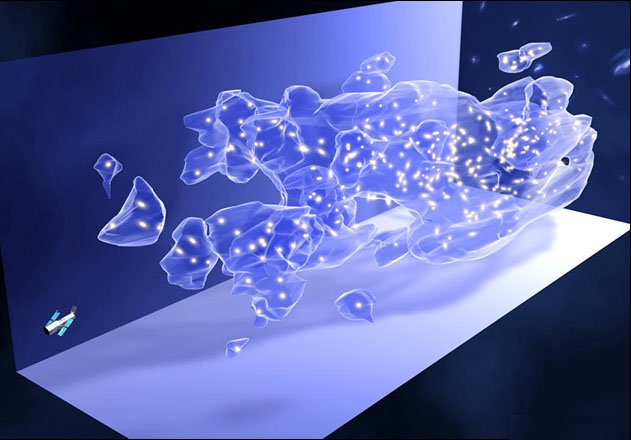
A "loose network", this is how our universe is being described anyway ...


[Image: Courtesy of NASA/ESA/MASSEY, via the BBC, via BLDGBLOG].

"Astronomers have mapped the cosmic 'scaffold' of dark matter upon which stars and galaxies are assembled," the BBC reports. Producing the map "involved nearly 1,000 hours of observations with the Hubble Space Telescope." But it was time well-spent: the map now "confirms that galaxy clusters are located within clumps of this invisible material. These clumps are connected via bridges of dark matter called filaments. The clumps and filaments form a loose network – like a web."

So where do we start ?
For the people, for the earth ? ...


Now we have accepted we are in a multiverse, are we ready to engage with a "multinet" (multiple Internet)? Maybe an Openet (an open network) is a good start? Will the politic follow (Barack Obama: On Net Neutrality) ?


I made this "multinet" illustration from Matt Britt, wikipedia internet map.

Vital function map, world threat maps

OpenSailing.net & 2012hopes.com concept and world map by you.
This is the concept map of the project : read from the bottom to the top, from the 2012 fears volcano, giving birth to the open sailing station. Download pdf (11.6mb) / see .jpg (2.6mb) / see flickr page

OpenSailing.net & 2012hopes.com concept and world map by you.
This is the geographical map of both 2012hopes.com and opensailing.net : 2012hopes.com suggests the ideal location, Open Sailing figures out how we will live and thrive in this new geographical context. download pdf (7.6mb) / see .jpg (1.4mb) / flickr page


The maps have all been programmed on maps.google.com, you can save individual map and ad them as your own (if you have a gmail account which is free and amazing) : all maps directory by 2012hopes@googlemail.com. You can also view these maps confortably using google earth.

open sailing world map
We have printed 300 of these maps to A1 size, if you want one email us, we'll arrange, we'll appreciate donations since they are expensive to print.


We might send the map as it is supposed to be : folded, to fit in your pocket, an authentic survival pratical map.

Creative Commons License

Conceptual chat - Open_Politics Lab Brasil

< Jorge Guberte >
As an effort to achieve a feasible personal concept of the Open_Politics lab, me and a friend had this chat.
I'm naturally immersed in brazilian politics, as i live in Brazil, so it was somewhat the main focus of the conversation.
Hopefully it'll open the curtains for me to further develop some concepts that i have in mind right now, and that aren't quite well formed yet.

P is Paulo - my friend - and J. is me.
P: Voting sounds like an idea, but the population needs to produce great candidates.
J.: Do you have a political view? Anarquist, Libertarian, etc?
P.: I'm Green. And Libertarian, i suppose.
J.: Cool. I like the pirate party, but i hate parties. I hate the system that's established.
P.: I think i'm deeply anarchistic, but i'm a bit too vicious to act like one openly. I want to pervert the system, and change it s-l-o-w-l-y. I hate violence and radical changes; i believe people only learn if they want, can't force it . So, it is fostering existing forces, focusing
J.: Even if voting is mandatory [it is in Brazil] , i don't go. I'd rather pay the fine than vote
P.: Hey, i'm really sorry, but I really dont know anything about politics in brasil. It would take me ages to know national politics, no ?
J: I'll explain in a nutshell
P.:Ok, go for it.
J: We pay one of the higher taxes in the world, and we get a crappy public service. Why? because the government is so pathetic and uneffective to handle public services. Why else? because the politicians that are elected steal all the money that was supposed to go back to the population, as services.
The Economit published a good article about it too: http://www.economist.com/world/americas/displaystory.cfm?story_id=13998624
P.: I don't mind if they have a good time with your money, if in return they give you a good service.
J: exactly, i wouldn't mind either
P.:: But as you said, public service is crap, so their life should resemble or depend on this same public service. What solution do you think of ? Better public services OR worst lifestyle for them ?
J: good question
P: better public services right ? If they are fat, it is their problem. I believe people can coordinate the state from more local initiatives, bottom up. So i rather feed ground up initiative, rather than fighting the fat politic bastards.
J: Horizontally in some decades. Or modularly, organically.
P: They live in a different world, they don't understand what we are talking about, so I wouldn't involve them, unless they decide to support.
J.: If we put effort on them, we lose the focus. Why put effort in something not benefical?
P: That's my point of view. Fighting against politics is loss of time; finding solutions that short circuit their authority is more productive, like inventing our own economies and technologies.
J.: Then theirs become obsolete.
P.: we dont fight them, we make them redundant. That's my opinion on the political context you describe. Activist becomes avery undirect activity. It is not activist against the politics, it is activist towards a vision, that can bring in something better than what politic scene offers, as a lifestyle.
J: Do you think the activists become leaders - not government leaders, but local leaders - as the subsystem evolves?
P.: I hope not...i hope there is a position of leadership that people are able not to be attached to, not be called by your function, be called by your name, as you are a human. Maybe the leadership can be circulated depending on the issue that needs solving. So I'm talking about atomising leadership to the specialist function. As far as I know this is called Adhocracy. I like the model of Object Oriented Politics  (Bruno Latour 2006) too.

Human ecologies

Adam Weymouth is joining the project, covering the human ecology aspect "field" sociology.
File:Sustainable development.svg
He's explainign even more in the freshly opened LAB 9. OPEN_POLITICS
Adam proposes to :
-
- Documenting the journey - exploring how communtiy builds along the journey, and how people's awareness of each other and of their environment alters. This could be used to emphasise the importance of open sailing in not just sustainable living through good applications of science and resources, but by building a strong community, which is, i believe, at the base of holistic practice.
-
- I wrote my Masters dissertation on looking at the links between protest walks and pilgrimage. Looking at the importance of the journey for people, at nomadic lifestyles, and of the spiritual importance of undertaking journeys. This project seems like a great way to extend my research.
-
- Developing some sort of outreach programme for the communities that we're passing through - not just in the cities but the villages also. Presumably you'll be passing a huge array of diverse communites - have you thought about how to talk to people about what you're up to/ get them involved and interested? I did an 80 mile walk across London last summer as part of the Climate Caravan - I found it was the best thing I've done to engage with people about issues we wanted to discuss, because we are coming to them, and getting involved in their communites. This seems to be the same, on an even bigger and more visual scale.
-
- Exploring ways for us to work as a community on board - modalities of socialising.

26/11/2009

CCCB Open_Sailing taller

Open_Sailing @ the Now festival, CCCB Barcelona

Open_Sailing has been invited in Barcelona by the CCCB  for a lecture (below you can see the slideshow) and for a day-long workshop, as a part of the NOW festival and Atopia. 
NOW is a reflection on the present based on the scientific, technological, artistic, social and spiritual transformations that are taking place at the start of the 21st century. It is a process of research, creation and dissemination that aims to bring together different local and international agents involved in the actions that are promoting a change of paradigm in the information and knowledge society and in globalised cultures.


Lecture
The first day, Cesar Harada presented Open_Sailing on a more historical perspective, explaining how it developed and where it is going, slideshow below.


Workshop
The second day 27 person participated the Open_Sailing workshop with Cesar Harada, Ruairi Glynn, Ollie Palmer, Carla Colet Castano. It was about dance, sensible linear - branched and complex networks, mapping, tagging, geostrategy, group and decision making, adhocracy, object oriented politics, open architecture, town-planning, renewable energies, sustainable design, hedonism, fun, architecture of play.

Here is the structure of the workshop as a simpler array of instructions :

Dance
1. walk
2. run
stretch
3. walk eyes closed
4. run eyes closed
5. linear network - walk eyes closed
6. linear network - walk eyes closed - somebody takes the lead
7. branched network - walk eyes closed
8. branched network - walk eyes closed - somebody takes the lead
9. complex network - walk eyes closed
10. complex network - walk eyes closed - somebody takes the lead
11. splitting the group is sub-groups

Map
1. cover the floor with a large paper
2. draw YOUR world map


Tag
1. have 2 colours stikers : one "like" color, one "dislike" color
2. tag the map, write words on tags
3. map the whole world


Individual desire
1. think of where you personaly would prefer to live according to your map and tags


Group decision of a location
1. make a decision, as group, of one location, where you all agree to go together


Group decision of activities
1. as a group decide one activity in this new location


Individual involvment
1. as an individual, choose your activity within this group


Craft of the system
1. describe your location, group activity, personal activity, how the system would work (food, energy, political, technology ...)


Design of the system
1. optimize your system


Fabrication of models
1. as a group, fabricate the physical model of what you have been describing


Public presentation and debate
1. present your group work to other groups of works
2. compare, discuss.
3. general debate : what happened? what did you enjoy? what did you not enjoy? what did you learn? what will remain in your memory? How will this workshop affect your future life?

thanks !


Promotional video


download flv 12.mb

23/11/2009

Proposal : Open_Sailing_01 Technical Drawing

We have now the design of the Open_Sailing_01 ready to submit to the British maritime authorities. This ship design has been tested in the water on models (iteration 1, iteration 2), so we have confirmed that the vessel is :
- large enough to host 4 people and equipment
- self-righting, hard to capsize, automatically fliping back in place
- insubmersible, resitant to internal pressure
- impact resistant, composite skin made of recycled material (see rogue waves)
- complying with SOLAS regulations and much more...


Download the ready-to-print 10 pages pdf technical drawing folder 13mb.

Download the 3d model on google 3D warehouse, sketchup, .dwg, .3ds.


front

right


left

back

top

bottom

Eco-Activists Storm Island On River Thames


We are warmly encouraged to do our Open Sailing assembly at the Raven's Ait Eco conference center. A few weeks ago, we went to visit and meet the guys, it is very very interesting. check the flickr set, and wikipedia page. They are talking about our project in this video. Big up Pheonix and the circle community. We can make it ! Read Guardian article.

They are good people, the space is wonderful, it has everything. This place would be perfect to assemble our floating thing, and than take it down the river toward the north sea.

14/11/2009

Swarmanoid

A good example of structure modules and components forming a super-organism. Swarm robotics is a good source of inspiration when thinking about formations of "mini-gaias" through fluid, mobile living.

hb-complete

http://www.swarmanoid.org

The Swarmanoid project (IST-022888) is a Future and Emerging Technologies (FET-OPEN) project funded by the European Commission.

The main scientific objective of this research project is the design, implementation and control of a novel distributed robotic system. The system will be made up of heterogeneous, dynamically connected, small autonomous robots. Collectively, these robots will form what we call a swarmanoid. The swarmanoid that we intend to build will be comprised of numerous (about 60) autonomous robots of three types: eye-bots, hand-bots, and foot-bots.

11/11/2009

Loic Dussud, Jean Marvaldi, IFREMER

I was lucky enough to meet Loic Dussud, Head of Mechanical Developments at the IFREMER in Brest, Bretagne France. His work consists in developping the instrumentation and exploration tools for ocean observation and analysis, involving managing 20 specialists in oceanography, biology, mechanics, electronics, computer sciences... His background is in ship engineering.
I think he is the best person we could think of to start with, he knows everything about what we are trying to achieve, it has more than 20 years of experience sending objects on the surface and at the bottom of the oceans for science missions.


fondvict

adeliesig_400


Flickr set of photos of IFREMER Brest.


General concept

Open sailing general concept

I presented him the general concept... He was very curious and patient.
He said, it looks like a sea farm (see aquaculture), with many floating modules.
It has a central shelter, looking like a submarine / flying saucer / fallout shelter with a weight at the bottom, a very smooth object with no flat face, to resist the 100t/m2 impact of 30m high waves.


In motion, static (farming), defensive.


20080108mobile-static-agression_500

(Comments on above drawing) The idea is that a flexible structure, allows to:
1. Sail, dragging behing the various objects constituting the food, water and energy "farm".
2. Static, with a good weather, deploying the units, offering more space for culture, more stability.
3. Protective / retracted when the situation is threatening : more compact not to be dislocated in the violence of wind and waves, more vertical with weight concentrated to insure vertical sustain.


Materials


Uros

I pointed out my interest in building structures with organic materials, ocean-available material :
- to provide a "natural" habitat for fauna and flora
- to have a ressource that grows, like the Uros people - building ships in locally growing reed, or papyrus boats, knowing that will be a lot of maintenance work.
- simply not to become a form of pollution ourselves!
He was a bit skeptic on the use of ocean materials.


I presented Loic Dussud some ideas of energy modules I had, mostly LOW-FI adaptation of larger exisiting renewable technologies...
Quickly he redirected me to his colleague Jean Marvaldi, Specialist of renewable energies at the IFREMER, amazing person too.

The metronome solenoid


solenoid-metronome

This energy system is based on a couple of physcial principles : the buoy, metronome, solenoid, spring.

 _http://www.islikersolenoids.co.uk/images/large/tubular-solenoid-L.jpg _http://www.lakewoodconferences.com/direct/dbimage/50224257/Commercial_Vehicle_Braking_Spring.jpg


I observed that the Pelamis power principle is exellent, but it is too expensive to implement and difficult to scale up and maintain. I was very inspired by the shake torch (video). I bought one for £0.75, shaking for a minutes provided a reasonnable LED to light for almost 48hours non-stop... promising.

http://www.igadget.com.au/catalog/images/batfreetorch.jpg

So the "metronome solemoid" system I propose is made of simple buoys that continuously move on the surface of the ocean, it is possible to amplify the movement of a single buoy by placing the counterweight higher when there is not much waves, lower when there are big waves. The intermediary arms, which are where the solenoid system is, produces energy when the structure is moved by its environment. Each module can have several "male &/or "female" parts, so you would need an articulated structure or "sexualy complementary" nodes to produce energy with. This system would be quite cheap, not very powerfull, but interesting for a small living unit. Tom Hulbert (luckybite.co.uk) pointed out that we need to do tests and calculations to see if it has some competitive potential versus solar or windmill power, or we can think of how to combine...

We might be interested in tensegrity mecanisms to have minimal sustaining structures:

_


The air pressure module


air-pressure


The air pressure is very simple idea too : having the minimum of moving parts to reduce maintenance and fragility.

It is a tiny scale adaptation of the wave or tidal power station above : just transforming air mouvement into electricity through a turbine.


Wave power station

The ideas are :
- to divide the main air tube in many small tubes, each of them having their own pair of IN and OUT valves to harness even the smallest surface mouvements. The valves are made of a simple sandwich of 2 plastic plates holding a silicon (or maybe teflon) sheet with 3/4 - opened circles. Above the sandwich a layer of air circuit conveys air INPUTS and OUTPUTS to a central turbine, or for any type of work.

You can have many floating modules, or snap them into a platform, the bigger the platform, the more rigidity and more potential amplitude in wave oscillation -> energy produced.


concentrator-dissipator

It is a very simple idea : concentrate sun heat and dissipating it in the water, creating a micro climate to attract certain variety of molluscs, fishes.
I am not sure what species we are likely to attract, we need to study this in depth, test this. Apparently any floating object is quickly colonised.

http://www.solarcooking.com.au/recipes/images/SunOven0006.jpg_http://www.medithau.com/IMG/jpg/3_corde_moules.jpg

solar oven, heat disspiation, sea shell culture, micro-climate


Energy animals VS energy network


Energy-animals

So, I wonder if we may converge all these technologies into "hybrid energy animals", or, instead isolate the functions into modules that all feed into a central "mother" shelter?
The "energy animals" have been several times been preferred to modules : less connections, less cables = efficiency, economy, more robust.
For the implementation of the technology, Jean Marvaldi recommends to :
- test separately each technology and mesure the production of each component
- associate them and see if they cancel -or- amplify each other work...

Let's order the parts and try it up!


Loic Dussud introduced me to Yvon Legay of the Institute of marine Prevention in Lorient, and recommended me to contact prof. Paul D. Mitcheson, at the Imperial College London, researching in micro-power generators and their associated power electronics.

Low visibility superorganism

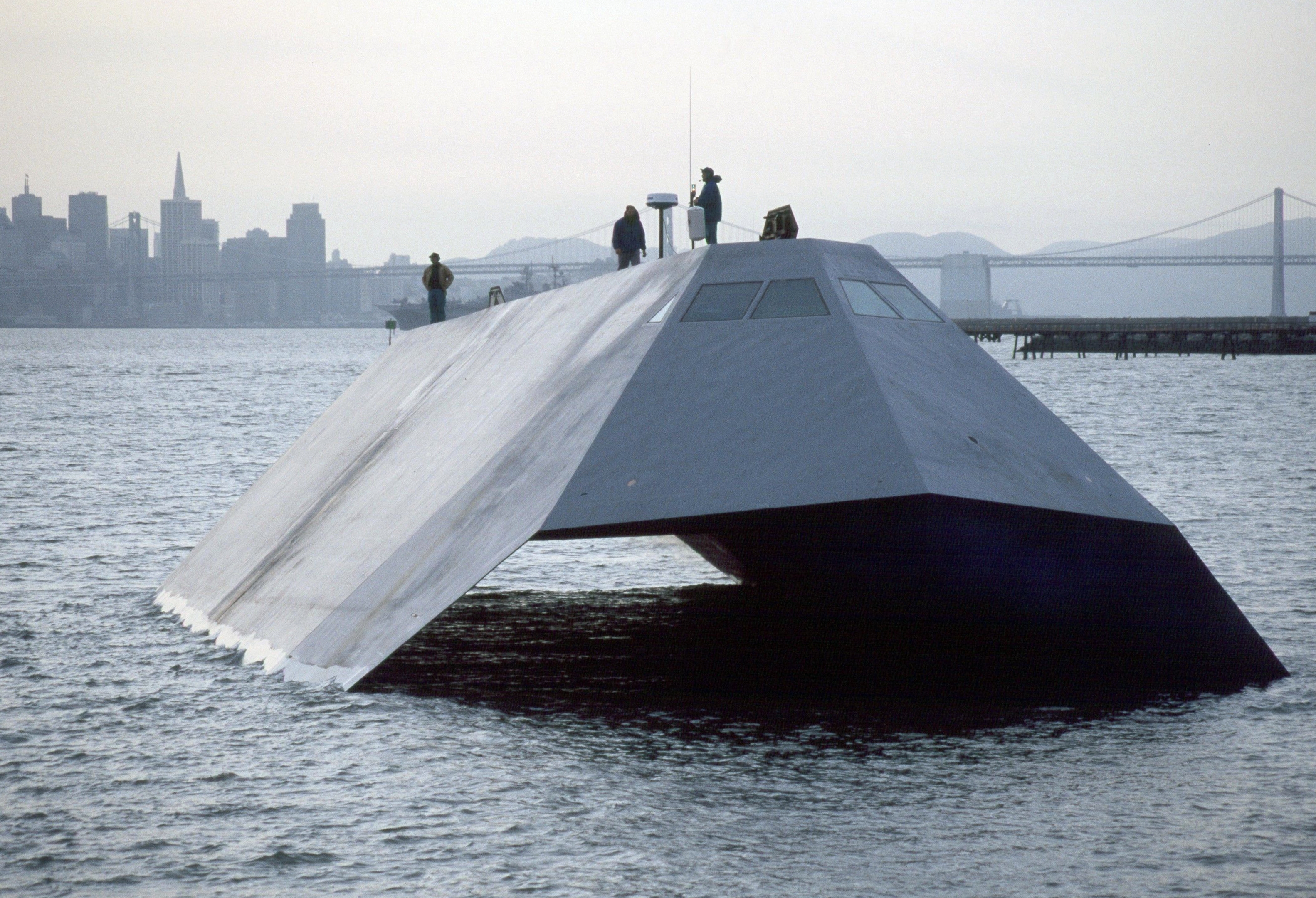
Fichier:US Navy Sea Shadow stealth craft.jpg

In this era of omni-surveillance, in the case of war, it's not so easy to remain undercover... Earth has become a military panopticon. How can one evade the authorities when everybody's freedom is claimed by the war-industry? Any individual can legitimately seek peace and escape conflict, but who amongst us does not belong to a nation? Is freedom the nature of not belonging? Or is it just to hide?


The electronic war has been raging for a very long time now. Every object is shown as a signature on the radar (see above). We must ensure our low observability with a Radar cross-section (RCS) reductions, vehicle shape, non-metallic airframe, radar absorbing material, acoustics, visibility, infrared and by reducing radio frequency (RF) emissions. Some of the most horrible inventions are inspiring for the best purposes : naval mines.


http://www1.eguermin.org/images/training/mv/fig4.jpghttp://www.navy.mil/navydata/policy/fromsea/pos98/55.gif

So here's the plan: instead of large units with an obvious signature, the most powerful way of hiding is to spread over small units.

http://web.uae.ac.ma/uaegrid/images/grid.gif

Grid computing can happen in low visibility flock, herd or crowd formation, most pervasive and resilient to attacks :


We can "mechanize" our system, optimize our communication routes, ventilations, with the superorganism mind...


Please watch this video right to the end! We dont have to be big to be successful! And ants can even go over the water!!!! Look at the video below!
download the film .flv

Labels

design (116) structure (81) architecture (69) Energy_Animal (53) Nomadic_Ecosystem (46) art (43) Instinctive_Architecture (42) free energy (36) 3d (34) graphic (33) Swarm_Operating_System (32) Ocean (31) presentation (31) maps (28) Ocean_Cookbook (23) biology (23) communication (23) navigation (21) Open_Politics (20) strategy (20) water (20) boat (19) computing (19) survival (19) Life_Cable (18) construction (18) farm (18) safety (17) algae (16) posting (16) materials (15) wave (15) ecology (14) politics (14) technology (14) london (13) physics (13) agriculture (12) battery (12) Openet (11) food (11) animal (10) craft (10) culture (10) fishes (10) mechanics (10) Open_Sailing (9) chemistry (9) media (9) open-source (9) plastic (9) theory (9) video (9) TED (8) behaviour (8) competition (8) engine (8) exploration (8) performance (8) technique (8) philosophy (7) sociology (7) Open_Games (6) biomass (6) inflatable (6) seasteading (6) wind (6) OS_Polar (5) USA (5) animation (5) electronics (5) legal (5) medecine (5) pollution (5) berlin (4) data (4) ethics (4) money (4) psychology (4) reportage (4) service (4) statistics (4) sun (4) Brazil (3) Cesar Harada (3) Observation (3) Protei (3) TEDxOilSpill (3) catastrophy (3) engineering (3) garbage (3) google (3) history (3) identity (3) kite (3) mapping (3) metareciclagem (3) oil spill (3) recovery (3) research (3) sailing (3) science (3) space (3) spain (3) sustainable (3) tradition (3) AI (2) Argo (2) CAD (2) Environment (2) Exploration. Robots Swarm .Sea (2) Jellyfish (2) LABB (2) Louisiana (2) NL (2) NOLA (2) Object Oriented Politics (2) Open Hardware (2) Pachube (2) Pacific (2) Plastiki (2) TEDxBoston (2) UK (2) World Environment Organization (2) ants (2) austria (2) autonomy (2) com (2) coral (2) des (2) endangered species (2) fiction (2) geography (2) gulf of mexico (2) model (2) news (2) open architecture initiative (2) open innovation (2) organisation (2) plant (2) post (2) preservation (2) product (2) protection (2) rca (2) reserve (2) robots (2) simulation (2) skeleton (2) social (2) symbol (2) text (2) treatment (2) waste (2) Adhocracy (1) Aerial (1) Articles (1) BBC (1) BLDGBLOG (1) BP (1) BP oil spill (1) Balloon (1) Bangladesh (1) Barataria (1) Barcelona (1) Bay (1) Black (1) Boston (1) CCCB (1) Colet Castano (1) Crafts (1) Decentralize (1) Distributed System (1) Documentary (1) Dream (1) Environmental Concerns (1) Europe (1) Flight (1) Germany (1) Grassrootsmapping (1) Grenelle (1) Grier (1) Helium (1) Hydrogenase. Architecture (1) Institute (1) JP (1) Jimmy (1) John (1) Kaku (1) Kiel (1) Kim (1) Korea (1) LA Bucket Brigade (1) Luxembourg (1) NOAA (1) New Orleans (1) New York (1) Nina (1) Noah (1) Norway (1) Oceanography (1) Oil (1) Photography (1) Plane (1) Plater (1) Pope (1) Pragmatism (1) Resistance (1) Robot (1) Rotterdam (1) Ruairi Glynn (1) Sketchup (1) Snyder (1) Sphere (1) Spill (1) Stitching (1) TEDxMidAtlantic (1) Talk (1) Tilling (1) Tribe (1) Trondheim (1) Tumas (1) Uros (1) V2_ (1) Vision (1) Washington DC (1) Werner (1) Wood (1) Woods Hole (1) YouTube (1) Zygmunt (1) accident (1) admin (1) alternative (1) anaconda (1) appropedia (1) aquanaut (1) architecture for humanity (1) ars (1) autarcy (1) autark (1) awareness (1) ball (1) baltic (1) belgium (1) biodiversity (1) biofuel (1) brainstorming (1) broadcast (1) buoy (1) canada (1) carbon (1) cardboard (1) carton (1) cesar (1) clear climate code (1) climate (1) cold fusion (1) collaboration (1) concepts (1) cruise (1) current (1) deadly (1) deep (1) departure (1) developing (1) disposal (1) dispute (1) diving (1) diy (1) drone (1) eartquake (1) edgcm (1) events (1) excellent (1) experimental (1) exploring (1) farming (1) farms (1) file (1) fire (1) flickr (1) floating (1) florida (1) fluid dynamics (1) forum (1) france (1) future (1) futurology (1) generator (1) geodesic (1) geoengineering (1) graduate (1) green (1) grey (1) habitation (1) halley vi research station (1) harada (1) hybrid (1) icon (1) ideas (1) ideology (1) independent (1) indian (1) indonesia (1) industrial (1) inhabitat (1) innovation (1) instructables (1) insurance (1) japan (1) kelp (1) ledger (1) lloyds (1) louisina (1) machine (1) magnet (1) maths (1) message (1) messaging (1) metal (1) mimicry (1) mission blue (1) mobile (1) modular (1) monitoring (1) nasa (1) natural (1) naviagation (1) nice (1) nucelar (1) open source (1) opportunity (1) pachbox (1) park (1) participation (1) patch (1) pelamis (1) people (1) photo (1) pirate radio (1) planning (1) pods (1) polar (1) pop (1) popular (1) power (1) pr (1) press (1) raft (1) reef (1) render (1) renewable (1) repost (1) rogue (1) sewage (1) ship (1) ships (1) shit (1) software (1) sound (1) speculation (1) studies (1) study (1) super-collider (1) sylvia earle (1) system (1) temporary (1) toxic (1) tv (1) typography (1) underwater (1) utopia (1) weather (1) web (1) whales (1) wired (1) workshops (1) young (1) youth (1)

This blog is embeded inside the official Open_Sailing website, visit us here : http://opensailing.net

Open_Sailors