Showing posts with label food. Show all posts

13/12/2009

Case Study Part 2: Marine Protected Areas in West Bali - Algae aquaculture as a solution

Part Two: Algae farming - method and specifications

1. Introduction


Algae farming was introduced to Sumber Kima in 2003, but the first attempts were more or less failures, as the seaweed would not thrive in their particular bay.

Different species of red algae were tested, among them Eucheuma Catonii. Finally, a species brought in from Maumere, Flores - another Rodophyte species called Kappaphycus Alpharezi - proved to be suitable for that area. (Maumere, in turn, got it from the Phillipines: the species is not native to the Indonesian seas).

Red algae are known for their high contents of the gelling agent carrageenan, which has many commercial applications in the food and cosmetics industry, for example in dairy products, pet foods, or toothpastes. Red algae high in carrageenan, as the species mentioned above, are therefore the major types of algae to be commercially cultivated in SE Asia.

"Hello, my name ist alvarezii"

Hello, my name ist alvarezii[/caption]

Seaweed farming is actually not an ancient practice in Indonesia, and therefore the knowledge about suitability and adaptability of species still low. While Japan has a very ancient tradition of algae cultivation, the Philippines were pioneers in SE Asia, from where it spread to Indonesia. In Bali, the first algae culture was done in the area of Nusa Dua, South Bali, in the 90ies.

Certainly, wild seeweads have been harvested in Indonesia for decades, and used in a variety of dishes, as salads or as gelling agent (Agar).

2. The method

2.1 Planting


Algae farmers in Bali Barat employ the long-line cultivation method. The seedlings are attached to a very long sythetic rope, which floats close to the surface of the water, held up by little buoys every few meters.


this sketch is borrowed from here! Thanks!

The seedlings, which are simply cut-off branches from an older plant, are tied to the rope with a thinner rope with a loose knot, allowing for some movement with the currents, with spaces of approx. 20 cm between knots. The floaters, usually pieces of Styrofoam, plastic bottles or balls, do not only keep the line at a more or less constant depth of 30-40cm and make it easier to spot but also increase the amount of movement of each little segment.


"'field of' long lines and floaters, clearly visible from the shore"
field of long lines and floaters, clearly visible  from the shore


The line itself is attached to a stong pole or frame which sits firmly in the ground on both ends. This method is suited for bays which are steep, but no too deep.

At Nusa Dua, for example, algae is grown it along the ground. The advantage of this is that it can be planted and harvested on foot at low tide. But this works only on a flat, plan coastline. The result is the same, but the environmental damage is probably higher because you walk on any existing coral. Floating method and harvest/planting by boat is pretty low impact. The only impact really are some runaway styrofoam floaties, but these are usually collected again because they are needed.

In fact the seaweed cultivation creates favorable environment for fish, and the seaweed farmers report that the fish have increased in the area of seaweed farming and are easy to catch.

2.2 Harvesting

After 35-45 days, the algae has grown enough to be harvested. For harvest, the line is lifted above the water and the algae cut off close to the knot.

The tips of some of the harvested plants are cut for use of re-planting. Planting and harvesting is thus done in a constant cycle. While harvesting the ‘field’ on one side, young seedlings are being replanted on the other.

While harvest is technically possible throughout the year, the growth rate of the algae is best during the rainy season. During the dry months, june-september, seedlings grow slowly and are more prone to deseases.

The reason for this is not known for sure, because the farmers don’t have the means to measure temperature/salinity or any other factors that might be influencing this. However, the observation implies that during hot months, the water gets too muddy/warm or salty. In other areas, it’s the other way around and it seems to depend strongly on the species. Here, the alage aquaculture could profit greatly from a scientific research partnership. Perhaps it could prove best to cultivate one species during the hot months and another during the rainy season to yield maximum profits?

2.3 Drying

After harvest, the seaweeds are spread out on flat thatched bamboo boards and these are put on top of wood or concrete stand, directly in the sun. They get sun and wind from top and sides and a little from underneath because of thatched board. They needs to be spread evenly and only one layer to avoid fouling. If it starts to rain, they need to be covered with a synthetic cloth immediately, it is simply thrown over the drying structure and held up by the wooden bar running along the middle. If it’s hot and sunny it will only take two days to dry. Hanging is also possible but is simply much more work and the results are the same.

"drying stands"

drying stands


"spreading out the algae on the drying stand"

spreading out the algae on the drying stand

After drying, they will have lost 90% of their weight. In dried form, the algae can be stored for several months.

"wet product on the left and dried on the right"

wet product on the left and dried on the right


inside the currently very empty storage room

The dried product is sold on the markets in Bali’s capital Denpasar, but the farmers don’t know much about what happens then.

3. Species, reproduction, diseases

As described in the introduction, the species cultivated in Sumber Kima, and all over SE Asia as a matter of fact, are red algae of the Kappaphycus or Eucheuma kind. Both are high in carrageenan and essentially very similar.

They are branched, have thick, fleshy thalli and are olive-brown to purplish-red in color.

Highly interesting is their capacity for vegetative regeneration, which essentially is the reason for the entirely asexual reproduction method employed by farmers in Sumber Kima (simply cutting off tips of older plants and regrowing from there, and so on). Thinking back to our visit to Kiel, this method really sets them off from the German alage farmers who were obtaining new generations of their brown algae from spores in each cycle.

Now I am not a expert (yet) but I came across this study which seems to imply that purely vegetative methods in algae farming may lead up to problems such as decrease in productivity after several ‘generations’, increased vulnerability to catch diseases and so on, which are precisely the problems Sumber Kima farmers were also reporting.

At the time of my visit, two types of diseases had been affecting the harvest: first something called Ice-Ice. The algae starts to turn white around the attachment area, and is prone to break off. It is not so fatal and can be diminished by cutting the stems above the white spot one by one and reattaching it – a lot of work, but can be done

The other disease is known as Karat (‘Rust’). It is some sort of fouling or infection of the seaweed and it spreads quickly. It does not kill the seaweed entirely but inhibits growth and results in an uglier, less-branched and rather rough-skinned plant. Karat is one of the diseases which befalls the algae during the already less productive dry season. Again, more scientific support could help in gaining a better understanding of the diseases and finding ways how to deal with them.


healthy vs. sick algae

Look out for Part 3 of my report: processing algae: candy, crackers and more

Case study: Marine Protected Areas in West Bali – algae aquaculture as a solution

< Nadine Freischlad >
I’ve been lucky to spend the past few weeks in Indonesia. Part of my trip involved visiting a program initiated by the WWF in West Bali: This region is designated as a National Park but still, the coastal ecosystem has been suffering greatly from overfishing/cyniade fishing and tourism, as local inhabitants are struggling to find sources of income.

Bali Barat National Park Region

Bali Barat National Park Region

Part of the WWF’s work was to introduce collectives of fishermen to algae farming, a practice which is NOT native to Bali, but is considered a profitable and simple alternative to fishing. It has been successfully introduced to other areas of Bali previously, including Nusa Dua and Nusa Lembongan. (Another more sustainable form of fish production are the grouper breeding sites, floating aquafarm structures locally known as Kerambah, which I will report on later.)

Since the days in the village of Sumber Kima (‘Source of Pearls’), one of the villages in the vicinity of the National Park, have been so extremely insightful, I will split up the report into several posts. The first post is dedicated to painting a picture of the complex cultural, economic and ecological system that makes up a coastal zone in Indonesia – and most likely everywhere else in the world.

The obvious conflict in the area of the National Park was the clash of interests between those wanting to preserve the natural habitat and those people in need of using the ocean’s resources for their survival. In the beginning, not enough effort was put into bringing together all interests, which resulted in the criminalization of people still using destructive fishing methods and catching ornamental fish to sell them.

In this situation, there was a need for mediation and bringing all stakeholders together in a common forum. (Which is what the WWF facilitated) Representatives of the National Park, fishermen groups, regional entrepreneurs and the local police are meeting regularly to discuss problems and to find solutions. The main pillars of work of this forum are:

1. Protecting the coastal ecosystem (Zonation of National Park: core zone vs. zones for ‘light’ tourism, research, recreation)
2. Introducing alternative sources of income for fishermen (algae farming)
3. Joint patrols to monitor
4. Fundraising

Algae aquaculture seemed especially suited as the demand is high and it has worked in other regions of Bali. It requires little investment, thus allowing fishermen with little funds to join in.

Villagers in Bali are often organized in neighborhood collectives, or groups, in which they share workload and equipment. In this specific program, effort has been made to integrate the women of the collective into to production cycle. The women help with preparing the seeds, planting and harvesting, but are also responsible for some processing of the algae. This includes baking cakes, making different sorts of candy and crackers, which are then sold at local markets.

Since the program started in 2003, after some initial difficulties, the farmers have seen some significant improvements and more groups have joined in. The amount of algae produced has risen dramatically and they report that fish are now more plentiful and easy to catch as they use the algae farming site to feed on and for shelter.

increase in yearly algae production from 1 0 tons to 750 tons since 2003 (weight before drying)"

increase in yearly algae production from 1 0 tons to 750 tons since 2003

Another interesting fact is that the fishermen-turned-algae farmers on Bali are not actually Balinese people, but from the island of Madura. The Madurese, living on a small and overpopulated island, have a long tradition of fishing. They are also known to be very skilled boat builders and are basically found inhabiting any coast of the Indonesian Archipelago, bringing their belief, Islam, with them. The Balinese themselves, as Hindus, are traditionally not fishers but farmers and prefer to populate the mountainous regions. In their belief, Demons inhabit the seas while the mountains are the domain of the gods.

Thus, the program to help the fishermen to find more sustainable, less exploitative and most of all legal uses of the ocean is not only addressing an economic dimension, but might also be part of stabilizing the social fabric. (Luckily, there is and has been NO conflict regarding differences in religion or culture in the region)


So, I am thinking that my next visit should be to Madura, to learn from the cradle of these crafty sea-faring people ☺

Look, they even make their own fishing nets… I totally believed those are machine-made these days!


Stay tuned for Part 2: The algaeculture method employed in Bali Barat (seeding, long-line planting, harvesting, replanting, drying)

< /Nadine Freischlad >

12/12/2009

<Matthieu Sales>


nomadic-ecosystem-schema1
Goals
to create a relationship between Open sailing and the float ecosystem
to make the open sailing autonomic
to Reduce ecologic impact of open sailing project

phytoplankton_02

Our system is based on plankton primary production. In fact plankton (like all photosynthetic organisms) does convert solar energy to chemical energy which we can at first use for food. But there are some other ways to use this energy, like compost warming or bio-fuel.

The cycle of element is composed by several stages :

Plankton Laboratory : For stocking and for growing plankton stumps (plankton library) for inseminate Biomass production module (BPM) and bio-reactor. This library have to be as large as possible, and to represent several biomes and ecosystems. and in this way we could initiate a large scale of different ecosystems (hot or cold, ocean or river, etc..).
Culturs of plankton need two weeks to be mature.

This library could be extend with captures in environment.

Biomass Production Module (BPM) : well, all about it was already very good explained by benjamin in a other post.

Bioreactor :
bioreaktor_quer2


it may be probably difficult to realize this stage for the Danube prototype, but in fact with a bio reactor which is based on intensive plankton growing system, we should be able to produce O2 and oil. The oil can be used as a Bio fuel.

Compost :
250px-compost_heap

it is a very critic and important stage in all ecosystem. It is the mineralization of wastes, giving CO2, nitrates, phosphate, in order to these elements could be assimilated by plants, It is very important to fertilized primary production (plants, alga, plankton, etc...). This mineralization is realized by a lot of organisms. because that compost is the longest stages,  the turn over of elements depend of decomposition duration.

This cycle of element is very important too to reduce the ecologic impact of opensailing. If this system is efficient, we will create biomass by capture of CO2, and open sailing will become a carbon well (or be a exemple), and participate to reduce global warming.


The Ocean_Cookbook is taking form

You may have heard it via Twitter or Facebook:  Open_Sailing just recently won another award, taking home a 10 000 EUR grant which will help jump-start the activities of Open_Sailing's Food Department!

Berlin-based Open_Sailing associate Nadine Freischlad wrote a short concept for a book, based on the Open_Sailing vision: Some sort of hybrid between survival guide, picture book and collection of techniques and recipes, called the ‘Ocean_Cookbook‘.

Working together with illustrator Nina Eggemann for some beautiful images, evoking the possibility of our future life at sea, we were ready to present the concept at 5Gum Vision Lab, an idea contest and workshop event in Berlin targeted at exploring the future of our '5 senses' LOOK, TOUCH, SMELL, SOUND and TASTE. A jury of professional designers and artists (each experts in the field of one of the 5 senses) were to judge the concepts according their originality, relevance and, well, their visionary power.

As representatives of the OS Food_Lab, our primary focus was the TASTE-sense, but  considering that Open_Sailing's future lifestyle at sea equals a re-evaluation of all sense, we were confident that we could grab people's attention at this idea contest.

The book, as we described it, covers several themes: nutritional facts about
what life on the ocean will do to our bodies, DIY survival technologies
(for example, how to build efficient solar stills)… it’s going to investigate which animals and plants are best to be cultivated under these circumstances… .. And how we could cultivate them… finally culminating in a cahpter dedicated to delicious recipes
involving algae, sea cucumbers, salicornia and other yummy stuff!

Luckily, the jury was able to grasp the essence and relevance of the book concept and after we got into the round of 10 finalists (from about 130 applications in total), the door was opened to take home the grand prize! (At first, we were a little sceptical because this 'Vision Lab' is a
sponsored event, (5 Gum is a new product by one of the big bubblegum
companies ;-)) but it turns out that they mean this prize as a subsidy
award with no strings attached...) And what's also great is that we met many people, got a lot of encouragement and established contacts to Telse Bus. She was jury member for the TASTE department - herself an expert for food concepts and food design - was totally enthusiastic about the Ocean_Cookbook and will hopefully advise us in the future!

So, now, what's going to happen? The money will flow into the research and development phase coming up this summer, leading up to the ARS electronica festival in Linz in September. Together with Siska, Harrison Leaf, Peter von Bartheld and other magnificent people, we'll read, build and expreiment until the first floating gardens and small scale aqua-farms are ready to travel alongside Open_Sailin_01!  The long term goal is to put our experience and case studies down in the form of a printed book, the Ocean_Cookbook. We'll keep you posted!

Check out some of the beautiful images Nina proposed for the Ocean_Cookbooknf_o_cb_praesentation_final038-001

nf_o_cb_praesentation_final032-001

nf_o_cb_praesentation_final031-001

nf_o_cb_praesentation_final035-001

Nomadic life, agriculture in movement

http://www.varmatin.com/edito/photo/510/20080221/photo-119773-3293959222c7cb11ff58a1384fc73208.jpg

We are going to move. We need to feed ourselves while not damaging the ecosystem we are passing by. We would like to put together a nomadic ecosystem as we move, and adapt it progressivly as we move.

- What are the cultures we are able to make ? Which species have the potential to adapt?
- How easy is it to create a trophic level.

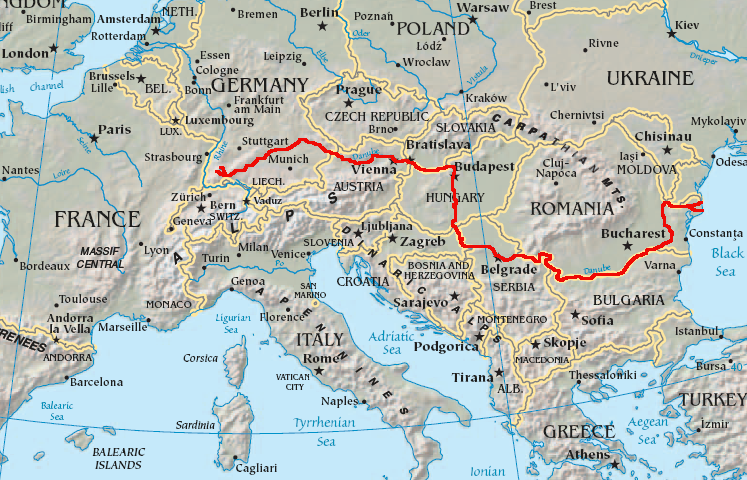
The Danube is our playground :

File:Danubemap.png

What is the most interesting perhaps, is  the transition from a freshwater to a salty environment :

File:WOA05 sea-surf SAL AYool.png

and this is life on the water : the biomass on the sea :

http://nordpil.com/static/images/ocean_productivity_full.png

24/11/2009

Who will feed your Fish when you are out?

My wife frequently asks me to bring pet animal at home (i.e.: Fish) but I have some (maintenance) problem, especially who will feed my fish when we are out?
Now she got an answer to my dilemma - A Robotic Fish Feeder is the answer. (Designer: Ran Xiangfei) FIFER robot (Fish Feeder) does feeding job to Fish. Fish finally get the attention they deserve. One less item you need to worry about on your day to day tasks. (Related article: End of one more boring task - inflate your car tire)
Fish Feeder
Fish feeder not only feeds but feeds the fish in correct amount. First it calculates the density of Fish in water and dispenses the right amount of food at the pre-set times. If you are growing fish in fish pond then Robot moves to another area (based on pre-set path setting) of the pond calculate the fish density and dispenses. There is also a plant on top which grows to represent the health of your fish.
Fish Feeder
See more pictures here
Via [GearFuse.com and Designer: Ran Xiangfei Gerard Rallo]
Via [http://www.technologymadness.com/?p=415]

23/11/2009

Condenser

< Peter Von Bartheld >

Salty water can be condensed to get fresh water. Sea water is being pumped up into the lower compartment in small quantities by a simple pump powered by the waves. The black isolated plate heats up the water through solar energy, the water vaporises, moves trough holes into the second compartment were it condenses against the transparent outer layer. It drips down and is being collected at the bottom of the second compartment.

condensor

An unusual way of desalting water

lavements-deau-saumatre

According to Xavier Maniguet, in his "Survive" book, and relating the story of Lynn Robertson, famous shipwrecker, it is possible to desalt water with the human rectal mucous membranes...

It is the fonction of the colic mucous to absorb water in feces.

you just have to put salted water in your ass...

this method has no real scientific experimentation, but it should be.

any volunteer?

Martin Gautron

15/11/2009

Ocean farmers

As a matter fo fact we want to become "ocean farmers". Fish farms are super interesting structures to look at.
http://wwz.ifremer.fr/aquaculture/filieres
We want to grow as many things as possible, especially stuff we can eat.
We need to learn so many things, meet so many people...
Sea farming can look like this (source Kames sea farming products) :


OH! Made with tyres! Of course! Where shall we put all these tyres?

Peter von Bartheld sais:

There are quite a few companies constructing very fancy fish pens which can with stand violent storms and attacks from pretators. I would certainly be worth it to drag your fresh supply of fish along, right? One of those companies is Ocean Spar.oceanspar_company_english

Appropriate technology


Appropriate technology (AT) is technology that is designed with special consideration to the environmental, ethical, cultural, social and economical aspects of the community it is intended for.[neutrality disputed] With these goals in mind, AT typically requires fewer resources, is easier to maintain, has a lower overall cost and less of an impact on the environment compared to industrialized practices.[1][neutrality disputed]

The term is usually used to describe simple technologies suitable for use in developing nations or less developed rural areas of industrialized nations.[1] This form of appropriate technology usually prefers labor-intensive solutions over capital-intensive ones, although labor-saving devices are also used where this does not mean high capital or maintenance cost. In practice, appropriate technology is often something described as using the simplest level of technology that can effectively achieve the intended purpose in a particular location. In industrialized nations, the term appropriate technology takes a different meaning, often referring to engineering that takes special consideration of its social and environmental ramifications.[2]

Scenarii of usage for nomadic ecosystem modules

ideal_world_medium

by Nadine Freischlad

Letting our minds run wild with the possibilities of the modular floating system we came up with this ideal-world-scenario for its use and application.
In the setup, we have considered the following needs and applied them to the modular system.

Growing
- Land garden indoor (regulated temp/water/nutrients // regular veggies)
- Land garden outdoor (exposed to salt/temp // halophytes)
> needs to be accessible, close to storage facilities
- Salt Water gardens (algae)
- Salt Water fisheries (fish)
> need to be accesible, larger space, free circulation of water

Water refinement
- water stills (large surface/heat)
- water catch (large surface/rain)
> water stills need to be accessible, water catch needs to be very flexible for fast setup and cover max. surface

Process and store
- water store (filled from stills and rain water catch)
- food store (cool/dry, abover water and below water)
- food drying (exposed to wind/hot/dry)

waste
- compost/biomass/ biogas production unit
- fed from organic waste

Labels

design (116) structure (81) architecture (69) Energy_Animal (53) Nomadic_Ecosystem (46) art (43) Instinctive_Architecture (42) free energy (36) 3d (34) graphic (33) Swarm_Operating_System (32) Ocean (31) presentation (31) maps (28) Ocean_Cookbook (23) biology (23) communication (23) navigation (21) Open_Politics (20) strategy (20) water (20) boat (19) computing (19) survival (19) Life_Cable (18) construction (18) farm (18) safety (17) algae (16) posting (16) materials (15) wave (15) ecology (14) politics (14) technology (14) london (13) physics (13) agriculture (12) battery (12) Openet (11) food (11) animal (10) craft (10) culture (10) fishes (10) mechanics (10) Open_Sailing (9) chemistry (9) media (9) open-source (9) plastic (9) theory (9) video (9) TED (8) behaviour (8) competition (8) engine (8) exploration (8) performance (8) technique (8) philosophy (7) sociology (7) Open_Games (6) biomass (6) inflatable (6) seasteading (6) wind (6) OS_Polar (5) USA (5) animation (5) electronics (5) legal (5) medecine (5) pollution (5) berlin (4) data (4) ethics (4) money (4) psychology (4) reportage (4) service (4) statistics (4) sun (4) Brazil (3) Cesar Harada (3) Observation (3) Protei (3) TEDxOilSpill (3) catastrophy (3) engineering (3) garbage (3) google (3) history (3) identity (3) kite (3) mapping (3) metareciclagem (3) oil spill (3) recovery (3) research (3) sailing (3) science (3) space (3) spain (3) sustainable (3) tradition (3) AI (2) Argo (2) CAD (2) Environment (2) Exploration. Robots Swarm .Sea (2) Jellyfish (2) LABB (2) Louisiana (2) NL (2) NOLA (2) Object Oriented Politics (2) Open Hardware (2) Pachube (2) Pacific (2) Plastiki (2) TEDxBoston (2) UK (2) World Environment Organization (2) ants (2) austria (2) autonomy (2) com (2) coral (2) des (2) endangered species (2) fiction (2) geography (2) gulf of mexico (2) model (2) news (2) open architecture initiative (2) open innovation (2) organisation (2) plant (2) post (2) preservation (2) product (2) protection (2) rca (2) reserve (2) robots (2) simulation (2) skeleton (2) social (2) symbol (2) text (2) treatment (2) waste (2) Adhocracy (1) Aerial (1) Articles (1) BBC (1) BLDGBLOG (1) BP (1) BP oil spill (1) Balloon (1) Bangladesh (1) Barataria (1) Barcelona (1) Bay (1) Black (1) Boston (1) CCCB (1) Colet Castano (1) Crafts (1) Decentralize (1) Distributed System (1) Documentary (1) Dream (1) Environmental Concerns (1) Europe (1) Flight (1) Germany (1) Grassrootsmapping (1) Grenelle (1) Grier (1) Helium (1) Hydrogenase. Architecture (1) Institute (1) JP (1) Jimmy (1) John (1) Kaku (1) Kiel (1) Kim (1) Korea (1) LA Bucket Brigade (1) Luxembourg (1) NOAA (1) New Orleans (1) New York (1) Nina (1) Noah (1) Norway (1) Oceanography (1) Oil (1) Photography (1) Plane (1) Plater (1) Pope (1) Pragmatism (1) Resistance (1) Robot (1) Rotterdam (1) Ruairi Glynn (1) Sketchup (1) Snyder (1) Sphere (1) Spill (1) Stitching (1) TEDxMidAtlantic (1) Talk (1) Tilling (1) Tribe (1) Trondheim (1) Tumas (1) Uros (1) V2_ (1) Vision (1) Washington DC (1) Werner (1) Wood (1) Woods Hole (1) YouTube (1) Zygmunt (1) accident (1) admin (1) alternative (1) anaconda (1) appropedia (1) aquanaut (1) architecture for humanity (1) ars (1) autarcy (1) autark (1) awareness (1) ball (1) baltic (1) belgium (1) biodiversity (1) biofuel (1) brainstorming (1) broadcast (1) buoy (1) canada (1) carbon (1) cardboard (1) carton (1) cesar (1) clear climate code (1) climate (1) cold fusion (1) collaboration (1) concepts (1) cruise (1) current (1) deadly (1) deep (1) departure (1) developing (1) disposal (1) dispute (1) diving (1) diy (1) drone (1) eartquake (1) edgcm (1) events (1) excellent (1) experimental (1) exploring (1) farming (1) farms (1) file (1) fire (1) flickr (1) floating (1) florida (1) fluid dynamics (1) forum (1) france (1) future (1) futurology (1) generator (1) geodesic (1) geoengineering (1) graduate (1) green (1) grey (1) habitation (1) halley vi research station (1) harada (1) hybrid (1) icon (1) ideas (1) ideology (1) independent (1) indian (1) indonesia (1) industrial (1) inhabitat (1) innovation (1) instructables (1) insurance (1) japan (1) kelp (1) ledger (1) lloyds (1) louisina (1) machine (1) magnet (1) maths (1) message (1) messaging (1) metal (1) mimicry (1) mission blue (1) mobile (1) modular (1) monitoring (1) nasa (1) natural (1) naviagation (1) nice (1) nucelar (1) open source (1) opportunity (1) pachbox (1) park (1) participation (1) patch (1) pelamis (1) people (1) photo (1) pirate radio (1) planning (1) pods (1) polar (1) pop (1) popular (1) power (1) pr (1) press (1) raft (1) reef (1) render (1) renewable (1) repost (1) rogue (1) sewage (1) ship (1) ships (1) shit (1) software (1) sound (1) speculation (1) studies (1) study (1) super-collider (1) sylvia earle (1) system (1) temporary (1) toxic (1) tv (1) typography (1) underwater (1) utopia (1) weather (1) web (1) whales (1) wired (1) workshops (1) young (1) youth (1)

This blog is embeded inside the official Open_Sailing website, visit us here : http://opensailing.net

Open_Sailors