The survival of human life depends on the restoration of the Oceans.
Showing posts with label survival. Show all posts
Showing posts with label survival. Show all posts
23/05/2010

26/03/2010
A survival guide to Geo Engineering.
Very interesting points by Jamais Cascio on http://www.openthefuture.com

A Survival Guide to Geoengineering, my essay for Momentum, the journal of the University of Minnesota's Institute on the Environment, is now available online and via PDF. It's an exploration of what would be necessary to reduce the risks associated with geoengineering, if (or, sadly, when) it gets deployed. This essay served as the basis of the talk I gave at the State of Green Business Forum last month.
The first part of the essay is a recap of the main issues around geoengineering -- the kinds of proposals out there, the uncertainties involved, and the political dilemmas. But the real focus is the list of five key steps that I believe to be mandatory to steer us away from the worst potential results of geoengineering:
Transparency
Ongoing international advisory group
A bottom-up "Ecoscientists without Borders"
Clear mechanisms for resolving disputes
Ban (with teeth) on non-state projects
Interestingly, when I gave the talk in February going over these ideas, the last is the one that I got the most push-back on. I suspect that, once real mechanisms for monitoring and managing global climate systems are in place, non-state projects could be useful and warranted. For now, however, it seems clear that non-state groups acting independently are more likely to lead to inter-state disputes than any persistent moderation of temperatures or carbon.
23/11/2009
Open_Sailing prototype 2 Paris
Learning from the first experiment, we wanted to optimize the design of the Open_Sailing_01, this is prototype Paris nº 2.
Download quicktime (31mb) | Vimeo | Youtube | Dailymotion | Sevenload
So according to the prototype Paris nº 1 and its defects, we have changed :
- enhance capability of self-righting (more floatation on top on every side)
- reinforce overall structure with metal mesh rebar
- Addition of the flexible ballast (inspired by Givens invention)
- make the 3 hulls deeper and slightly curved to dive in the waves more smoothly.
- have 2 anchoring points for 2 kites attached to the main frame front
- have 2 lateral openings on each side for fishing and rowing (alternative emergency propulsion)
- main openings to have an doorstep higher to avoid too much water entering in at all times.
Self-righting, insubmersible boats
The design of the Open_Sailing_01 has been influenced by the Givens Inflatable liferaft.
Download the video ( .flv flash 14 mb | .mp4 quicktime 40 mb)

You can download here the .pdf of the Givens US-Patent of James A. Givens 1988.

Download the pdf the self-righting boat, Patent of Derek Wright 1991

And lastly, the large inflatable life raft with a central pilar to hold the roof, pdf patent of Baughman 1989.

So this is our design, Open_Sailing_01, inspired by these inflatable liferaft technologies. We try to combine these technologies in something simple and efficient.
Download the video ( .flv flash 14 mb | .mp4 quicktime 40 mb)
You can download here the .pdf of the Givens US-Patent of James A. Givens 1988.
Download the pdf the self-righting boat, Patent of Derek Wright 1991
And lastly, the large inflatable life raft with a central pilar to hold the roof, pdf patent of Baughman 1989.
So this is our design, Open_Sailing_01, inspired by these inflatable liferaft technologies. We try to combine these technologies in something simple and efficient.
Open_Sailing_01 skin proposal

These are the walls on Open_Sailing_01, 20 cm thick of floatability, under pressure for rigity with ø10 steel staples.
OUT
-polypropylene heavy duty fabric (http://www.loxam.be/data/Image/01-24-02-0_Sac-gravats.jpg)
- 10ø steel mesh, rebar (http://www.geocities.com/burao2003/ReSteel2.jpg)
- fish nets holding bottles (http://asnailpace.com/blog/wp-content/uploads/2007/11/richie-sowa-spiral-island-new.jpg)
- 10ø steel mesh, rebar again
- space blanket (http://listverse.com/wp-content/uploads/2008/05/bl001-1.jpg)
- polypropylene heavyduty fabric
IN
The thickness should ensure structural fonction, no need for huge metal beams -> exo-skeleton!
This is a very cheap construction material, all materials are remaining separate which means, it is easy to recycle each component separately, or recycle the materials in the next iteration.
Imagine the inner skin to a bit like this (in white):

Hehehe! Old english! So now, it is comfortable, you want to join? He!
Deux pêcheurs birmans rescapés après 25 jours dans la mer : Le Point
Deux pêcheurs birmans ont survécu pendant près d'un mois dans des eaux infestées de requins en flottant dans un grand réfrigérateur après le naufrage de leur bateau, ont déclaré leurs sauveteurs.


Les deux hommes, âgés d'une vingtaine d'années, étaient employés avec 18 autres marins sur un bateau de pêche thaïlandais qui a chaviré le 23 décembre au large de la côte nord de l'Australie, a précisé Tracey Jiggins, porte-parole de l'autorité australienne de sûreté maritime.
"Ils n'avaient pas d'équipement de survie, pas de balise, pas de moyen de communiquer et ils ont dérivé pendant 25 jours", a-t-elle ajouté. Le réfrigérateur, utilisé par les bateaux de pêche, avait la "taille d'un bureau".
"C'est stupéfiant qu'ils aient été repérés dans une telle masse d'eau." C'est un avion de la garde-côte australienne qui a vu les deux hommes samedi. Ils ont été hélitreuillés et hospitalisés sur l'île de Thursday Island.
"Dès qu'ils sont montés, ils ont bu chacun deux litres d'eau en quelques secondes", a raconté le pilote d'hélicoptère à la télévision.
Les deux rescapés étaient affamés et déshydratés mais leur état n'inspire pas d'inquiétude et ils devraient sortir rapidement de l'hôpital.
Ils seront alors interrogés par les autorités qui se demandent comment ils ont survécu et ce qu'ils ont mangé et bu pendant près d'un mois.
Tracey Jiggins a déclaré que les autres marins à bord avaient certainement péri et qu'aucune recherche ne serait entreprise.
"Ce qu'ils nous ont dit, c'est qu'ils ont vu les autres membres d'équipage dans l'eau, sans gilet de sauvetage. Nous pensons qu'il est impossible de survivre dans l'eau pendant 25 jours."
An unusual way of desalting water

According to Xavier Maniguet, in his "Survive" book, and relating the story of Lynn Robertson, famous shipwrecker, it is possible to desalt water with the human rectal mucous membranes...
It is the fonction of the colic mucous to absorb water in feces.
you just have to put salted water in your ass...
this method has no real scientific experimentation, but it should be.
any volunteer?
Martin Gautron
15/11/2009
Thor Heyerdahl, Kon-Tiki
The Kon-Tiki Expedition Across the Pacific Ocean by balsa wood raft (1947)
III
In 1947 the balsa wood raft Kon-Tiki was launched. It was named after a legendary seafaring sun-king common to both the old Inca kingdom and the islands of Polynesia. The raft hoisted sail outside the port of Callào in Peru with 6 men onboard. With Thor were 4 other Norwegians, Herman Watzinger, Knut Haugland, Torstein Raaby and Erik Hesselberg, and a Swede, Bengt Danielsson.
During the course of 101 days the raft sailed approx. 8,000 km over the open Pacific Ocean and landed on the Raroia Atoll in the Tuamotu Archipelago. The voyage put the existing view of the balsa wood raft to shame and proved that Polynesia was well within the range of prehistoric South American seafarers. Some scientists refused to believe that the incredible voyage had actually taken place until a documentary film about the expedition was released. The film won an Oscar for best documentary. Thor’s popular book The Kon-Tiki Expedition was later translated into 70 languages.
The Ra Expeditions
Across the Atlantic Ocean by papyrus boat (1969-1970)

During the expedition to Easter Island in 1955-1956, Heyerdahl became interested in reed boats and their seagoing properties. The archaeologists’ excavations had uncovered pictures of large reed boats with masts and sails engraved in the buried statues and painted on flagstones in prehistoric houses. It soon became clear to Heyerdahl that not only balsa wood rafts, but also reed boats, with pre-Incan sailors could have carried the earliest South Americans out over the open Pacific Ocean.
Other researchers had pointed out the obvious similarity between the old reed boats from Mexico and Peru, and the papyrus boats from the earliest civilisations in the Mediterranean region. These anthropologists, who were known as ‘diffusionists’, had listed reed boats as one of the many cultural parallels between the great civilisations of pre-Columbian times on both sides of the Atlantic Ocean. They used the reed boat as an argument in the discussion about transoceanic-contact prior to the arrival of the Europeans. Their opponents meanwhile, the ‘isolationists’, pointed to the accepted view that reed boats could not cross oceans. They believed that cultural parallels could be ascribed to independent development.

The Papyrus Institute in Egypt had determined that papyrus-reed rotted and dissolved after two weeks in a water tank.
Despite this, Heyerdahl was convinced that ship builders in the time of the pharaohs would never have used this reed to built enormous seagoing vessels if they had only stayed afloat on the ocean for two weeks. He decided to build a reed boat and cross the Atlantic Ocean with it to see whether or not his assumption was correct.
Ra was launched in the spring of 1969 in the old Phoenician seaport of Safi, Morocco. In order to show that people from different nations could work together even under pressure and difficult circumstances, Heyerdahl picked a crew of 7 men from 7 nations and sailed under the flag of the UN. Ra sailed west with the trade winds and the Northern Equatorial Stream. The reed bundles proved to be incredibly buoyant. Despite broken steering oars and poor weather, Ra had sailed 5,000 km in 8 weeks before the loss of bundles on the starboard side made Heyerdahl call off the experiment, just one week before they would have reached Barbados, in the West Indies.

Ten months later Heyerdahl launched a new papyrus boat – Ra II – from the same Moroccan seaport.
This time he had brought four Aymara Indians over from Lake Titicaca in South America to build the vessel.
The Aymara still built reed boats on the shores of this stormy mountain lake in the Andes, 4,000 m above sea level, using the same methods used in ancient Mesopotamia and Egypt.
The entire crew from the first Ra voyage wanted to repeat the experiment and, with the addition of a representative from yet another nation, Heyerdahl hoisted the sail on Ra II. This boat was only 12 m long, but was structurally far stronger than Ra.
Ra II crossed the Atlantic Ocean and sailed the approx. 6,100 km from Safi in Morocco to Barbados in the West Indies in 57 days. Since this time the experiment had been successful, anthropologists across the entire world had to forget the old dogma that papyrus boats could not have brought cultural impulses from North Africa to Central America in pre-Columbian times.

During the Ra voyage, Heyerdahl wrote his first letter to the UN about the fact that the oceans of the world were becoming polluted. He was asked by the Secretary-General of the UN to make daily pollution observations during the Ra II voyage. Hardened clumps of tar were collected on 43 days of the 57-day voyage. In this way the voyage helped to raise awareness of the need to stop the pollution of the world’s seas.
Heyerdahl presented reports about the pollution problem to the UN’s first conference on oceanic law, committees of the USA’s senate and congress, the USSR’s scientific academy and in a long series of campaigns for the conservation of the world’s seas.
Following the expedition a book was published about the Ra expeditions, as well as a documentary, which was nominated for an Oscar.
The Tigris Expedition
Across the Indian Ocean by reed boat (1978)
In ancient times, reed boats were used as vessels in the Mediterranean from the Middle East to the Atlantic coast.
Thor Heyerdahl now became interested in the highly controversial question concerning whether or not there had originally been contact between the three ‘mother’ civilisations in Mesopotamia, Egypt, and the Indus Valley.
In all of these three culturally related regions prehistoric artists had left behind illustrations of the same kind of reed boat on which he himself had crossed the Atlantic Ocean.

Heyerdahl had learnt from the Marsh Arabs in the former Sumerian region of Iraq that the reeds would only retain their buoyancy properties if they were cut in the month of August. Heyerdahl decided to try this, and at the same time experiment with the navigation of a reed ship. His previous sea voyages had been purely drifting voyages.
In 1977, Heyerdahl built his largest reed vessel, 18 m long, where the Euphrates and Tigris rivers meet in the former Mesopotamia, now Iraq. The vessel was named Tigris.
Tigris was constructed of reed bundles lashed together by marsh Arabs under the leadership of the same South American Indians who had built Ra II. Once again Heyerdahl sailed under the flag of the UN, with an international crew of 11 men, of whom 3 were earlier companions from the two Ra voyages: Norman Baker (USA), Yuri Senkevich (USSR), and Carlo Mauri (Italy).
Tigris sailed 6,800 km. First they sailed down Shatt-el-Arab in Iraq to the Persian Gulf and out into the Indian Ocean. Thereafter the voyage took them, via Muscat in Oman, to the Indus Valley in Pakistan, before finally le
aving Asia and sailing across the Indian Ocean to Africa.

The 5 month long journey ended in Djibouti at the mouth of the Red Sea. Surrounded by wars on all sides, the expedition’s members decided in April 1978 to burn the vessel.
At the same time the expedition’s members also sent a unanimous appeal to the UN asking it to stop arms deliveries to developing countries in the region of the world where the foundations of our own civilisation were laid.
Tigris had, unlike Kon-Tiki and the two Ra boats, sailed to predetermined harbours independent of the wind and current conditions, and lay high enough in the water to be consumed by flames.

.........
III
In 1947 the balsa wood raft Kon-Tiki was launched. It was named after a legendary seafaring sun-king common to both the old Inca kingdom and the islands of Polynesia. The raft hoisted sail outside the port of Callào in Peru with 6 men onboard. With Thor were 4 other Norwegians, Herman Watzinger, Knut Haugland, Torstein Raaby and Erik Hesselberg, and a Swede, Bengt Danielsson.
During the course of 101 days the raft sailed approx. 8,000 km over the open Pacific Ocean and landed on the Raroia Atoll in the Tuamotu Archipelago. The voyage put the existing view of the balsa wood raft to shame and proved that Polynesia was well within the range of prehistoric South American seafarers. Some scientists refused to believe that the incredible voyage had actually taken place until a documentary film about the expedition was released. The film won an Oscar for best documentary. Thor’s popular book The Kon-Tiki Expedition was later translated into 70 languages.
The Ra Expeditions
Across the Atlantic Ocean by papyrus boat (1969-1970)
During the expedition to Easter Island in 1955-1956, Heyerdahl became interested in reed boats and their seagoing properties. The archaeologists’ excavations had uncovered pictures of large reed boats with masts and sails engraved in the buried statues and painted on flagstones in prehistoric houses. It soon became clear to Heyerdahl that not only balsa wood rafts, but also reed boats, with pre-Incan sailors could have carried the earliest South Americans out over the open Pacific Ocean.
Other researchers had pointed out the obvious similarity between the old reed boats from Mexico and Peru, and the papyrus boats from the earliest civilisations in the Mediterranean region. These anthropologists, who were known as ‘diffusionists’, had listed reed boats as one of the many cultural parallels between the great civilisations of pre-Columbian times on both sides of the Atlantic Ocean. They used the reed boat as an argument in the discussion about transoceanic-contact prior to the arrival of the Europeans. Their opponents meanwhile, the ‘isolationists’, pointed to the accepted view that reed boats could not cross oceans. They believed that cultural parallels could be ascribed to independent development.
The Papyrus Institute in Egypt had determined that papyrus-reed rotted and dissolved after two weeks in a water tank.
Despite this, Heyerdahl was convinced that ship builders in the time of the pharaohs would never have used this reed to built enormous seagoing vessels if they had only stayed afloat on the ocean for two weeks. He decided to build a reed boat and cross the Atlantic Ocean with it to see whether or not his assumption was correct.
Ra was launched in the spring of 1969 in the old Phoenician seaport of Safi, Morocco. In order to show that people from different nations could work together even under pressure and difficult circumstances, Heyerdahl picked a crew of 7 men from 7 nations and sailed under the flag of the UN. Ra sailed west with the trade winds and the Northern Equatorial Stream. The reed bundles proved to be incredibly buoyant. Despite broken steering oars and poor weather, Ra had sailed 5,000 km in 8 weeks before the loss of bundles on the starboard side made Heyerdahl call off the experiment, just one week before they would have reached Barbados, in the West Indies.
Ten months later Heyerdahl launched a new papyrus boat – Ra II – from the same Moroccan seaport.
This time he had brought four Aymara Indians over from Lake Titicaca in South America to build the vessel.
The Aymara still built reed boats on the shores of this stormy mountain lake in the Andes, 4,000 m above sea level, using the same methods used in ancient Mesopotamia and Egypt.
The entire crew from the first Ra voyage wanted to repeat the experiment and, with the addition of a representative from yet another nation, Heyerdahl hoisted the sail on Ra II. This boat was only 12 m long, but was structurally far stronger than Ra.
Ra II crossed the Atlantic Ocean and sailed the approx. 6,100 km from Safi in Morocco to Barbados in the West Indies in 57 days. Since this time the experiment had been successful, anthropologists across the entire world had to forget the old dogma that papyrus boats could not have brought cultural impulses from North Africa to Central America in pre-Columbian times.
During the Ra voyage, Heyerdahl wrote his first letter to the UN about the fact that the oceans of the world were becoming polluted. He was asked by the Secretary-General of the UN to make daily pollution observations during the Ra II voyage. Hardened clumps of tar were collected on 43 days of the 57-day voyage. In this way the voyage helped to raise awareness of the need to stop the pollution of the world’s seas.
Heyerdahl presented reports about the pollution problem to the UN’s first conference on oceanic law, committees of the USA’s senate and congress, the USSR’s scientific academy and in a long series of campaigns for the conservation of the world’s seas.
Following the expedition a book was published about the Ra expeditions, as well as a documentary, which was nominated for an Oscar.
The Tigris Expedition
Across the Indian Ocean by reed boat (1978)
In ancient times, reed boats were used as vessels in the Mediterranean from the Middle East to the Atlantic coast.
Thor Heyerdahl now became interested in the highly controversial question concerning whether or not there had originally been contact between the three ‘mother’ civilisations in Mesopotamia, Egypt, and the Indus Valley.
In all of these three culturally related regions prehistoric artists had left behind illustrations of the same kind of reed boat on which he himself had crossed the Atlantic Ocean.
Heyerdahl had learnt from the Marsh Arabs in the former Sumerian region of Iraq that the reeds would only retain their buoyancy properties if they were cut in the month of August. Heyerdahl decided to try this, and at the same time experiment with the navigation of a reed ship. His previous sea voyages had been purely drifting voyages.
In 1977, Heyerdahl built his largest reed vessel, 18 m long, where the Euphrates and Tigris rivers meet in the former Mesopotamia, now Iraq. The vessel was named Tigris.
Tigris was constructed of reed bundles lashed together by marsh Arabs under the leadership of the same South American Indians who had built Ra II. Once again Heyerdahl sailed under the flag of the UN, with an international crew of 11 men, of whom 3 were earlier companions from the two Ra voyages: Norman Baker (USA), Yuri Senkevich (USSR), and Carlo Mauri (Italy).
Tigris sailed 6,800 km. First they sailed down Shatt-el-Arab in Iraq to the Persian Gulf and out into the Indian Ocean. Thereafter the voyage took them, via Muscat in Oman, to the Indus Valley in Pakistan, before finally le
aving Asia and sailing across the Indian Ocean to Africa.
The 5 month long journey ended in Djibouti at the mouth of the Red Sea. Surrounded by wars on all sides, the expedition’s members decided in April 1978 to burn the vessel.
At the same time the expedition’s members also sent a unanimous appeal to the UN asking it to stop arms deliveries to developing countries in the region of the world where the foundations of our own civilisation were laid.
Tigris had, unlike Kon-Tiki and the two Ra boats, sailed to predetermined harbours independent of the wind and current conditions, and lay high enough in the water to be consumed by flames.
.........
volontary shipwrecker, Alain Bombard: "Naufragé volontaire"

Alain Bombard, french doctor, using a fish-squeezer to obtain freshwater in the laboratory of the oceanographic museum of Monaco. Preparation of a sea survival experience made in the 50's.
Scenarii of usage for nomadic ecosystem modules

by Nadine Freischlad
Letting our minds run wild with the possibilities of the modular floating system we came up with this ideal-world-scenario for its use and application.
In the setup, we have considered the following needs and applied them to the modular system.
Growing
- Land garden indoor (regulated temp/water/nutrients // regular veggies)
- Land garden outdoor (exposed to salt/temp // halophytes)
> needs to be accessible, close to storage facilities
- Salt Water gardens (algae)
- Salt Water fisheries (fish)
> need to be accesible, larger space, free circulation of water
Water refinement
- water stills (large surface/heat)
- water catch (large surface/rain)
> water stills need to be accessible, water catch needs to be very flexible for fast setup and cover max. surface
Process and store
- water store (filled from stills and rain water catch)
- food store (cool/dry, abover water and below water)
- food drying (exposed to wind/hot/dry)
waste
- compost/biomass/ biogas production unit
- fed from organic waste
14/11/2009
floating gardens

Floating garden par Benjamin Graindorge, systeme de filtration naturel pour aquarium


11/11/2009
Only balls will survive
Totally hilarious stuff; some people really love to inflate, this is the way they enjoy life:
Some people say "yes" and plan to survive the end of the world as we know it within balls, and this is serious :

SurvivaBalls save managers from abrupt climate change. An advanced new technology will keep corporate managers safe even when climate change makes life as we know it impossible.


"The SurvivaBall is designed to protect the corporate manager no matter what Mother Nature throws his or her way," said Fred Wolf, a Halliburton representative who spoke today at the Catastrophic Loss conference held at the Ritz-Carlton hotel in Amelia Island, Florida. "This technology is the only rational response to abrupt climate change," he said to an attentive and appreciative audience.
Halliburton has a bank of very funny serious projects here :
http://theyesmen.org/agribusiness/halliburton/about/history.html
But in 1975, a french architect, Gilles Ebersolt, made it happen !!!!


You absolutely need to see the video !!! A young man falls from the top of the Mt Blanc with the ball !!! Amazing.
So yes, inflatables are very good, security, light and fun. BOUNCE!
Some people say "yes" and plan to survive the end of the world as we know it within balls, and this is serious :
SurvivaBalls save managers from abrupt climate change. An advanced new technology will keep corporate managers safe even when climate change makes life as we know it impossible.


"The SurvivaBall is designed to protect the corporate manager no matter what Mother Nature throws his or her way," said Fred Wolf, a Halliburton representative who spoke today at the Catastrophic Loss conference held at the Ritz-Carlton hotel in Amelia Island, Florida. "This technology is the only rational response to abrupt climate change," he said to an attentive and appreciative audience.
Halliburton has a bank of very funny serious projects here :
http://theyesmen.org/agribusiness/halliburton/about/history.html
But in 1975, a french architect, Gilles Ebersolt, made it happen !!!!
You absolutely need to see the video !!! A young man falls from the top of the Mt Blanc with the ball !!! Amazing.
So yes, inflatables are very good, security, light and fun. BOUNCE!
Loic Dussud, Jean Marvaldi, IFREMER
I was lucky enough to meet Loic Dussud, Head of Mechanical Developments at the IFREMER in Brest, Bretagne France. His work consists in developping the instrumentation and exploration tools for ocean observation and analysis, involving managing 20 specialists in oceanography, biology, mechanics, electronics, computer sciences... His background is in ship engineering.
I think he is the best person we could think of to start with, he knows everything about what we are trying to achieve, it has more than 20 years of experience sending objects on the surface and at the bottom of the oceans for science missions.


Flickr set of photos of IFREMER Brest.

I presented him the general concept... He was very curious and patient.
He said, it looks like a sea farm (see aquaculture), with many floating modules.
It has a central shelter, looking like a submarine / flying saucer / fallout shelter with a weight at the bottom, a very smooth object with no flat face, to resist the 100t/m2 impact of 30m high waves.

(Comments on above drawing) The idea is that a flexible structure, allows to:
1. Sail, dragging behing the various objects constituting the food, water and energy "farm".
2. Static, with a good weather, deploying the units, offering more space for culture, more stability.
3. Protective / retracted when the situation is threatening : more compact not to be dislocated in the violence of wind and waves, more vertical with weight concentrated to insure vertical sustain.

I pointed out my interest in building structures with organic materials, ocean-available material :
- to provide a "natural" habitat for fauna and flora
- to have a ressource that grows, like the Uros people - building ships in locally growing reed, or papyrus boats, knowing that will be a lot of maintenance work.
- simply not to become a form of pollution ourselves!
He was a bit skeptic on the use of ocean materials.
I presented Loic Dussud some ideas of energy modules I had, mostly LOW-FI adaptation of larger exisiting renewable technologies...
Quickly he redirected me to his colleague Jean Marvaldi, Specialist of renewable energies at the IFREMER, amazing person too.

This energy system is based on a couple of physcial principles : the buoy, metronome, solenoid, spring.
 _
 _

I observed that the Pelamis power principle is exellent, but it is too expensive to implement and difficult to scale up and maintain. I was very inspired by the shake torch (video). I bought one for £0.75, shaking for a minutes provided a reasonnable LED to light for almost 48hours non-stop... promising.

So the "metronome solemoid" system I propose is made of simple buoys that continuously move on the surface of the ocean, it is possible to amplify the movement of a single buoy by placing the counterweight higher when there is not much waves, lower when there are big waves. The intermediary arms, which are where the solenoid system is, produces energy when the structure is moved by its environment. Each module can have several "male &/or "female" parts, so you would need an articulated structure or "sexualy complementary" nodes to produce energy with. This system would be quite cheap, not very powerfull, but interesting for a small living unit. Tom Hulbert (luckybite.co.uk) pointed out that we need to do tests and calculations to see if it has some competitive potential versus solar or windmill power, or we can think of how to combine...
We might be interested in tensegrity mecanisms to have minimal sustaining structures:
 _


The air pressure is very simple idea too : having the minimum of moving parts to reduce maintenance and fragility.
It is a tiny scale adaptation of the wave or tidal power station above : just transforming air mouvement into electricity through a turbine.

The ideas are :
- to divide the main air tube in many small tubes, each of them having their own pair of IN and OUT valves to harness even the smallest surface mouvements. The valves are made of a simple sandwich of 2 plastic plates holding a silicon (or maybe teflon) sheet with 3/4 - opened circles. Above the sandwich a layer of air circuit conveys air INPUTS and OUTPUTS to a central turbine, or for any type of work.
You can have many floating modules, or snap them into a platform, the bigger the platform, the more rigidity and more potential amplitude in wave oscillation -> energy produced.

So, I wonder if we may converge all these technologies into "hybrid energy animals", or, instead isolate the functions into modules that all feed into a central "mother" shelter?
The "energy animals" have been several times been preferred to modules : less connections, less cables = efficiency, economy, more robust.
For the implementation of the technology, Jean Marvaldi recommends to :
- test separately each technology and mesure the production of each component
- associate them and see if they cancel -or- amplify each other work...
Let's order the parts and try it up!
Loic Dussud introduced me to Yvon Legay of the Institute of marine Prevention in Lorient, and recommended me to contact prof. Paul D. Mitcheson, at the Imperial College London, researching in micro-power generators and their associated power electronics.
I think he is the best person we could think of to start with, he knows everything about what we are trying to achieve, it has more than 20 years of experience sending objects on the surface and at the bottom of the oceans for science missions.
Flickr set of photos of IFREMER Brest.
General concept
I presented him the general concept... He was very curious and patient.
He said, it looks like a sea farm (see aquaculture), with many floating modules.
It has a central shelter, looking like a submarine / flying saucer / fallout shelter with a weight at the bottom, a very smooth object with no flat face, to resist the 100t/m2 impact of 30m high waves.


In motion, static (farming), defensive.
(Comments on above drawing) The idea is that a flexible structure, allows to:
1. Sail, dragging behing the various objects constituting the food, water and energy "farm".
2. Static, with a good weather, deploying the units, offering more space for culture, more stability.
3. Protective / retracted when the situation is threatening : more compact not to be dislocated in the violence of wind and waves, more vertical with weight concentrated to insure vertical sustain.
Materials
I pointed out my interest in building structures with organic materials, ocean-available material :
- to provide a "natural" habitat for fauna and flora
- to have a ressource that grows, like the Uros people - building ships in locally growing reed, or papyrus boats, knowing that will be a lot of maintenance work.

- simply not to become a form of pollution ourselves!
He was a bit skeptic on the use of ocean materials.
I presented Loic Dussud some ideas of energy modules I had, mostly LOW-FI adaptation of larger exisiting renewable technologies...
Quickly he redirected me to his colleague Jean Marvaldi, Specialist of renewable energies at the IFREMER, amazing person too.
The metronome solenoid
This energy system is based on a couple of physcial principles : the buoy, metronome, solenoid, spring.
_ _I observed that the Pelamis power principle is exellent, but it is too expensive to implement and difficult to scale up and maintain. I was very inspired by the shake torch (video). I bought one for £0.75, shaking for a minutes provided a reasonnable LED to light for almost 48hours non-stop... promising.
So the "metronome solemoid" system I propose is made of simple buoys that continuously move on the surface of the ocean, it is possible to amplify the movement of a single buoy by placing the counterweight higher when there is not much waves, lower when there are big waves. The intermediary arms, which are where the solenoid system is, produces energy when the structure is moved by its environment. Each module can have several "male &/or "female" parts, so you would need an articulated structure or "sexualy complementary" nodes to produce energy with. This system would be quite cheap, not very powerfull, but interesting for a small living unit. Tom Hulbert (luckybite.co.uk) pointed out that we need to do tests and calculations to see if it has some competitive potential versus solar or windmill power, or we can think of how to combine...
We might be interested in tensegrity mecanisms to have minimal sustaining structures:
_ The air pressure module
The air pressure is very simple idea too : having the minimum of moving parts to reduce maintenance and fragility.
It is a tiny scale adaptation of the wave or tidal power station above : just transforming air mouvement into electricity through a turbine.
The ideas are :
- to divide the main air tube in many small tubes, each of them having their own pair of IN and OUT valves to harness even the smallest surface mouvements. The valves are made of a simple sandwich of 2 plastic plates holding a silicon (or maybe teflon) sheet with 3/4 - opened circles. Above the sandwich a layer of air circuit conveys air INPUTS and OUTPUTS to a central turbine, or for any type of work.
You can have many floating modules, or snap them into a platform, the bigger the platform, the more rigidity and more potential amplitude in wave oscillation -> energy produced.

It is a very simple idea : concentrate sun heat and dissipating it in the water, creating a micro climate to attract certain variety of molluscs, fishes.
I am not sure what species we are likely to attract, we need to study this in depth, test this. Apparently any floating object is quickly colonised.
 _

solar oven, heat disspiation, sea shell culture, micro-climate
Energy animals VS energy network
So, I wonder if we may converge all these technologies into "hybrid energy animals", or, instead isolate the functions into modules that all feed into a central "mother" shelter?
The "energy animals" have been several times been preferred to modules : less connections, less cables = efficiency, economy, more robust.
For the implementation of the technology, Jean Marvaldi recommends to :
- test separately each technology and mesure the production of each component
- associate them and see if they cancel -or- amplify each other work...
Let's order the parts and try it up!
Loic Dussud introduced me to Yvon Legay of the Institute of marine Prevention in Lorient, and recommended me to contact prof. Paul D. Mitcheson, at the Imperial College London, researching in micro-power generators and their associated power electronics.
Freak waves
If we decide to go on the oceans, our contraption must resist at least this:

OK? We can do that? Can we? Faith in DIY technology? Yeah? Ready to go? Have you ever stood on the deck during a storm?
Want to know more about freak waves?
See this exellent BBC document, download .flv : part 1 / part 2 / part 3 / part 4 / part 5.
Or on Youtube : part 1 / part 2 / part 3 / part 4 / part 5
Let's be positive about all this : boats might be too "solid", too stiff, not flexible enough to cope with rogue waves... Maybe something pre-broken/semi-flexible might offer better shelter. A 40 metre high freak wave will probably break the earth's strongest ship, but wouldn't brake a small piece of wood; or many small modules attached together... But it would be messy, that's for sure.
We need something a bit better than this:
| Location | Rogue waves happen on notorious coasts with complex current and wind patterns as giant waves reach the shores. Freak waves also happen in deep sea where the linear model of waves does not apply anymore, in the middle of the ocean. |
| Strength | A classical 3m wave, hits a ship with 1.5t/m2 A typical storm wave 12m wave, hits a ships with 6t/m2 A rogue wave, hits a ship with 100t/m2 |
| Ship weak momentum | The ship is likely to be damaged when paralel to the wave pattern. A rogue sea does not have pattern, the energy of one wave is transmitted to another, unpredictable. |
The pelagic ecosystem
[caption id="attachment_436" align="alignright" width="450" caption="pelagic ecosystem"] [/caption]
biological activity in superficial waters (where there is enough light for photosynthesis) requiers nutritives salts.
[/caption]biological activity in superficial waters (where there is enough light for photosynthesis) requiers nutritives salts.
Waterproofing things
careless systems to protect water-sensible things, for big and small units. food, devices, organic, shelter, raft...

Low visibility superorganism
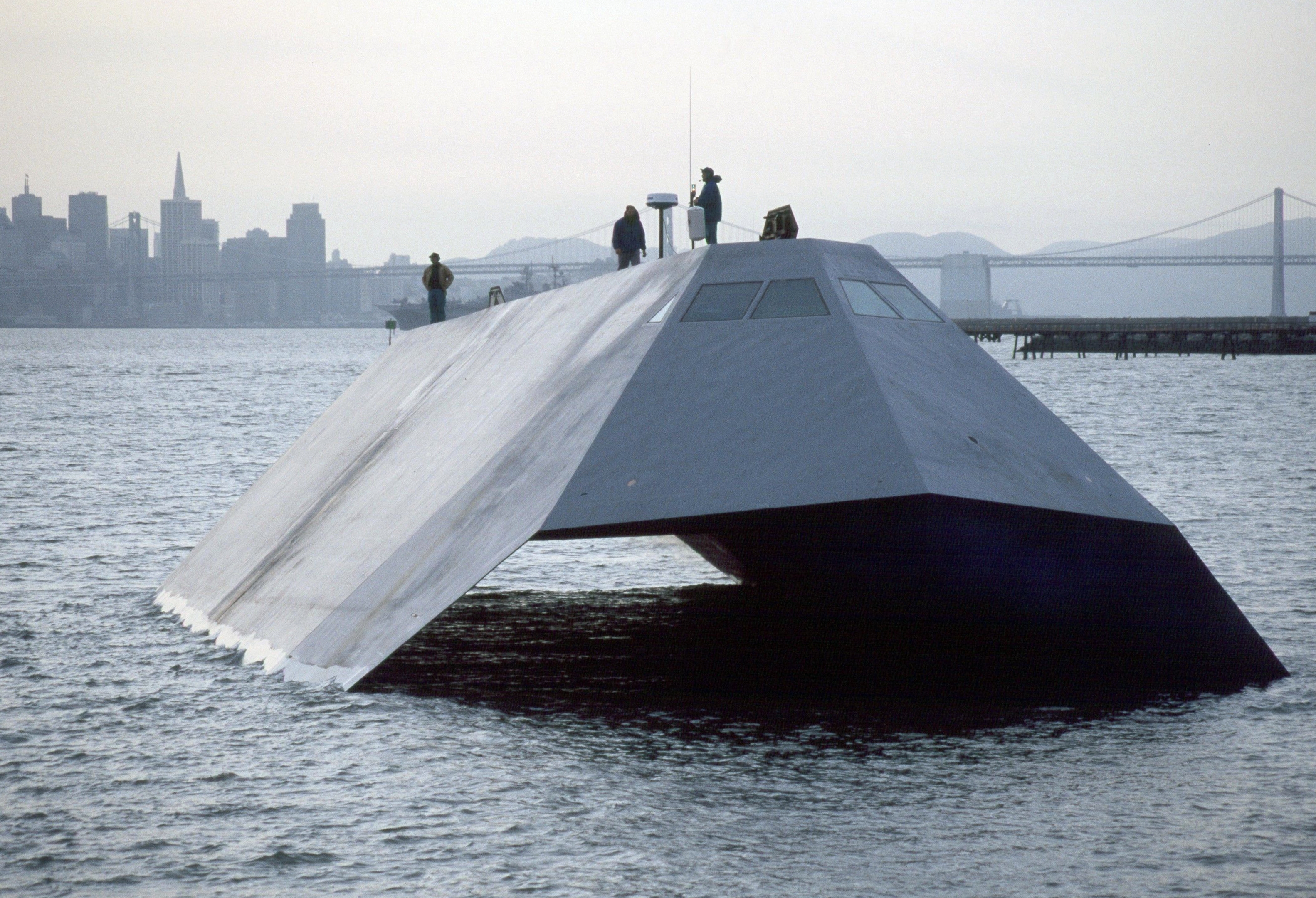
In this era of omni-surveillance, in the case of war, it's not so easy to remain undercover... Earth has become a military panopticon. How can one evade the authorities when everybody's freedom is claimed by the war-industry? Any individual can legitimately seek peace and escape conflict, but who amongst us does not belong to a nation? Is freedom the nature of not belonging? Or is it just to hide?


The electronic war has been raging for a very long time now. Every object is shown as a signature on the radar (see above). We must ensure our low observability with a Radar cross-section (RCS) reductions, vehicle shape, non-metallic airframe, radar absorbing material, acoustics, visibility, infrared and by reducing radio frequency (RF) emissions. Some of the most horrible inventions are inspiring for the best purposes : naval mines.


So here's the plan: instead of large units with an obvious signature, the most powerful way of hiding is to spread over small units.

Grid computing can happen in low visibility flock, herd or crowd formation, most pervasive and resilient to attacks :
We can "mechanize" our system, optimize our communication routes, ventilations, with the superorganism mind...
Please watch this video right to the end! We dont have to be big to be successful! And ants can even go over the water!!!! Look at the video below!
download the film .flv
Subscribe to:
Posts (Atom)