The survival of human life depends on the restoration of the Oceans.
Showing posts with label ecology. Show all posts
Showing posts with label ecology. Show all posts
23/05/2010

12/12/2009
Microcosmic Aquaculture
<Cesar Harada> 07-2-2009, straight from http://www.thefunctionality.com/blog/2009/7/2/microcosmic-aquaculture.html
[Editors' Note]: For this week's Friday Feature (posted early for the holiday), The Functionality is proud to host "Microcosmic Aquaculture," a speculative project by new design office Bittertang (Michael Loverich + Antonio Torres). The project recently won inclusion as part of [Bracket] magazine's feature on the future of farming, which explores "the modification of infrastructure, urbanisms, architectures, and landscapes toward a privileging of production." We love "Microcosmic Aquaculture" because it is both completely whimsical and completely convincing as a concept that could help increase marine biodiversity and replenish the world's overfished waters. Think of it as a biodegradable fish farm. Or a synthetic reef. Or an edible scuba museum. Or a pile of goo. Either way, it follows on the heels of an (unintentional) theme here at The Functionality over the past month: self-sustaining pods. From Mary Mattingly's water pods to Tomás Saraceno's floating blob, we're embracing the post-apocalyptic condition with gusto...

Gelatinous orb section and detail (courtesy bittertang)[Project statement]: We imagine a future where the vast and deep expanses of the ocean will teem with overabundant floating gelatinous reefs. Human's will be nourished physically and aesthetically by encouraging new floating worlds of reefs that sustain large quantities of harvestable wild and captive fish. Farming in this project is not viewed as a monoculture but the creation of a new ecology where wild and captive wildlife are 'raised' and their aesthetic potential is enjoyed by future divers and fishermen.


Cesar Harada>
[Editors' Note]: For this week's Friday Feature (posted early for the holiday), The Functionality is proud to host "Microcosmic Aquaculture," a speculative project by new design office Bittertang (Michael Loverich + Antonio Torres). The project recently won inclusion as part of [Bracket] magazine's feature on the future of farming, which explores "the modification of infrastructure, urbanisms, architectures, and landscapes toward a privileging of production." We love "Microcosmic Aquaculture" because it is both completely whimsical and completely convincing as a concept that could help increase marine biodiversity and replenish the world's overfished waters. Think of it as a biodegradable fish farm. Or a synthetic reef. Or an edible scuba museum. Or a pile of goo. Either way, it follows on the heels of an (unintentional) theme here at The Functionality over the past month: self-sustaining pods. From Mary Mattingly's water pods to Tomás Saraceno's floating blob, we're embracing the post-apocalyptic condition with gusto...

Gelatinous orb section and detail (courtesy bittertang)[Project statement]: We imagine a future where the vast and deep expanses of the ocean will teem with overabundant floating gelatinous reefs. Human's will be nourished physically and aesthetically by encouraging new floating worlds of reefs that sustain large quantities of harvestable wild and captive fish. Farming in this project is not viewed as a monoculture but the creation of a new ecology where wild and captive wildlife are 'raised' and their aesthetic potential is enjoyed by future divers and fishermen.
By encouraging the establishment of new ecosystems contemporary farmers as well as the public can reap sustenance and aesthetic benefits from environmental stewardship. The ocean is a vast resource that can accommodate more life when the proper conditions are met. These conditions are minimal and new ecologies can flourish around the simplest substrate. In the ocean it is not a matter of making space for life but by making objects that attract life. By combining manufactured products with plant material we will help to define a new bio-engineered aesthetic associated with qualitative benefits that disturbs romantic desires to return to nature and environmentalism. Our ominous orbs will provide the structure from which this aesthetic will arise.

Gelatinous Armada (courtesy bittertang)By encouraging the establishment of new ecosystems contemporary farmers as well as the public can reap sustenance and aesthetic benefits from environmental stewardship. The ocean is a vast resource that can accommodate more life when the proper conditions are met. These conditions are minimal and new ecologies can flourish around the simplest substrate. In the ocean it is not a matter of making space for life but by making objects that attract life. By combining manufactured products with plant material we will help to define a new bio-engineered aesthetic associated with qualitative benefits that disturbs romantic desires to return to nature and environmentalism. Our ominous orbs will provide the structure from which this aesthetic will arise.

Gelatinous orb lifecycle (courtesy bittertang)The advantage of this methodology is that farmed fish are grown within a larger reef system that manages and cleanses the waste and accumulation of typical farms. Large colonies of wild fish and shellfish will be attracted to the new substrate and can be harvested by a farm's owner of may be made available to the public.
These orbs will not only be productive and efficient farms, but the giant spherical reefs will become an aestheticized and living object to be explored by divers and recreational fisherman. Shape and gelatin mixture will produce different living conditions and various reef typologies, no two will be the same. Once set loose in the wild the orbs will literally take on a life of their own, following currents and attracting life wherever they go, possibly even mingling with other spheres of various ages, sharing their ecosystems and giving them away as they collapse and die. In the ocean this growth can happen very quickly within months of being born the orbs will be covered with living material becoming new edible living worlds.
From the fellows at bittertang.

Prototype Street Lamplamp absorber of CO2
Tyca reveals lamps that could absorb CO2.
source : http://www.frenchcleantech.com/

Pierre Calleja is the talented inventor of a process that is already revolutionary : the lamp absorber of CO2. Pierre Calleja runs the innovative company named Tyca based in Libourne (Gironde) and specializing in aquaculture and aquariology. At a time when everyone is looking for solutions to counteract the pollution in our cities (especially pollution), he had the idea to develop a CO2 canister lamp.
It is equipped with a tank containing micro algae to absorb CO2, to issue in exchange for oxygen, while continuing to grow in the light. The lamp of this patent was filed by Tyca that had already been contacted not only by private customers, but also by large groups such as Vinci. The city of Libourne in turn could be one of the first laboratories of real experience of the lamp. This lamp absorber of CO2 is not yet commercially available.Car parks, tunnels, stations and buildings could develop in the future streetlights Calleja.
A revolutionary solution for its efficiency, since a lighting of 1.5 m3 can capture 1 ton of CO2 per year. Multiplied by the number of fixtures that exist in a city as Paris and it is the Amazon forest that is planted on our streets!
source : http://www.frenchcleantech.com/
Pierre Calleja is the talented inventor of a process that is already revolutionary : the lamp absorber of CO2. Pierre Calleja runs the innovative company named Tyca based in Libourne (Gironde) and specializing in aquaculture and aquariology. At a time when everyone is looking for solutions to counteract the pollution in our cities (especially pollution), he had the idea to develop a CO2 canister lamp.
It is equipped with a tank containing micro algae to absorb CO2, to issue in exchange for oxygen, while continuing to grow in the light. The lamp of this patent was filed by Tyca that had already been contacted not only by private customers, but also by large groups such as Vinci. The city of Libourne in turn could be one of the first laboratories of real experience of the lamp. This lamp absorber of CO2 is not yet commercially available.Car parks, tunnels, stations and buildings could develop in the future streetlights Calleja.
A revolutionary solution for its efficiency, since a lighting of 1.5 m3 can capture 1 ton of CO2 per year. Multiplied by the number of fixtures that exist in a city as Paris and it is the Amazon forest that is planted on our streets!
Human ecologies
Adam Weymouth is joining the project, covering the human ecology aspect "field" sociology.

He's explainign even more in the freshly opened LAB 9. OPEN_POLITICS
Adam proposes to :
-
- Documenting the journey - exploring how communtiy builds along the journey, and how people's awareness of each other and of their environment alters. This could be used to emphasise the importance of open sailing in not just sustainable living through good applications of science and resources, but by building a strong community, which is, i believe, at the base of holistic practice.
-
- I wrote my Masters dissertation on looking at the links between protest walks and pilgrimage. Looking at the importance of the journey for people, at nomadic lifestyles, and of the spiritual importance of undertaking journeys. This project seems like a great way to extend my research.
-
- Developing some sort of outreach programme for the communities that we're passing through - not just in the cities but the villages also. Presumably you'll be passing a huge array of diverse communites - have you thought about how to talk to people about what you're up to/ get them involved and interested? I did an 80 mile walk across London last summer as part of the Climate Caravan - I found it was the best thing I've done to engage with people about issues we wanted to discuss, because we are coming to them, and getting involved in their communites. This seems to be the same, on an even bigger and more visual scale.
-
- Exploring ways for us to work as a community on board - modalities of socialising.
<Matthieu Sales>


Goals
to create a relationship between Open sailing and the float ecosystem
to make the open sailing autonomic
to Reduce ecologic impact of open sailing project

Our system is based on plankton primary production. In fact plankton (like all photosynthetic organisms) does convert solar energy to chemical energy which we can at first use for food. But there are some other ways to use this energy, like compost warming or bio-fuel.
The cycle of element is composed by several stages :
Plankton Laboratory : For stocking and for growing plankton stumps (plankton library) for inseminate Biomass production module (BPM) and bio-reactor. This library have to be as large as possible, and to represent several biomes and ecosystems. and in this way we could initiate a large scale of different ecosystems (hot or cold, ocean or river, etc..).
Culturs of plankton need two weeks to be mature.
This library could be extend with captures in environment.
Biomass Production Module (BPM) : well, all about it was already very good explained by benjamin in a other post.
Bioreactor :


 it may be probably difficult to realize this stage for the Danube prototype, but in fact with a bio reactor which is based on intensive plankton growing system, we should be able to produce O2 and oil. The oil can be used as a Bio fuel.
Compost :

it is a very critic and important stage in all ecosystem. It is the mineralization of wastes, giving CO2, nitrates, phosphate, in order to these elements could be assimilated by plants, It is very important to fertilized primary production (plants, alga, plankton, etc...). This mineralization is realized by a lot of organisms. because that compost is the longest stages, the turn over of elements depend of decomposition duration.
This cycle of element is very important too to reduce the ecologic impact of opensailing. If this system is efficient, we will create biomass by capture of CO2, and open sailing will become a carbon well (or be a exemple), and participate to reduce global warming.
Goals
to create a relationship between Open sailing and the float ecosystem
to make the open sailing autonomic
to Reduce ecologic impact of open sailing project
Our system is based on plankton primary production. In fact plankton (like all photosynthetic organisms) does convert solar energy to chemical energy which we can at first use for food. But there are some other ways to use this energy, like compost warming or bio-fuel.
The cycle of element is composed by several stages :
Plankton Laboratory : For stocking and for growing plankton stumps (plankton library) for inseminate Biomass production module (BPM) and bio-reactor. This library have to be as large as possible, and to represent several biomes and ecosystems. and in this way we could initiate a large scale of different ecosystems (hot or cold, ocean or river, etc..).
Culturs of plankton need two weeks to be mature.
This library could be extend with captures in environment.
Biomass Production Module (BPM) : well, all about it was already very good explained by benjamin in a other post.
Bioreactor :
it may be probably difficult to realize this stage for the Danube prototype, but in fact with a bio reactor which is based on intensive plankton growing system, we should be able to produce O2 and oil. The oil can be used as a Bio fuel.Compost :
it is a very critic and important stage in all ecosystem. It is the mineralization of wastes, giving CO2, nitrates, phosphate, in order to these elements could be assimilated by plants, It is very important to fertilized primary production (plants, alga, plankton, etc...). This mineralization is realized by a lot of organisms. because that compost is the longest stages, the turn over of elements depend of decomposition duration.
This cycle of element is very important too to reduce the ecologic impact of opensailing. If this system is efficient, we will create biomass by capture of CO2, and open sailing will become a carbon well (or be a exemple), and participate to reduce global warming.
New drawings for the Biomass Production Module

this is a new version of the biomass production module, more simple but more efficient , and more adapted to the danube

this structure is very flexible (wire netting), and only the surface is solid

culture of phytoplanktons, do it yourself (french)
Cultiver son phytoplancton à la maison
Bonjour!
Aujourd'hui, je vais faire un petit recap' sur la culture de phytoplancton, à faire chez soi. Si j'y arrive, c'est que c'est vraiment à la portée de tout le monde, étant une réelle adepte du moindre effort, un savant mélange de phobie du bricolage et un gros baobab dans la main...
Je souffre aussi de manque d'espace pour faire toutes ces cultures super pour les bacs... Je ne peux pas placer de refuge, j'ai pas de cuve annexe, bref, il faut batailler pour trouver 20cm² de libre autour du bac. Vous verrez que la culture de phyto prend une place très modérée, et c'est tant mieux!
Voici donc mon "installation":
file:///Users/yuewu/Desktop/recherches%20ecosysteme/9541598_fichiers/2572717146_5bc8a35f78.jpg
Je cultive deux algues, la Dunaliella (vert foncée) et la Nannochloropsis salina (vert/jaune).
Pourquoi multiplier les souches?
Les algues phytoplanctoniques ne sont pas toutes de la même taille, ni appréciées par les mêmes animaux. En cultiver plusieurs vous garantit un spectre de nourrissage plus large. J'utilise la Dunaliella pour ma culture de copépodes et j'en rajoute aussi dans le bac, de temps à autre. La Nannochloropsis, qui est plus grosse, me sert de base de nourrissage pour la microfaune du bac communautaire.
Les différentes souches se trouvent auprès d'autres "cultivateurs", ou de revendeurs spécialisés (vous ai je déjà parlé de Coral Verde? ;) Sinon, Marine Life ou Aqualiment vendent aussi quelques souches)
Pourquoi se donner la peine de cultiver les souches séparément?
Les algues font de la prédation entre elles, et si l'on mets plusieurs souches en culture dans le même contenant, au bout de quelque temps, il ne restera plus que l'espèce dominante, la plus grosse (en général Nannochloropsis) qui aura mangé les autres souches. Il faut donc, en culture, faire extrêmement attention à ne jamais mélanger les contenant, ni les tubes d'aération, entre souches, car sinon, on risque de perdre les espèces les plus faibles.
Pourquoi les vendeurs de phyto vendent des mélanges, alors?
Le mélange est possible, après la culture. Si l'on stabilise le mélange, en le réfrigérant,alors, le plancton, endormi, ne fera pas de prédation sur les algues plus petites, et les différentes algues "cohabiteront". Le mélange est donc exploitable pour les ajouts dans le bac, mais n'est pas cultivable. Il doit se garder impérativement au frigo.
Pourquoi ajouter du phytoplancton dans son bac communautaire?
Le bénéfice est certain, même si les animaux "visibles" du bac ne font pas de predation directe dessus. Vous me direz, pourquoi ajouter du phytoplancton alors que ni les coraux, ni les poissons ne le mangent? Le phyto est le socle, la première etape de la chaîne alimentaire, dans le bac. Avec un ajout régulier de phyto, le zooplancton proliférera, copépodes, etc... qui nourrira à sont tour des macroorganismes plus importants, comme des amphipodes, des mysis... Pour peu que l'on se donne la peine de doter le bac de zones de preservation de la microfaune (comme des buissons de caulerpes, où les organismes se reproduisent à l'abri...) ou mieux, d'un refuge connecté, c'est une source importante de nourriture vivante, fraiche et très bénéfique que vous apporterez à vos poissons et coraux.
Passons à la méthode de culture:
Matériel:
- une bouteille de coca 2 litres, bien lavée, par souche. D'autres contenants en plastique transparent et lisses sont possibles, bien sûr ;)
- Tuyau à air
- Pompe à air
- Engrais spécial (Grotech ou Coral verde)
- Eau de mer neuve
- Souche de phytoplancton

Il faut percer un trou sur le bouchon de la bouteille, en haut, pour laisser passer un tuyau à air.
Verser la souche de phyto dans la bouteille propre, remplir la bouteille d'eau de mer, ajoutez un bouchon d'engrais (quantité selon mode d'emploi du produit) et voilà, la culture est prête!

Fermez le bouchon, glisser le tuyau à air jusqu'au fond de la bouteille, et reliez le à la pompe a air de façon a ce que l'eau bulle bien.
Placez la bouteille devant une source lumineuse pendant environ 12h par jour. Chez moi, la culture se fait devant une petite fenêtre, mais vous pouvez installer un tube T8 devant les bouteilles. Comme ça, en plus, vous bénéficiez du même temps de lumière toute l'année, alors que chez moi, la culture se ralentit notablement pendant l'hiver, puisqu'on est alors loin de 12h de lumière par jour...
Attention à ne pas faire trop grimper la température de l'eau, même si les algues sont plutôt tolérantes.
Pendant deux semaines environ, laissez la culture mûrir. rajoutez une fois par semaine un bouchon d'engrais dans chaque bouteille, et ajustez le niveau d'eau avec de l'eau osmosée, pour pallier à l'évaporation.
Au bout de ces deux semaines, la culture est normalement prête à être récoltée. Attendez une semaine entre le dernier ajout d'engrais et la fin de la culture, pour laisser les algues absorber l'engrais au maximum, afin de ne pas risquer de verser ce genre de composant très phosphaté dans le bac communautaire!
En début de culture, l'aspect est vert clair, translucide. Sur la photo, notez la différence de couleur et d'opacité entre une bouteille en début de culture et une bouteille avec la production bien développée, de la même souche.
Lorsque la culture à l'aspect de la bouteille foncée, alors elle est prête à être stabilisée.

Il vous faut alors repiquer la culture, afin de préparer du nouveau plancton. Versez un 10e environ de la 1ere bouteille dans une seconde bouteille vide et propre, remplissez d'eau de mer neuve et d'un bouchon d'engrais. Replacez la bouteille en culture avec la pompe à air. C'est reparti!
La première bouteille prête peut être alors stabilisée et consommée. Perso je verse une bonne rasade tous les trois jours environ. Lorsque je fais l'ajout, je coupe l'ecumeur pour la nuit entière, afin de ne pas détruire de suite le phyto, et le laisser nourrir les organismes. Les deux litres de la bouteille me font les quinze jours d'espacement entre deux cultures.
La bouteille de consommation doit être maintenue au frigo, en la remuant si possible chaque jour pour ne pas laisser de dépôt de former au fond (algues mortes). Elle peut tenir au moins un mois.
voilà, j'espère que cela vous aura donné envie de vous lancer!!
Depuis que je fais ça, j'ai noté une importance vraiment accrue des organismes filtreurs dans le bac (notamment des éponges de toute les couleurs, des petites huitres, beaucoup de vers tubicoles...), et une présence importante de mysis et amphipodes, tout au long de l'année. Je ne me verrai pas arrêter!
Bonjour!
Aujourd'hui, je vais faire un petit recap' sur la culture de phytoplancton, à faire chez soi. Si j'y arrive, c'est que c'est vraiment à la portée de tout le monde, étant une réelle adepte du moindre effort, un savant mélange de phobie du bricolage et un gros baobab dans la main...
Je souffre aussi de manque d'espace pour faire toutes ces cultures super pour les bacs... Je ne peux pas placer de refuge, j'ai pas de cuve annexe, bref, il faut batailler pour trouver 20cm² de libre autour du bac. Vous verrez que la culture de phyto prend une place très modérée, et c'est tant mieux!
Voici donc mon "installation":
file:///Users/yuewu/Desktop/recherches%20ecosysteme/9541598_fichiers/2572717146_5bc8a35f78.jpg
Je cultive deux algues, la Dunaliella (vert foncée) et la Nannochloropsis salina (vert/jaune).
Pourquoi multiplier les souches?
Les algues phytoplanctoniques ne sont pas toutes de la même taille, ni appréciées par les mêmes animaux. En cultiver plusieurs vous garantit un spectre de nourrissage plus large. J'utilise la Dunaliella pour ma culture de copépodes et j'en rajoute aussi dans le bac, de temps à autre. La Nannochloropsis, qui est plus grosse, me sert de base de nourrissage pour la microfaune du bac communautaire.
Les différentes souches se trouvent auprès d'autres "cultivateurs", ou de revendeurs spécialisés (vous ai je déjà parlé de Coral Verde? ;) Sinon, Marine Life ou Aqualiment vendent aussi quelques souches)
Pourquoi se donner la peine de cultiver les souches séparément?
Les algues font de la prédation entre elles, et si l'on mets plusieurs souches en culture dans le même contenant, au bout de quelque temps, il ne restera plus que l'espèce dominante, la plus grosse (en général Nannochloropsis) qui aura mangé les autres souches. Il faut donc, en culture, faire extrêmement attention à ne jamais mélanger les contenant, ni les tubes d'aération, entre souches, car sinon, on risque de perdre les espèces les plus faibles.
Pourquoi les vendeurs de phyto vendent des mélanges, alors?
Le mélange est possible, après la culture. Si l'on stabilise le mélange, en le réfrigérant,alors, le plancton, endormi, ne fera pas de prédation sur les algues plus petites, et les différentes algues "cohabiteront". Le mélange est donc exploitable pour les ajouts dans le bac, mais n'est pas cultivable. Il doit se garder impérativement au frigo.
Pourquoi ajouter du phytoplancton dans son bac communautaire?
Le bénéfice est certain, même si les animaux "visibles" du bac ne font pas de predation directe dessus. Vous me direz, pourquoi ajouter du phytoplancton alors que ni les coraux, ni les poissons ne le mangent? Le phyto est le socle, la première etape de la chaîne alimentaire, dans le bac. Avec un ajout régulier de phyto, le zooplancton proliférera, copépodes, etc... qui nourrira à sont tour des macroorganismes plus importants, comme des amphipodes, des mysis... Pour peu que l'on se donne la peine de doter le bac de zones de preservation de la microfaune (comme des buissons de caulerpes, où les organismes se reproduisent à l'abri...) ou mieux, d'un refuge connecté, c'est une source importante de nourriture vivante, fraiche et très bénéfique que vous apporterez à vos poissons et coraux.
Passons à la méthode de culture:
Matériel:
- une bouteille de coca 2 litres, bien lavée, par souche. D'autres contenants en plastique transparent et lisses sont possibles, bien sûr ;)
- Tuyau à air
- Pompe à air
- Engrais spécial (Grotech ou Coral verde)
- Eau de mer neuve
- Souche de phytoplancton
Il faut percer un trou sur le bouchon de la bouteille, en haut, pour laisser passer un tuyau à air.
Verser la souche de phyto dans la bouteille propre, remplir la bouteille d'eau de mer, ajoutez un bouchon d'engrais (quantité selon mode d'emploi du produit) et voilà, la culture est prête!
Fermez le bouchon, glisser le tuyau à air jusqu'au fond de la bouteille, et reliez le à la pompe a air de façon a ce que l'eau bulle bien.
Placez la bouteille devant une source lumineuse pendant environ 12h par jour. Chez moi, la culture se fait devant une petite fenêtre, mais vous pouvez installer un tube T8 devant les bouteilles. Comme ça, en plus, vous bénéficiez du même temps de lumière toute l'année, alors que chez moi, la culture se ralentit notablement pendant l'hiver, puisqu'on est alors loin de 12h de lumière par jour...
Attention à ne pas faire trop grimper la température de l'eau, même si les algues sont plutôt tolérantes.
Pendant deux semaines environ, laissez la culture mûrir. rajoutez une fois par semaine un bouchon d'engrais dans chaque bouteille, et ajustez le niveau d'eau avec de l'eau osmosée, pour pallier à l'évaporation.
Au bout de ces deux semaines, la culture est normalement prête à être récoltée. Attendez une semaine entre le dernier ajout d'engrais et la fin de la culture, pour laisser les algues absorber l'engrais au maximum, afin de ne pas risquer de verser ce genre de composant très phosphaté dans le bac communautaire!
En début de culture, l'aspect est vert clair, translucide. Sur la photo, notez la différence de couleur et d'opacité entre une bouteille en début de culture et une bouteille avec la production bien développée, de la même souche.
Lorsque la culture à l'aspect de la bouteille foncée, alors elle est prête à être stabilisée.
Il vous faut alors repiquer la culture, afin de préparer du nouveau plancton. Versez un 10e environ de la 1ere bouteille dans une seconde bouteille vide et propre, remplissez d'eau de mer neuve et d'un bouchon d'engrais. Replacez la bouteille en culture avec la pompe à air. C'est reparti!
La première bouteille prête peut être alors stabilisée et consommée. Perso je verse une bonne rasade tous les trois jours environ. Lorsque je fais l'ajout, je coupe l'ecumeur pour la nuit entière, afin de ne pas détruire de suite le phyto, et le laisser nourrir les organismes. Les deux litres de la bouteille me font les quinze jours d'espacement entre deux cultures.
La bouteille de consommation doit être maintenue au frigo, en la remuant si possible chaque jour pour ne pas laisser de dépôt de former au fond (algues mortes). Elle peut tenir au moins un mois.
voilà, j'espère que cela vous aura donné envie de vous lancer!!
Depuis que je fais ça, j'ai noté une importance vraiment accrue des organismes filtreurs dans le bac (notamment des éponges de toute les couleurs, des petites huitres, beaucoup de vers tubicoles...), et une présence importante de mysis et amphipodes, tout au long de l'année. Je ne me verrai pas arrêter!
Nomadic life, agriculture in movement

We are going to move. We need to feed ourselves while not damaging the ecosystem we are passing by. We would like to put together a nomadic ecosystem as we move, and adapt it progressivly as we move.
- What are the cultures we are able to make ? Which species have the potential to adapt?
- How easy is it to create a trophic level.
The Danube is our playground :
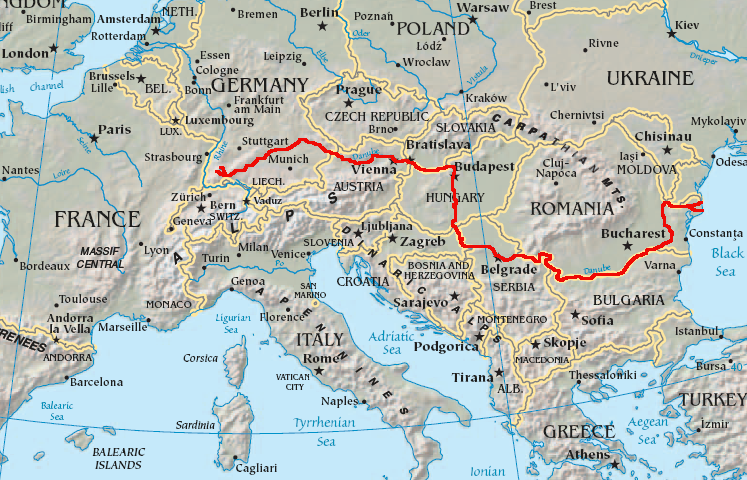
What is the most interesting perhaps, is the transition from a freshwater to a salty environment :

and this is life on the water : the biomass on the sea :

Open_Sailing funding
We're looking for media, sponsorship and technology partners for Open_Sailing.

Click here to read on-screen
Click here for a printable version
Open_Sailing website and contacts
Click here to read on-screen
Click here for a printable version

Open_Sailing website and contacts
UN climate talks don't focus enough on oceans
http://worldradio.ch/wrs/news/switzerland/un-climate-talks-dont-focus-enough-on-oceans.shtml?14242
Monday, 8 June, 2009
Listen to this : http://worldradio.ch/wrs/bm~doc/intv-ocean-day-080609.mp3
The high-profile climate change talks in Copenhagen at the end of the year don’t focus enough on the world’s oceans, according to the Swiss-based International Union for the Conservation of Nature, who made the announcement for World Ocean Day, Monday. The IUCN is pushing for a worldwide system of protecting the oceans. Reporter Alex Helmick talks to Carl Gustaf Lundin, head of IUCN’s Global Marine Program. He started off by asking if Lundin was disappointed by the agenda from the United Nations Framework Convention on Climate Change held in Copenhagen.

Alex Helmick, World Radio Switzerland. Thanks to Annie Harada for letting us know about this article.
Monday, 8 June, 2009
Listen to this : http://worldradio.ch/wrs/bm~doc/intv-ocean-day-080609.mp3
The high-profile climate change talks in Copenhagen at the end of the year don’t focus enough on the world’s oceans, according to the Swiss-based International Union for the Conservation of Nature, who made the announcement for World Ocean Day, Monday. The IUCN is pushing for a worldwide system of protecting the oceans. Reporter Alex Helmick talks to Carl Gustaf Lundin, head of IUCN’s Global Marine Program. He started off by asking if Lundin was disappointed by the agenda from the United Nations Framework Convention on Climate Change held in Copenhagen.
Alex Helmick, World Radio Switzerland. Thanks to Annie Harada for letting us know about this article.
Biomodding - living sculpture combines computers, gaming culture& ecology
Hey, guys, check this out. It's a greenhouse sculpture powered by excess heat from a giant, overclocked computer.

Artist Angelo Vermeulen, drawing inspiration from the case-modding scene, came up with this idea of fusing art, ecology and technology. In the inside of the case are computer parts, plants and a system of pipes and tubes for water. The computer is a game server with individual game stations surrounding the case. In a collaborative effort, game enthusiasts have developed a multiplayer game which picks up biomodding themes and translates them into a game experience. This way, visitors can become part of the installation by interacting and affecting the ecosystem inside of the case.
But watch for yourself:
The fist version of the sculpture, called Biomodd [ATH1] was built in Athens, Ohio. Soon more experiments are to follow in Manila, Singapore and Brazil!
09/12/2009
GEOENGINEERING !
http://blog.ted.com/2007/11/david_keith.php
You've all seen lots of articles on climate change, and here's yet another New York Times article just like every other darn one you've seen, it says all the same stuff as all the other ones you've seen, it even has the same amount of headline as all the other ones you've seen.
(slide of NYT article entitled "How Industry May Change Climate")
What's unusual about this one, maybe, is that it's from 1953. And the reason I'm saying this is that you may have the idea this problem is relatively recent, that people have just sort of figured out about it now, with Kyoto, and the governator, and people beginning to actually do something- we may be on the road to a solution. The fact is- uh uh. We've known about this problem for 50 years, depending on how you count it, and we have talked about it endlessly over the last decade or so, and we've accomplished close to zip.
This is the growth rate of CO2 in the atmosphere, you've seen this in various forms- but maybe you haven't seen this one.
(chart showing CO2 emissions, in various forms, rising over a 20 year period, as explained below)
What this shows is that the rate of growth of our emissions is accelerating, and that it's accelerating even faster that what we thought was the worst case just a few years back. So that red line there was something that a lot of skeptics said the environmentalists only put in the projections to make the projections look as bad as possible. That emissions would never grow as fast as that red line- but in fact, they're growing faster.
Here's some data from actually just 10 days ago, which shows this year's minimum of the Arctic Sea ice-
(chart- "And, it's melting quicker than models predict"- showing shrinking ice cover, 1979-2000)
-and it's the lowest by far. And the rate at which the Arctic Sea ice is going away is a lot quicker than models. So despite all sorts of experts like me flying around the planet and burning jet fuel, and politicians signing treaties, in fact you could argue the net effect of all this has been negative, 'cause it's just consumed a lot of jet fuel. In terms of what we- (laughter) No, no no! In terms of what we really need to do to put the brakes on this very high inertial thing- our big economy- we've really hardly started. Really, we're doing this-
(cartoon showing speaker speaking- "blah, blah, blah,..." with windmill spinning in front of his mouth- sign on stage says "Renewable Energy Sources- Harvesting the Wind")
-basically. Really, not very much.
I don't want to depress you too much. The problem is absolutely soluble, and even soluble in a way that's reasonably cheap. Cheap meaning sort of the cost of the military, not the cost of medical care. Cheap meaning a few percent of GDP. No, this is really important to have this sense of scale. So, the problem is soluble, and the way we should go about solving it, is say dealing with electricity production, which causes something like 43 or so percent and rising of CO2 emissions, and we could do that by perfectly sensible things like conservation, and wind power, nuclear power, and coal to CO2 capture which are all things that are ready for giant scale deployment, and work. And all we lack is the action to actually spend the money to put those into place. Instead we spend our time talking.
But nevertheless, that's not what I'm going to talk to you about tonight, I'm going to talk to you about tonight is stuff we might do if we did nothing.
(chart showing
"Human actions that change climate--> Climate System--> Climate impact on human welfare"
each chart entry captioned below by (in order) "Mitigation," "Geoengineering," and "Adaptation")
And it's this stuff in the middle here, which is what you do if you don't stop the emissions quickly enough and you need to deal- somehow break the link between human actions that change climate, and the climate change itself. And that's particularly important, because of course while we can adapt to climate change, and it's important to be honest here- there will be some benefits to climate change. Oh yes, I think it's bad. I've spent my whole life working to stop it. But one of the reasons it's politically hard is there are winners and losers, not all losers. But of course, the natural world, polar bears- I spent time skiing across the sea ice for weeks at a time in the high Arctic- they will completely lose, and there's no adaption.
So this problem is absolutely soluble- this geoengineering idea, in it's simplest form, is basically the following. You could put signed particles, say sulfuric acid particles- sulfates- into the upper atmosphere, the stratosphere, where they'd reflect away sunlight and cool the planet. And I know for certain that that will work- not that there aren't side effects- but I know for certain it will work, and the reason is, it's been done. And it was done not by us, not by me, but by nature.
(photo of volcano erupting)
Here's Mount Pinatubo in the early 90s, that put a whole bunch of sulfur in the stratosphere- with a sort of atomic bomb like cloud- and the result of that was pretty dramatic. After that, and some previous volcanoes we have, you see a quite dramatic cooling of the atmosphere-
(two charts- one showing temperature change in the lower atmosphere over time, and one of temp. change in the stratosphere, both show eruptions of Agung, El Chichen, and Pinatubo shown by date)
-so this lower bar is the upper atmosphere, the stratosphere, and it heats up after these volcanoes. But you'll notice that in the upper bar, which is the lower atmosphere and the surface, it cools down, because we shielded the atmosphere a little bit. There's no big mystery about it. There's lots of mystery in the details, and there's some bad side effects, like it partially destroys the ozone layer, and I'll get to that in a minute- but it clearly cools down. And one other thing- it's fast. It (sic) really important to say. So much of the other things that we ought to do- like slowing emissions- are intrinsically slow, because it takes time to build all the hardware we need to reduce emissions. And not only that, when you cut emissions, you don't cut concentrations, 'cause concentrations- the amount of CO2 in the air- is the sum of emissions over time. So you can't step on the brakes very quickly. But if you do this, it's quick. And there are times you might like to do something quick.
This- another thing you might wonder about, is does it work. Can you shade some sunlight and effectively compensate for the added CO2, and produce a climate sort of back to what it was originally? And the answer seems to be yes. So here's the graphs you've seen lots of times before. That's what the world looks like under one particular climate model's view-
("Models suggest the compensation is quite good"- top chart shows global temperatures on a map with double CO2 emissions, bottom shows double CO2 "and 1.8% reduction in solar intensity", with lower temps throughout the globe)
-with twice the amount of CO2 in the air, the lower graph is with twice the amount of CO2 and 1.8% less sunlight, and you're back to the original climate. And this graph from Ken Caldera, it's important to say, came because Ken, at a meeting that I believe Marty Hoffart was also at in the mid-90, Ken and I stood up at the back of the meeting and said geoengineering won't work, and to the person who was promoting it said- the atmosphere's much more complicated, there're a bunch of physical reasons why it wouldn't do a very good compensation- Ken went and ran his models, and found that it did.
This topic is also old. That report that landed on president Johnson's desk when I was two years old, 1965-
(slide of Johnson's report-"Restoring the Quality of Our Environment"- paragraph highlighted- The climatic changes that may be produced by the increased CO2 content could be deleterious from the point of view of human beings. The possibilities of deliberately bringing about countervailing climatic changes therefore need to be thoroughly explored. A change in the radiation balance in the opposite direction to that which might result from the increase of atmospheric CO2 could be produced by raising the albedo, or reflectivity, of the earth. Such a change in albedo could be......")
That report, in fact, which had all the modern climate science- the only thing they talked about doing was geoengineering, it didn't even talk about cutting emissions, which is an incredible shift in our thinking about this problem. I'm not saying we shouldn't cut emissions, we should- but it made exactly this point.
So in a sense, there's not much new. The one new thing is this essay.
("Albedo Enhancement by Stratospheric Sulfur Injections: A Contribution to Resolve a Policy Dilemma? An Editorial Essay. Paul J. Crutzen")
So I should say, I guess, that since the time of that original president Johnson report, and the various reports of the U.S. National Academy, 1977, 1982, 1990- people always talked about this idea. Not as something that was full-proof, but as an idea to think about. But when climate became, politically, a hot topic, if I may make the pun, in the last 15 years, this became so un-PC we couldn't talk about it. It just sunk below the surface. We weren't allowed to speak about it. But in the last year, Paul Crutzen published this essay saying roughly what's all been said before- that maybe given our very slow rate of progress in solving this problem, and the uncertain impacts, we should think about things like this. He said, roughly, what's been said before- the big deal was, he happened to have won the Nobel Prize for ozone chemistry, and so people took him seriously when he said we should think about this, even though there will be some ozone impacts. And, in fact, he had some ideas to make them go away.
There was all sorts of press coverage, all over the world, going right down to "Dr. Strangelove Saves the Earth," from the Economist,
(slide of Economist article)
-and that got me thinking- I've worked on this topic on and off, but not so much technically- and I was actually lying in bed, thinking one night, and I thought about this child's toy-
(photo of radiometer, a glass ball with suspended black and white paddles inside that spin in sunlight)
which is- hence the title of my talk- and I wondered if you could use the same physics that makes that thing spin round in the child's radiometer to levitate particles into the upper atmosphere and make them stay there. One of the problems with sulfates is they fall out quickly, the other problem is they're right in the ozone layer, and I'd prefer them above the ozone layer. And it turns out- I woke up the next morning, and I started to calculate this- and it was very hard to calculate from first principles, I was stumped- but then I found out that there were all sorts of papers already published that addressed this topic, because it happens already in the natural atmosphere. So it seems there're already fine particles that are levitated up to what we call the mesosphere, about a hundred kilometers up, that already have this effect.
I'll tell you very quickly how the effect works, there are a lot of fun complexities that I'd love to spend the whole evening on, but I won't. But let's say you have sunlight hitting some particle, and it's unevenly heated.
("Photophoresis"- "Uneven illumination"-->"Temperature gradient across particle"- drawing showing sunlight striking particle, warm energy deflected back up, cool reflected back down, net force gradient heading downward)
So the side facing the sun is warmer, the side away cooler, gas molecules that bounce off the warm side bounce away with some extra velocity, because it's warm, and so you see a net force away from the sun. That's called the photophoretic force. There are a bunch of other versions of it that I and some collaborators have thought about how to exploit, and of course, we may be wrong, this hasn't all been peer reviewed, we're in the middle of thinking about it, but so far it seems good. But it looks like we could achieve long atmospheric lifetimes- much longer than before, because they're levitated. We can move things out of the stratosphere into the mesosphere, in principle solving the ozone problem. I'm sure there will be other problems that arise. And finally, we could make the particles migrate to over the poles, so we could arrange the climate engineering so it really focused on the poles, which would have minimal bad impacts in the middle of the planet where we live, and do the maximum job of what we might need to do, which is cooling the poles, in case of planetary emergency, if you like.
This is a new idea that's crept up, that may be, essentially, a cleverer idea than putting sulfates in. Whether this idea is right, or some other idea is right, I think it's almost certain we will eventually think of cleverer things than just putting sulfur in. That if engineers and scientists really turned their minds to this, it's amazing how we can affect the planet. The one thing about this is that it gives us extraordinary leverage.
(engraving of Archimedes moving the planet with a large lever)
This improved science and engineering will, whether we like it or not, give us more and more leverage to affect the planet. To control the planet. To give us weather and climate control, not because we plan it, not because we want it, just because science delivers it to us bit by bit. With better knowledge of the way the system works, and better engineering tools to effect it.
Now suppose that space aliens arrived on- maybe they're going to land at the UN headquarters down the road here, or maybe they'll pick a smarter spot- but suppose they arrive and they give you a box. And the box has two knobs. One knob is the knob for controlling global temperature, maybe another knob is a knob for controlling CO2 concentrations. You might imagine that we would fight wars over that box. Because we have no way to agree about where to set the knobs. We have no global governance. And different people will have different places they want it set. Now I don't think that's gonna happen, it's not very likely.
But we're building that box. The scientists and the engineers of the world are building it piece by piece, in their labs. Even when they're doing it for other reasons. Even when they're thinking they're just working on protecting the environment. They have no interest in crazy ideas like engineering the whole planet, they develop science that makes it easier and easier to do. And so I guess my view on this is not that I want to do it, I do not- but that we should move this out of the shadows and talk about it seriously, because sooner or later we'll be confronted with decisions about this, and it's better if we think hard about it, even if we want to think hard about reasons why we should never do it.
I'll give you two different ways to think about this problem, that are the beginning of my thinking about how to think about it. But what we need is not just a few oddballs like me thinking about this, we need a broader debate. A debate that involves musicians, scientists, philosophers, writers, who get engaged with this question about climate engineering, and think seriously about what its implications are. So here's one way to think about it, which is that we just do this instead of cutting emissions, because it's cheaper. I guess the thing I haven't said about this is it is absurdly cheap.
(chart showing rise of geoengineering, instead of mitigation, in tandem with rising emission rates)
It's conceivable that, say using the sulfates method, or this method I've come up with, you could create an ice age at a cost of .001% of GDP. It's very cheap. We have a lot of leverage. It's not a good idea, but it's just important- I'll tell you how big the lever is. The lever is that big. And that calculation isn't much in dispute. You might argue about the sanity of it, but the leverage is real (laughter).
So because of this, we could deal with the problem simply by stopping reducing emissions, and just as the concentrations go up, we can increase the amount of geoengineering. I don't think anybody takes that seriously. Because under this scenario, we walk further and further away from the current climate, we have all sorts of other problems like ocean acidification that come from CO2 in the atmosphere anyway, nobody but maybe one or two very odd folks really suggest this.
But here's a case which is harder to reject.
(same graph, paired with one showing reduced emissions AND "Geoengineering to take the edge of the heat")
Let's say that we don't do geoengineering, we do what we ought to do, which is get serious about cutting emissions. But we don't really know how quickly we have to cut them. There's a lot of uncertainty about exactly how much climate change is too much. So let's say that we work hard, and we actually don't just tap the brakes, but we step hard on the brakes and really reduce emissions, and eventually reduce concentrations, and maybe some day, like 2075, October 23rd, we finally reach that glorious day where concentrations have peaked and are rolling down the other side. And we have global celebrations, and we've actually started to- you know- we've seen the worst of it. But maybe on that day we also find that the Greenland ice sheet is really melting unacceptably fast, fast enough to put meters of sea level on the oceans in the next hundred years, and remove some of the biggest cities from the map. That's an absolutely possible scenario. We might decide at that point that even though geoengineering was uncertain, and morally unhappy, that it's a lot better than not geoengineering. And that's a very different way to look at the problem. It's using this as risk control, not instead of action. It's saying that you do some geoengineering for a little while to take the worst of the heat off, not that you'd use it as a substitute for action.
But there is a problem with that view. And the problem is the following.
(chart- "Knowledge that geoengineering is possible--> Climate impacts look less fearsome--> A weaker commitment to cutting emissions now")
Knowledge that geoengineering is possible makes the climate impacts look less fearsome and that makes a weaker commitment to cutting emissions today. This is what economists call a moral hazard. And that's one of the fundamental reasons that this problem is so hard to talk about, and in general I think it's the underlying reason that it's been politically unacceptable to talk about this. But you don't make good policy by hiding things in a drawer.
I'll leave you with three questions, and then one final quote. Should we do serious research on this topic? Should we have a national research program that looks at this? Not just at how you would do it better, but also what all the risks and downsides of it are. Right now you have a few enthusiasts talking about it, some in a positive side, some in a negative side- but that's a dangerous state to be in, because there's very little depth of knowledge on this topic. A very small amount of money would get us some. Many of us- maybe now me- think we should do that. But I have a lot of reservations. My reservations are principally about the moral hazard problem, and I don't really know how we can best avoid the moral hazard. I think there is a serious problem as you talk about this, people begin to think they don't need to work so hard to cut emissions.
Another thing is, maybe we need a treaty. A treaty that decides who gets to do this. Right now we may think of a big rich country like the US doing this, but it might well be that, in fact, if China wakes up in 2030 and realizes that the climate impacts are just unacceptable, they may not be very interested in our moral conversations about how to do this, and they may just decide they'd really rather have a geoengineered world than a non-geoengineered world, and we'll have no international mechanism to figure out who makes the decision.
So here's one last thought, which is said much, much better 25 years ago in the US National Academy report than I can say today- and I think it really summarizes where we are here.
(slide in background- "Interest in CO2 may generate or reinforce a lasting interest in national or international means of climate and weather modification: once generated, that interest may flourish independent of whatever is done about CO2"-1982 US National Academy study- Changing Climate)
That the CO2 problem- the climate problem that we've heard about- is driving lots of things, innovations in energy technologies that will reduce emissions- but also, I think inevitably, it will drive us towards thinking about climate and weather control whether we like it or not. And it's time to begin thinking about it even if the reason we're thinking about it is to construct arguments for why we shouldn't do it. Thank you very much.
24/11/2009
Who will feed your Fish when you are out?
My wife frequently asks me to bring pet animal at home (i.e.: Fish) but I have some (maintenance) problem, especially who will feed my fish when we are out?
Now she got an answer to my dilemma - A Robotic Fish Feeder is the answer. (Designer: Ran Xiangfei) FIFER robot (Fish Feeder) does feeding job to Fish. Fish finally get the attention they deserve. One less item you need to worry about on your day to day tasks. (Related article: End of one more boring task - inflate your car tire)

Fish feeder not only feeds but feeds the fish in correct amount. First it calculates the density of Fish in water and dispenses the right amount of food at the pre-set times. If you are growing fish in fish pond then Robot moves to another area (based on pre-set path setting) of the pond calculate the fish density and dispenses. There is also a plant on top which grows to represent the health of your fish.

See more pictures here
Via [GearFuse.com and Designer: Ran Xiangfei Gerard Rallo]
Via [http://www.technologymadness.com/?p=415]
Now she got an answer to my dilemma - A Robotic Fish Feeder is the answer. (Designer: Ran Xiangfei) FIFER robot (Fish Feeder) does feeding job to Fish. Fish finally get the attention they deserve. One less item you need to worry about on your day to day tasks. (Related article: End of one more boring task - inflate your car tire)
Fish feeder not only feeds but feeds the fish in correct amount. First it calculates the density of Fish in water and dispenses the right amount of food at the pre-set times. If you are growing fish in fish pond then Robot moves to another area (based on pre-set path setting) of the pond calculate the fish density and dispenses. There is also a plant on top which grows to represent the health of your fish.
See more pictures here
Via [GearFuse.com and Designer: Ran Xiangfei Gerard Rallo]
Via [http://www.technologymadness.com/?p=415]
23/11/2009
Boat Made From Plastic PET Bottles To Sail on 11,000 Mile Ocean Voyage

The Plastiki launches in Spring 2009 on a 7,500-mile route from San Francisco to Sydney
Plastiki Workshop GigaPan 1 | GigaPan 2
The Plastiki design brief calls for an off-grid habitation—a house in essence—that would function as the cabin for a catamaran. The middle of the Pacific Ocean is the ultimate off-grid site. At Architecture for Humanity (AfH), we are always searching for prototypes, systems and materials that have broad relief applications. As the Plastiki is literally composed of re-purposed materials and off-grid systems, anything we learn through the boat design/build process carries over into our housing and systems initiatives.
Innovation is challenging. The biggest challenge here was adapting a new material system (srPET) for what promises to be a demanding voyage. The Plastiki will literally float on post-consumer bottles nested within a re-purposed plastic panel system. The major challenge of naval design more generally is to reconcile the often contradictory demands of what makes a boat perform well and what people need on an extended voyage.
The adoption of the egg as a generative form is a clear example of ‘biomimicry;’ that is to say, looking to nature for design solutions. In this case, a strong shape was needed to handle wave and storm forces during the voyage. The design of the Plastiki cabin is informed by the shells of several long-term earth residents. Turtle shells, Horseshoe Crab armor, Dinosaur plating, and eggs all contributed to the overall form, fused plates and folds that comprise the cabin shell geometry.
Working with design team members, we are integrating waste and water systems into the cabin. The cabin shell is our primary source for collecting rainwater, which will be filtered and stored. Solar photovoltaic panels are arrayed on the shell roof. Other energy exhibits, such as wind, water, bicycle and possibly wave power are being situated on the deck along with a modern-day ‘canoe garden’ that echoes the on-board gardens of ancient Polynesian mariners who brought staple plants and animals on voyages to ensure their sustainability.
[CNN and Architecture for Humanity, gizmodo, thanks to Vahakn]
Subscribe to:
Posts (Atom)