Showing posts with label Nomadic_Ecosystem. Show all posts

09/05/2010

A Primer: Can Algae Replace Gas?

Via Nadine Freischlad from Open_Sailing
Original Post : http://www.good.is/post/a-primer-can-algae-replace-gas/
by  Cliff Kuang on March 11, 2009 at 2:01 pm PDT


Can algae, that banal scourge of the swimming pool, fuel an energy-independent America? The hype is certainly there. News reports have been flowing quick and steady about the potential of algal biofuels. Just yesterday, Treehugger proclaimed them the #1 green technology in the offing.


But you’d be excused for still being baffled. No one is answering the most basic questions: What is algae technology, and why is it so promising? Why isn’t it already available? What are the challenges that remain to be solved?

What Are Algae?
Algae are some of the planet’s simplest organisms. Comprised of just a single cell, or sometimes a few cells, they're slightly more complex than bacteria but far less complex than most plants.

But like plants, algae are loaded with chloroplasts, which lets them create energy using just carbon dioxide, water, and sunlight. Algae use this energy to reproduce or to store it for leaner times. Some algae in particular store energy as lipids (aka, oils). These lipids, in turn, can be readily refined into basically any hydrocarbon you like, from biodiesel to jet fuel—and the whole process is carbon-neutral. That's the miracle of algae.

Plants can also be used to create lipids—these are the biofuel crops such as camelina being developed by companies like Targeted Growth—but they still waste a good deal of their energy on things like stems and seeds. Algae, by contrast, are simpler, with fewer outputs, and thus far more efficient. Their per-acre yields are so high that we could conceivably produce all the oil we need with a space that, at maximum, is just 1/7 the area we now use to grow corn.

Unlike many other biofuels, algae doesn’t displace food crops. That’s significant because one fundamental dilemma with biofuels is that they’ll crush our economy with rising food costs, by competing with edible crops for arable land.

The Challenges
But algae aren't great multitaskers. “Algae usually just reproduce or make oil,” says Tom Todaro, CEO of Sustainable Oils. “They don’t usually do both. Under favorable conditions they’d rather multiply than store their energy.”

So there's a dilemma: You want your algae to multiply so you have a lot of it, but if they're spending energy multiplying they won’t make any oil. That’s why companies such as Sustainable Oils are trying to engineer algae that balance the two imperatives, multiplying rapidly in the first few days of life, and making oil thereafter.

Volume is another problem: No one has ever produced as much algae as we’d need to actually start replacing gasoline at a meaningful scale. Sustainable Oils is just breaking ground on a 50,000-gallon test facility in Colorado, but industrial levels would require plants that accommodate 100 million gallons of algae.


It’s not as simple as just building bigger algae ponds. No one knows exactly how to cultivate that much algae—from how to feed them all carbon dioxide, to how they’ll behave and interact at such great quantity. Just getting them sunlight is a problem. Algae usually sits in a thin layer atop water, soaking up sunlight; Building huge, shallow ponds is way too expensive, so we’ll need to find ways to get sunlight deeper into vats. (And remember, if we use lots of electriciy in the process the whole projecct is moot).

Again, biology is being marshaled to solve these problems; some have explored creating algae with physical properties that allow sunlight to soak deeper into a pool (so algae to grow at greater depths). Others pursuing engineering solutions have created bioreactors, which churn algae during cultivation, or grow them in tubes. But bioreactors, while promising, are expensive. “You have to understand that oil is the world’s most efficient market in the world,” says Mark Tegen, CEO of Inventure, whose company refines algae into fuel compounds. “You have to wring every cost out to make it competitive, and biology is where you get your bang for the buck.”

Then comes a third problem: To release the algae's oils they have to be dried out. Companies like Inventure already do this, but again, industrial scales may require new technologies. Centrifuging isn’t practical, but algae are being bred that naturally excrete their oil, while the chemical and mechanical processes for separating the oils artificially are still being refined.

The Prospects
Despite these problems, there’s good reason for optimism. After all, money has been flowing into the sector, and it’s not just crazy bubble money—some of the savviest investors in the world are making big bets because the advances have come so quickly. “My bet is that we’ll see something in 5-10 years,” says Tegen. “The scene is like tech in 1996. We’re living in dog years and there’s mayhem. But in just the last two years alone, the advancements have been shocking.”

Photo from flickr by Steve Jurvetson


02/02/2010

Le Bateau-usine de Takiji Kobayashi

if you happen to be in paris France, this films sounds very interesting :


http://www.mcjp.fr/francais/cinema/le-bateau-usine-de-takiji-107/le-bateau-usine-de-takiji
Le Bateau-usine de Takiji Kobayashi : témoin de l’histoire, symbole d’aujourd’hui
Table ronde cinéma
プロレタリア文学の名作『蟹工船』の現代性
Samedi 30 janvier de 14h à 18h
Présentation et projection du film
Table ronde consacrée au roman 


Le Bateau-usine (Kanikôsen, 1929) roman de Takiji Kobayashi (1903-1933) raconte l’épopée de trois cents hommes envoyés en mer d’Okhotsk pour pêcher le crabe et en faire des conserves. A travers le microcosme de leur bateau-usine, l’auteur dénonce le capitalisme en tant que système. Ce chef-d’œuvre de la littérature prolétarienne connaît aujourd’hui un fort regain d’intérêt, contemporain d’une prise de conscience des nouvelles inégalités sociales au Japon.

Présentation et projection du film
14h 14h30 : pré sen ta tion du film par Teru Shimamura (spé cia liste de la lit té ra ture pro lé ta rienne japonaise, uni ver sité Ferris, Tôkyô)
14h30 16h30 : pro jec tion du film
Le Bateau-usine「蟹工船」
1953 / 109’ / N&B / vo/stf

Un film de Sô Yamamura / D’après le roman de Takiji Kobayashi / Avec Sô Yamamura, Masayuki Mori, Sumiko Hidaka, Sanae Nakahara / Prix spé cial au Festival de Karlovy-Vary en 1954

Table ronde consacrée au roman
16h30 18h : Table ronde

Intervenants : Cécile Sakai (Professeur à l’Université Paris Diderot-Paris 7, mem bre de l’UMR CRCAO Centre de Recherches sur les Civilisations de l’Asie Orientale),
Jean-Jacques Tschudin (Professeur émérite à l’Université Paris Diderot-Paris 7, mem bre de l’UMR CRCAO),

Evelyne Lesigne-Audoly (doc to rante à l’Inalco, tra duc trice en fran çais du roman Le Bateau-usine).
Autres pro jec tions du film : jeudi 4 février et samedi 6 février à 20h (petite salle, entrée libre)

© Hokusei


Date
samedi 30 janvier
Table ronde - cinéma : Le Bateau-usine de 15h00 à 18h00


13/12/2009

Case Study Part 2: Marine Protected Areas in West Bali - Algae aquaculture as a solution

Part Two: Algae farming - method and specifications

1. Introduction


Algae farming was introduced to Sumber Kima in 2003, but the first attempts were more or less failures, as the seaweed would not thrive in their particular bay.

Different species of red algae were tested, among them Eucheuma Catonii. Finally, a species brought in from Maumere, Flores - another Rodophyte species called Kappaphycus Alpharezi - proved to be suitable for that area. (Maumere, in turn, got it from the Phillipines: the species is not native to the Indonesian seas).

Red algae are known for their high contents of the gelling agent carrageenan, which has many commercial applications in the food and cosmetics industry, for example in dairy products, pet foods, or toothpastes. Red algae high in carrageenan, as the species mentioned above, are therefore the major types of algae to be commercially cultivated in SE Asia.

"Hello, my name ist alvarezii"

Hello, my name ist alvarezii[/caption]

Seaweed farming is actually not an ancient practice in Indonesia, and therefore the knowledge about suitability and adaptability of species still low. While Japan has a very ancient tradition of algae cultivation, the Philippines were pioneers in SE Asia, from where it spread to Indonesia. In Bali, the first algae culture was done in the area of Nusa Dua, South Bali, in the 90ies.

Certainly, wild seeweads have been harvested in Indonesia for decades, and used in a variety of dishes, as salads or as gelling agent (Agar).

2. The method

2.1 Planting


Algae farmers in Bali Barat employ the long-line cultivation method. The seedlings are attached to a very long sythetic rope, which floats close to the surface of the water, held up by little buoys every few meters.


this sketch is borrowed from here! Thanks!

The seedlings, which are simply cut-off branches from an older plant, are tied to the rope with a thinner rope with a loose knot, allowing for some movement with the currents, with spaces of approx. 20 cm between knots. The floaters, usually pieces of Styrofoam, plastic bottles or balls, do not only keep the line at a more or less constant depth of 30-40cm and make it easier to spot but also increase the amount of movement of each little segment.


"'field of' long lines and floaters, clearly visible from the shore"
field of long lines and floaters, clearly visible  from the shore


The line itself is attached to a stong pole or frame which sits firmly in the ground on both ends. This method is suited for bays which are steep, but no too deep.

At Nusa Dua, for example, algae is grown it along the ground. The advantage of this is that it can be planted and harvested on foot at low tide. But this works only on a flat, plan coastline. The result is the same, but the environmental damage is probably higher because you walk on any existing coral. Floating method and harvest/planting by boat is pretty low impact. The only impact really are some runaway styrofoam floaties, but these are usually collected again because they are needed.

In fact the seaweed cultivation creates favorable environment for fish, and the seaweed farmers report that the fish have increased in the area of seaweed farming and are easy to catch.

2.2 Harvesting

After 35-45 days, the algae has grown enough to be harvested. For harvest, the line is lifted above the water and the algae cut off close to the knot.

The tips of some of the harvested plants are cut for use of re-planting. Planting and harvesting is thus done in a constant cycle. While harvesting the ‘field’ on one side, young seedlings are being replanted on the other.

While harvest is technically possible throughout the year, the growth rate of the algae is best during the rainy season. During the dry months, june-september, seedlings grow slowly and are more prone to deseases.

The reason for this is not known for sure, because the farmers don’t have the means to measure temperature/salinity or any other factors that might be influencing this. However, the observation implies that during hot months, the water gets too muddy/warm or salty. In other areas, it’s the other way around and it seems to depend strongly on the species. Here, the alage aquaculture could profit greatly from a scientific research partnership. Perhaps it could prove best to cultivate one species during the hot months and another during the rainy season to yield maximum profits?

2.3 Drying

After harvest, the seaweeds are spread out on flat thatched bamboo boards and these are put on top of wood or concrete stand, directly in the sun. They get sun and wind from top and sides and a little from underneath because of thatched board. They needs to be spread evenly and only one layer to avoid fouling. If it starts to rain, they need to be covered with a synthetic cloth immediately, it is simply thrown over the drying structure and held up by the wooden bar running along the middle. If it’s hot and sunny it will only take two days to dry. Hanging is also possible but is simply much more work and the results are the same.

"drying stands"

drying stands


"spreading out the algae on the drying stand"

spreading out the algae on the drying stand

After drying, they will have lost 90% of their weight. In dried form, the algae can be stored for several months.

"wet product on the left and dried on the right"

wet product on the left and dried on the right


inside the currently very empty storage room

The dried product is sold on the markets in Bali’s capital Denpasar, but the farmers don’t know much about what happens then.

3. Species, reproduction, diseases

As described in the introduction, the species cultivated in Sumber Kima, and all over SE Asia as a matter of fact, are red algae of the Kappaphycus or Eucheuma kind. Both are high in carrageenan and essentially very similar.

They are branched, have thick, fleshy thalli and are olive-brown to purplish-red in color.

Highly interesting is their capacity for vegetative regeneration, which essentially is the reason for the entirely asexual reproduction method employed by farmers in Sumber Kima (simply cutting off tips of older plants and regrowing from there, and so on). Thinking back to our visit to Kiel, this method really sets them off from the German alage farmers who were obtaining new generations of their brown algae from spores in each cycle.

Now I am not a expert (yet) but I came across this study which seems to imply that purely vegetative methods in algae farming may lead up to problems such as decrease in productivity after several ‘generations’, increased vulnerability to catch diseases and so on, which are precisely the problems Sumber Kima farmers were also reporting.

At the time of my visit, two types of diseases had been affecting the harvest: first something called Ice-Ice. The algae starts to turn white around the attachment area, and is prone to break off. It is not so fatal and can be diminished by cutting the stems above the white spot one by one and reattaching it – a lot of work, but can be done

The other disease is known as Karat (‘Rust’). It is some sort of fouling or infection of the seaweed and it spreads quickly. It does not kill the seaweed entirely but inhibits growth and results in an uglier, less-branched and rather rough-skinned plant. Karat is one of the diseases which befalls the algae during the already less productive dry season. Again, more scientific support could help in gaining a better understanding of the diseases and finding ways how to deal with them.


healthy vs. sick algae

Look out for Part 3 of my report: processing algae: candy, crackers and more

Case study: Marine Protected Areas in West Bali – algae aquaculture as a solution

< Nadine Freischlad >
I’ve been lucky to spend the past few weeks in Indonesia. Part of my trip involved visiting a program initiated by the WWF in West Bali: This region is designated as a National Park but still, the coastal ecosystem has been suffering greatly from overfishing/cyniade fishing and tourism, as local inhabitants are struggling to find sources of income.

Bali Barat National Park Region

Bali Barat National Park Region

Part of the WWF’s work was to introduce collectives of fishermen to algae farming, a practice which is NOT native to Bali, but is considered a profitable and simple alternative to fishing. It has been successfully introduced to other areas of Bali previously, including Nusa Dua and Nusa Lembongan. (Another more sustainable form of fish production are the grouper breeding sites, floating aquafarm structures locally known as Kerambah, which I will report on later.)

Since the days in the village of Sumber Kima (‘Source of Pearls’), one of the villages in the vicinity of the National Park, have been so extremely insightful, I will split up the report into several posts. The first post is dedicated to painting a picture of the complex cultural, economic and ecological system that makes up a coastal zone in Indonesia – and most likely everywhere else in the world.

The obvious conflict in the area of the National Park was the clash of interests between those wanting to preserve the natural habitat and those people in need of using the ocean’s resources for their survival. In the beginning, not enough effort was put into bringing together all interests, which resulted in the criminalization of people still using destructive fishing methods and catching ornamental fish to sell them.

In this situation, there was a need for mediation and bringing all stakeholders together in a common forum. (Which is what the WWF facilitated) Representatives of the National Park, fishermen groups, regional entrepreneurs and the local police are meeting regularly to discuss problems and to find solutions. The main pillars of work of this forum are:

1. Protecting the coastal ecosystem (Zonation of National Park: core zone vs. zones for ‘light’ tourism, research, recreation)
2. Introducing alternative sources of income for fishermen (algae farming)
3. Joint patrols to monitor
4. Fundraising

Algae aquaculture seemed especially suited as the demand is high and it has worked in other regions of Bali. It requires little investment, thus allowing fishermen with little funds to join in.

Villagers in Bali are often organized in neighborhood collectives, or groups, in which they share workload and equipment. In this specific program, effort has been made to integrate the women of the collective into to production cycle. The women help with preparing the seeds, planting and harvesting, but are also responsible for some processing of the algae. This includes baking cakes, making different sorts of candy and crackers, which are then sold at local markets.

Since the program started in 2003, after some initial difficulties, the farmers have seen some significant improvements and more groups have joined in. The amount of algae produced has risen dramatically and they report that fish are now more plentiful and easy to catch as they use the algae farming site to feed on and for shelter.

increase in yearly algae production from 1 0 tons to 750 tons since 2003 (weight before drying)"

increase in yearly algae production from 1 0 tons to 750 tons since 2003

Another interesting fact is that the fishermen-turned-algae farmers on Bali are not actually Balinese people, but from the island of Madura. The Madurese, living on a small and overpopulated island, have a long tradition of fishing. They are also known to be very skilled boat builders and are basically found inhabiting any coast of the Indonesian Archipelago, bringing their belief, Islam, with them. The Balinese themselves, as Hindus, are traditionally not fishers but farmers and prefer to populate the mountainous regions. In their belief, Demons inhabit the seas while the mountains are the domain of the gods.

Thus, the program to help the fishermen to find more sustainable, less exploitative and most of all legal uses of the ocean is not only addressing an economic dimension, but might also be part of stabilizing the social fabric. (Luckily, there is and has been NO conflict regarding differences in religion or culture in the region)


So, I am thinking that my next visit should be to Madura, to learn from the cradle of these crafty sea-faring people ☺

Look, they even make their own fishing nets… I totally believed those are machine-made these days!


Stay tuned for Part 2: The algaeculture method employed in Bali Barat (seeding, long-line planting, harvesting, replanting, drying)

< /Nadine Freischlad >

12/12/2009

Microcosmic Aquaculture

<Cesar Harada> 07-2-2009, straight from http://www.thefunctionality.com/blog/2009/7/2/microcosmic-aquaculture.html

[Editors' Note]: For this week's Friday Feature (posted early for the holiday), The Functionality is proud to host "Microcosmic Aquaculture," a speculative project by new design office Bittertang (Michael Loverich + Antonio Torres). The project recently won inclusion as part of [Bracket] magazine's feature on the future of farming, which explores "the modification of infrastructure, urbanisms, architectures, and landscapes toward a privileging of production." We love "Microcosmic Aquaculture" because it is both completely whimsical and completely convincing as a concept that could help increase marine biodiversity and replenish the world's overfished waters. Think of it as a biodegradable fish farm. Or a synthetic reef. Or an edible scuba museum. Or a pile of goo. Either way, it follows on the heels of an (unintentional) theme here at The Functionality over the past month: self-sustaining pods. From Mary Mattingly's water pods to Tomás Saraceno's floating blob, we're embracing the post-apocalyptic condition with gusto...


Gelatinous orb section and detail (courtesy bittertang)[Project statement]: We imagine a future where the vast and deep expanses of the ocean will teem with overabundant floating gelatinous reefs. Human's will be nourished physically and aesthetically by encouraging new floating worlds of reefs that sustain large quantities of harvestable wild and captive fish. Farming in this project is not viewed as a monoculture but the creation of a new ecology where wild and captive wildlife are 'raised' and their aesthetic potential is enjoyed by future divers and fishermen.
By encouraging the establishment of new ecosystems contemporary farmers as well as the public can reap sustenance and aesthetic benefits from environmental stewardship. The ocean is a vast resource that can accommodate more life when the proper conditions are met. These conditions are minimal and new ecologies can flourish around the simplest substrate. In the ocean it is not a matter of making space for life but by making objects that attract life. By combining manufactured products with plant material we will help to define a new bio-engineered aesthetic associated with qualitative benefits that disturbs romantic desires to return to nature and environmentalism. Our ominous orbs will provide the structure from which this aesthetic will arise.


Gelatinous Armada (courtesy bittertang)By encouraging the establishment of new ecosystems contemporary farmers as well as the public can reap sustenance and aesthetic benefits from environmental stewardship. The ocean is a vast resource that can accommodate more life when the proper conditions are met. These conditions are minimal and new ecologies can flourish around the simplest substrate. In the ocean it is not a matter of making space for life but by making objects that attract life. By combining manufactured products with plant material we will help to define a new bio-engineered aesthetic associated with qualitative benefits that disturbs romantic desires to return to nature and environmentalism. Our ominous orbs will provide the structure from which this aesthetic will arise.


Gelatinous orb lifecycle (courtesy bittertang)The advantage of this methodology is that farmed fish are grown within a larger reef system that manages and cleanses the waste and accumulation of typical farms. Large colonies of wild fish and shellfish will be attracted to the new substrate and can be harvested by a farm's owner of may be made available to the public.

These orbs will not only be productive and efficient farms, but the giant spherical reefs will become an aestheticized and living object to be explored by divers and recreational fisherman. Shape and gelatin mixture will produce different living conditions and various reef typologies, no two will be the same. Once set loose in the wild the orbs will literally take on a life of their own, following currents and attracting life wherever they go, possibly even mingling with other spheres of various ages, sharing their ecosystems and giving them away as they collapse and die. In the ocean this growth can happen very quickly within months of being born the orbs will be covered with living material becoming new edible living worlds.

From the fellows at bittertang.


(courtesy bittertang)
Cesar Harada>

Some types of edible algae

Algae are an incredibly nutritious food source and contain a high concentration of amino acids, vitamins and minerals. (According to my algae cooking guide by Éric Coisel, Hijiki algae contain up to 34% minerals, Nori up to 31% proteins) However, since they also contain high levels of iodine, they should not be consumed in very large amounts. Algae do not filter water but simply absorb it, so water quality plays an important role when harvesting or cultivating algae. everyone can harvest algae. Unlike mushrooms, very few of them are dangerously poisonous. When cooking, you can use them as a vegetable (whole) or in dried and ground form as seasoning.

Some type that are commonly eaten:

Wakame (Undaria, brown algae)
Kombu / Kelp / Seekohl (Laminaria)
Meersalat (Ulva, green algae)
Nori / Laver (Porphyra, red algae)
Dulse (Palmaria Palmata, red algae)


If you're living in the city, like me, the easiest way to get algae are Asian specialty supermarkets. I've found one that has several dried types of algae, mostly from Japan and Korea. I find it pretty difficult to distinguish one type from the other, as the size and shapes seem to vary according to how they've been dried and cut up. So far, I have tried

Hijiki

hijiki

Quite intense, a little bitter and 'mushroomy' when dry - needs to be soaked only 5 minutes in cold water before cooking.

Wakame

wakame

Salty and chewy when dry, needs to be soaked 30 minutes... the leaves unfold to become quite broad and greenish. Subtle taste and very very yummy! This will definitely be one of my favorites.

Mixed algae salad

mixedalgaesalad

Haven't even started to identify all the different algae in this wild mix. The white, straight strands become see-through and jellyfish-like when soaked. The yellow/white squirly stuff tastes pretty much of nothing but has interesting texture, as does about everything else in here. My verdict: Looks better than it tastes! (Maybe I just need the right dressing)

Nori-Snack

norisnack

This thin sheet of roasted nori is served as a snack. Nori (supposedly a red algae, why is it so green here?) are what's normally used to wrap sushi... this snack is very tasty, a little bit salty and with the distinct taste of sesame oil. Will this be what we're snacking on in the evenings while watching the sunset?

It seems the sea has a lot to offer in terms of vegetables. There's so much still to discover!

Btw, I made a wonderful dish afterwards: fried ricenoodles with Wakame and Hijiki and some ginger. I forgot to take a photo :(

Next I will try to find out more about freshwater algae and other edible freshwater plants. Stay tuned.

Technical drawings for Ars Electronica

All our technical drawings ! Get the original .jpg and .pdf here.

1_overall-20090720 by you.

2_boat-20090720 by you.3_Energy_Animal-20090720 by you.

4_bridge-20090720 by you.

5_floating_garden-20090720 by you.
Only for eyes pleasure the new version of own module, with receptacle for float gardens>

pbm30-top

bpm30-front
<Matthieu Sales>


nomadic-ecosystem-schema1
Goals
to create a relationship between Open sailing and the float ecosystem
to make the open sailing autonomic
to Reduce ecologic impact of open sailing project

phytoplankton_02

Our system is based on plankton primary production. In fact plankton (like all photosynthetic organisms) does convert solar energy to chemical energy which we can at first use for food. But there are some other ways to use this energy, like compost warming or bio-fuel.

The cycle of element is composed by several stages :

Plankton Laboratory : For stocking and for growing plankton stumps (plankton library) for inseminate Biomass production module (BPM) and bio-reactor. This library have to be as large as possible, and to represent several biomes and ecosystems. and in this way we could initiate a large scale of different ecosystems (hot or cold, ocean or river, etc..).
Culturs of plankton need two weeks to be mature.

This library could be extend with captures in environment.

Biomass Production Module (BPM) : well, all about it was already very good explained by benjamin in a other post.

Bioreactor :
bioreaktor_quer2


it may be probably difficult to realize this stage for the Danube prototype, but in fact with a bio reactor which is based on intensive plankton growing system, we should be able to produce O2 and oil. The oil can be used as a Bio fuel.

Compost :
250px-compost_heap

it is a very critic and important stage in all ecosystem. It is the mineralization of wastes, giving CO2, nitrates, phosphate, in order to these elements could be assimilated by plants, It is very important to fertilized primary production (plants, alga, plankton, etc...). This mineralization is realized by a lot of organisms. because that compost is the longest stages,  the turn over of elements depend of decomposition duration.

This cycle of element is very important too to reduce the ecologic impact of opensailing. If this system is efficient, we will create biomass by capture of CO2, and open sailing will become a carbon well (or be a exemple), and participate to reduce global warming.


New drawings for the Biomass Production Module

module-2-dessus

this is a new version of the biomass production module, more simple but more efficient , and more adapted to the danube

module-2-dessous

this structure is very flexible (wire netting), and only the surface is solid

module-2-pers

culture of phytoplanktons, do it yourself (french)

Cultiver son phytoplancton à la maison
Bonjour!

Aujourd'hui, je vais faire un petit recap' sur la culture de phytoplancton, à faire chez soi. Si j'y arrive, c'est que c'est vraiment à la portée de tout le monde, étant une réelle adepte du moindre effort, un savant mélange de phobie du bricolage et un gros baobab dans la main...

Je souffre aussi de manque d'espace pour faire toutes ces cultures super pour les bacs... Je ne peux pas placer de refuge, j'ai pas de cuve annexe, bref, il faut batailler pour trouver 20cm² de libre autour du bac. Vous verrez que la culture de phyto prend une place très modérée, et c'est tant mieux!

Voici donc mon "installation":

file:///Users/yuewu/Desktop/recherches%20ecosysteme/9541598_fichiers/2572717146_5bc8a35f78.jpg
Je cultive deux algues, la Dunaliella (vert foncée) et la Nannochloropsis salina (vert/jaune).

Pourquoi multiplier les souches?
Les algues phytoplanctoniques ne sont pas toutes de la même taille, ni appréciées par les mêmes animaux. En cultiver plusieurs vous garantit un spectre de nourrissage plus large. J'utilise la Dunaliella pour ma culture de copépodes et j'en rajoute aussi dans le bac, de temps à autre. La Nannochloropsis, qui est plus grosse, me sert de base de nourrissage pour la microfaune du bac communautaire.
Les différentes souches se trouvent auprès d'autres "cultivateurs", ou de revendeurs spécialisés (vous ai je déjà parlé de Coral Verde? ;) Sinon, Marine Life ou Aqualiment vendent aussi quelques souches)

Pourquoi se donner la peine de cultiver les souches séparément?
Les algues font de la prédation entre elles, et si l'on mets plusieurs souches en culture dans le même contenant, au bout de quelque temps, il ne restera plus que l'espèce dominante, la plus grosse (en général Nannochloropsis) qui aura mangé les autres souches. Il faut donc, en culture, faire extrêmement attention à ne jamais mélanger les contenant, ni les tubes d'aération, entre souches, car sinon, on risque de perdre les espèces les plus faibles.

Pourquoi les vendeurs de phyto vendent des mélanges, alors?
Le mélange est possible, après la culture. Si l'on stabilise le mélange, en le réfrigérant,alors, le plancton, endormi, ne fera pas de prédation sur les algues plus petites, et les différentes algues "cohabiteront". Le mélange est donc exploitable pour les ajouts dans le bac, mais n'est pas cultivable. Il doit se garder impérativement au frigo.

Pourquoi ajouter du phytoplancton dans son bac communautaire?

Le bénéfice est certain, même si les animaux "visibles" du bac ne font pas de predation directe dessus. Vous me direz, pourquoi ajouter du phytoplancton alors que ni les coraux, ni les poissons ne le mangent? Le phyto est le socle, la première etape de la chaîne alimentaire, dans le bac. Avec un ajout régulier de phyto, le zooplancton proliférera, copépodes, etc... qui nourrira à sont tour des macroorganismes plus importants, comme des amphipodes, des mysis... Pour peu que l'on se donne la peine de doter le bac de zones de preservation de la microfaune (comme des buissons de caulerpes, où les organismes se reproduisent à l'abri...) ou mieux, d'un refuge connecté, c'est une source importante de nourriture vivante, fraiche et très bénéfique que vous apporterez à vos poissons et coraux.

Passons à la méthode de culture:
Matériel:
- une bouteille de coca 2 litres, bien lavée, par souche. D'autres contenants en plastique transparent et lisses sont possibles, bien sûr ;)
- Tuyau à air
- Pompe à air
- Engrais spécial (Grotech ou Coral verde)
- Eau de mer neuve
- Souche de phytoplancton


Il faut percer un trou sur le bouchon de la bouteille, en haut, pour laisser passer un tuyau à air.

Verser la souche de phyto dans la bouteille propre, remplir la bouteille d'eau de mer, ajoutez un bouchon d'engrais (quantité selon mode d'emploi du produit) et voilà, la culture est prête!


Fermez le bouchon, glisser le tuyau à air jusqu'au fond de la bouteille, et reliez le à la pompe a air de façon a ce que l'eau bulle bien.

Placez la bouteille devant une source lumineuse pendant environ 12h par jour. Chez moi, la culture se fait devant une petite fenêtre, mais vous pouvez installer un tube T8 devant les bouteilles. Comme ça, en plus, vous bénéficiez du même temps de lumière toute l'année, alors que chez moi, la culture se ralentit notablement pendant l'hiver, puisqu'on est alors loin de 12h de lumière par jour...
Attention à ne pas faire trop grimper la température de l'eau, même si les algues sont plutôt tolérantes.

Pendant deux semaines environ, laissez la culture mûrir. rajoutez une fois par semaine un bouchon d'engrais dans chaque bouteille, et ajustez le niveau d'eau avec de l'eau osmosée, pour pallier à l'évaporation.
Au bout de ces deux semaines, la culture est normalement prête à être récoltée. Attendez une semaine entre le dernier ajout d'engrais et la fin de la culture, pour laisser les algues absorber l'engrais au maximum, afin de ne pas risquer de verser ce genre de composant très phosphaté dans le bac communautaire!

En début de culture, l'aspect est vert clair, translucide. Sur la photo, notez la différence de couleur et d'opacité entre une bouteille en début de culture et une bouteille avec la production bien développée, de la même souche.
Lorsque la culture à l'aspect de la bouteille foncée, alors elle est prête à être stabilisée.


Il vous faut alors repiquer la culture, afin de préparer du nouveau plancton. Versez un 10e environ de la 1ere bouteille dans une seconde bouteille vide et propre, remplissez d'eau de mer neuve et d'un bouchon d'engrais. Replacez la bouteille en culture avec la pompe à air. C'est reparti!

La première bouteille prête peut être alors stabilisée et consommée. Perso je verse une bonne rasade tous les trois jours environ. Lorsque je fais l'ajout, je coupe l'ecumeur pour la nuit entière, afin de ne pas détruire de suite le phyto, et le laisser nourrir les organismes. Les deux litres de la bouteille me font les quinze jours d'espacement entre deux cultures.
La bouteille de consommation doit être maintenue au frigo, en la remuant si possible chaque jour pour ne pas laisser de dépôt de former au fond (algues mortes). Elle peut tenir au moins un mois.

voilà, j'espère que cela vous aura donné envie de vous lancer!!
Depuis que je fais ça, j'ai noté une importance vraiment accrue des organismes filtreurs dans le bac (notamment des éponges de toute les couleurs, des petites huitres, beaucoup de vers tubicoles...), et une présence importante de mysis et amphipodes, tout au long de l'année. Je ne me verrai pas arrêter!

Nomadic life, agriculture in movement

http://www.varmatin.com/edito/photo/510/20080221/photo-119773-3293959222c7cb11ff58a1384fc73208.jpg

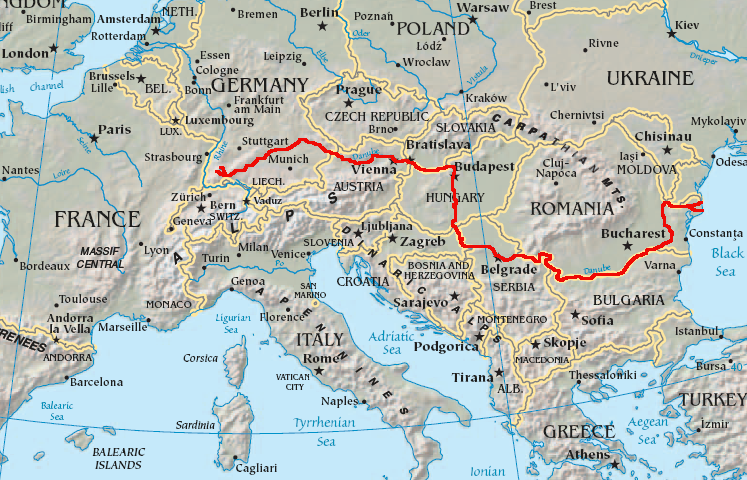
We are going to move. We need to feed ourselves while not damaging the ecosystem we are passing by. We would like to put together a nomadic ecosystem as we move, and adapt it progressivly as we move.

- What are the cultures we are able to make ? Which species have the potential to adapt?
- How easy is it to create a trophic level.

The Danube is our playground :

File:Danubemap.png

What is the most interesting perhaps, is  the transition from a freshwater to a salty environment :

File:WOA05 sea-surf SAL AYool.png

and this is life on the water : the biomass on the sea :

http://nordpil.com/static/images/ocean_productivity_full.png

Labels

design (116) structure (81) architecture (69) Energy_Animal (53) Nomadic_Ecosystem (46) art (43) Instinctive_Architecture (42) free energy (36) 3d (34) graphic (33) Swarm_Operating_System (32) Ocean (31) presentation (31) maps (28) Ocean_Cookbook (23) biology (23) communication (23) navigation (21) Open_Politics (20) strategy (20) water (20) boat (19) computing (19) survival (19) Life_Cable (18) construction (18) farm (18) safety (17) algae (16) posting (16) materials (15) wave (15) ecology (14) politics (14) technology (14) london (13) physics (13) agriculture (12) battery (12) Openet (11) food (11) animal (10) craft (10) culture (10) fishes (10) mechanics (10) Open_Sailing (9) chemistry (9) media (9) open-source (9) plastic (9) theory (9) video (9) TED (8) behaviour (8) competition (8) engine (8) exploration (8) performance (8) technique (8) philosophy (7) sociology (7) Open_Games (6) biomass (6) inflatable (6) seasteading (6) wind (6) OS_Polar (5) USA (5) animation (5) electronics (5) legal (5) medecine (5) pollution (5) berlin (4) data (4) ethics (4) money (4) psychology (4) reportage (4) service (4) statistics (4) sun (4) Brazil (3) Cesar Harada (3) Observation (3) Protei (3) TEDxOilSpill (3) catastrophy (3) engineering (3) garbage (3) google (3) history (3) identity (3) kite (3) mapping (3) metareciclagem (3) oil spill (3) recovery (3) research (3) sailing (3) science (3) space (3) spain (3) sustainable (3) tradition (3) AI (2) Argo (2) CAD (2) Environment (2) Exploration. Robots Swarm .Sea (2) Jellyfish (2) LABB (2) Louisiana (2) NL (2) NOLA (2) Object Oriented Politics (2) Open Hardware (2) Pachube (2) Pacific (2) Plastiki (2) TEDxBoston (2) UK (2) World Environment Organization (2) ants (2) austria (2) autonomy (2) com (2) coral (2) des (2) endangered species (2) fiction (2) geography (2) gulf of mexico (2) model (2) news (2) open architecture initiative (2) open innovation (2) organisation (2) plant (2) post (2) preservation (2) product (2) protection (2) rca (2) reserve (2) robots (2) simulation (2) skeleton (2) social (2) symbol (2) text (2) treatment (2) waste (2) Adhocracy (1) Aerial (1) Articles (1) BBC (1) BLDGBLOG (1) BP (1) BP oil spill (1) Balloon (1) Bangladesh (1) Barataria (1) Barcelona (1) Bay (1) Black (1) Boston (1) CCCB (1) Colet Castano (1) Crafts (1) Decentralize (1) Distributed System (1) Documentary (1) Dream (1) Environmental Concerns (1) Europe (1) Flight (1) Germany (1) Grassrootsmapping (1) Grenelle (1) Grier (1) Helium (1) Hydrogenase. Architecture (1) Institute (1) JP (1) Jimmy (1) John (1) Kaku (1) Kiel (1) Kim (1) Korea (1) LA Bucket Brigade (1) Luxembourg (1) NOAA (1) New Orleans (1) New York (1) Nina (1) Noah (1) Norway (1) Oceanography (1) Oil (1) Photography (1) Plane (1) Plater (1) Pope (1) Pragmatism (1) Resistance (1) Robot (1) Rotterdam (1) Ruairi Glynn (1) Sketchup (1) Snyder (1) Sphere (1) Spill (1) Stitching (1) TEDxMidAtlantic (1) Talk (1) Tilling (1) Tribe (1) Trondheim (1) Tumas (1) Uros (1) V2_ (1) Vision (1) Washington DC (1) Werner (1) Wood (1) Woods Hole (1) YouTube (1) Zygmunt (1) accident (1) admin (1) alternative (1) anaconda (1) appropedia (1) aquanaut (1) architecture for humanity (1) ars (1) autarcy (1) autark (1) awareness (1) ball (1) baltic (1) belgium (1) biodiversity (1) biofuel (1) brainstorming (1) broadcast (1) buoy (1) canada (1) carbon (1) cardboard (1) carton (1) cesar (1) clear climate code (1) climate (1) cold fusion (1) collaboration (1) concepts (1) cruise (1) current (1) deadly (1) deep (1) departure (1) developing (1) disposal (1) dispute (1) diving (1) diy (1) drone (1) eartquake (1) edgcm (1) events (1) excellent (1) experimental (1) exploring (1) farming (1) farms (1) file (1) fire (1) flickr (1) floating (1) florida (1) fluid dynamics (1) forum (1) france (1) future (1) futurology (1) generator (1) geodesic (1) geoengineering (1) graduate (1) green (1) grey (1) habitation (1) halley vi research station (1) harada (1) hybrid (1) icon (1) ideas (1) ideology (1) independent (1) indian (1) indonesia (1) industrial (1) inhabitat (1) innovation (1) instructables (1) insurance (1) japan (1) kelp (1) ledger (1) lloyds (1) louisina (1) machine (1) magnet (1) maths (1) message (1) messaging (1) metal (1) mimicry (1) mission blue (1) mobile (1) modular (1) monitoring (1) nasa (1) natural (1) naviagation (1) nice (1) nucelar (1) open source (1) opportunity (1) pachbox (1) park (1) participation (1) patch (1) pelamis (1) people (1) photo (1) pirate radio (1) planning (1) pods (1) polar (1) pop (1) popular (1) power (1) pr (1) press (1) raft (1) reef (1) render (1) renewable (1) repost (1) rogue (1) sewage (1) ship (1) ships (1) shit (1) software (1) sound (1) speculation (1) studies (1) study (1) super-collider (1) sylvia earle (1) system (1) temporary (1) toxic (1) tv (1) typography (1) underwater (1) utopia (1) weather (1) web (1) whales (1) wired (1) workshops (1) young (1) youth (1)

This blog is embeded inside the official Open_Sailing website, visit us here : http://opensailing.net

Open_Sailors